Law of Sines Explained: Legal Insight Into Mathematical Principles and Their Application
The law of sines and cosines represents one of the most fundamental mathematical concepts taught in trigonometry courses worldwide. While these principles originated in pure mathematics, their practical applications extend far beyond classroom walls into numerous professional fields, including legal analysis, evidence evaluation, and expert testimony in court proceedings. Understanding these mathematical tools can enhance your comprehension of how expert witnesses present technical evidence and how courts evaluate complex calculations presented during litigation.
When attorneys need to establish facts involving distances, angles, and spatial relationships—whether in property disputes, accident reconstruction cases, or engineering liability matters—expert witnesses often rely on trigonometric calculations. The law of sines and cosines provide the mathematical foundation for these analyses. This article explores these essential mathematical principles and demonstrates their relevance to legal practice and courtroom applications.
Understanding the Law of Sines: Foundational Principles
The law of sines establishes a fundamental relationship between the sides of a triangle and its angles. Mathematically expressed, this principle states that in any triangle, the ratio of a side length to the sine of its opposite angle remains constant across all three sides. This elegant relationship can be written as: a/sin(A) = b/sin(B) = c/sin(C), where lowercase letters represent side lengths and uppercase letters represent the angles opposite those sides.
In practical legal applications, this principle becomes invaluable when expert witnesses need to reconstruct events or verify spatial relationships. For instance, in personal injury cases involving vehicle collisions, accident reconstruction experts use the law of sines to determine vehicle positions, angles of impact, and trajectory paths. The mathematical precision this principle provides creates compelling evidence when presented properly in court.
When you consult with an expert witness or choose a lawyer who specializes in technical cases, understanding these mathematical foundations helps you evaluate the strength of their evidence. The law of sines applies specifically to situations where you know either two angles and one side, or two sides and a non-included angle. This flexibility makes it particularly useful in forensic analysis and spatial reconstruction scenarios.
The mathematical elegance of the law of sines lies in its universality. Regardless of whether a triangle is acute, obtuse, or right-angled, this relationship holds true. This consistency provides courts with reliable analytical tools when evaluating technical evidence. Expert witnesses who properly apply this principle create testimony that withstands rigorous cross-examination.
The Law of Cosines: Applications and Practical Uses
While the law of sines addresses specific triangle configurations, the law of cosines proves essential when dealing with triangles where the law of sines cannot be directly applied. This principle states that in any triangle: c² = a² + b² – 2ab·cos(C), where c represents the side opposite angle C, and a and b represent the other two sides.
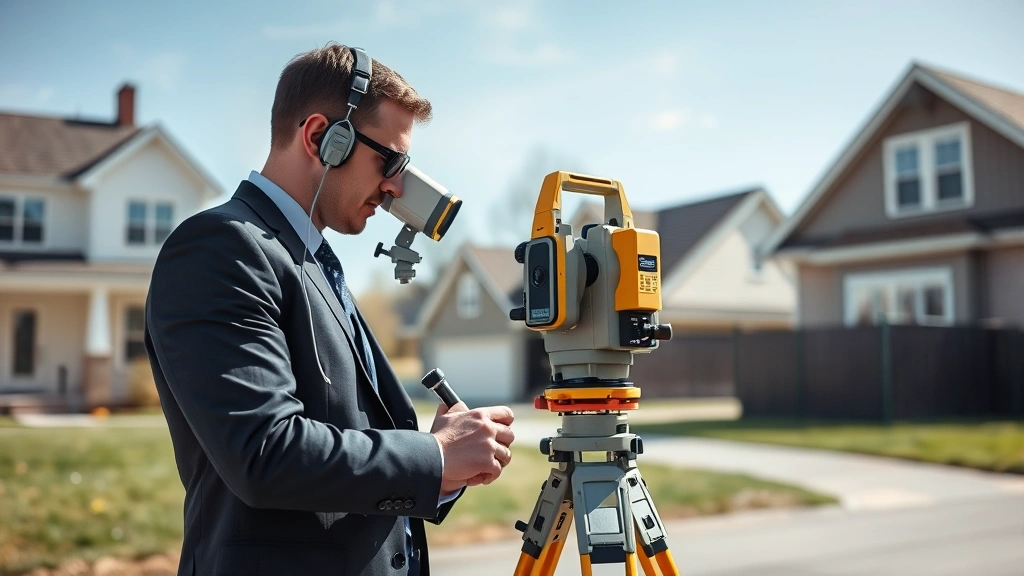
The law of cosines becomes particularly relevant in property disputes and boundary calculations. When surveyors and expert witnesses need to verify property lines, calculate distances between points, or determine the accuracy of boundary markers, they frequently employ the law of cosines. This mathematical tool allows professionals to work with triangles where they know all three sides or two sides and the included angle—situations common in property law disputes.
In engineering liability cases, the law of cosines helps experts analyze structural integrity, load distributions, and force vectors. When a building failure or structural defect becomes the subject of litigation, engineers use these trigonometric principles to reconstruct what happened and identify where design or construction failed. The mathematical rigor these calculations provide strengthens expert testimony and helps judges understand complex technical issues.
Understanding the relationship between the law of sines and cosines helps legal professionals recognize which mathematical tool applies to specific evidentiary situations. When reviewing expert reports or preparing for mediation vs arbitration proceedings, knowing which principle was applied demonstrates whether the expert used appropriate methodology.

” alt=”Professional surveyor measuring property boundaries using advanced equipment outdoors, precise instruments visible, clear daylight”/>
Mathematical Accuracy in Legal Expert Testimony
The admissibility of expert testimony in courts depends partly on whether the expert’s methodology is scientifically sound and mathematically rigorous. Federal Rules of Evidence Rule 702 and similar state rules require that expert testimony be based on reliable principles and methods. When experts rely on the law of sines and cosines, they must demonstrate that they applied these mathematical principles correctly and appropriately to the case facts.
Courts increasingly scrutinize the mathematical foundations of expert testimony. A judge or jury must understand not only the conclusion the expert reaches but also the mathematical pathway used to arrive at that conclusion. When experts present calculations based on trigonometric principles, they should explain how the law of sines or cosines applies to the specific facts, what measurements or angles were used, and how measurement uncertainties might affect the results.
The legal terms glossary includes numerous references to expert testimony standards and admissibility requirements. Understanding these standards helps attorneys prepare expert witnesses and challenge opposing experts effectively. Mathematical accuracy becomes a critical factor in these evaluations.
During cross-examination, opposing counsel frequently challenges the mathematical accuracy of expert calculations. An expert who thoroughly understands the law of sines and cosines, including their limitations and appropriate applications, can defend their methodology convincingly. This expertise builds credibility and strengthens the persuasiveness of testimony.
Documentation of calculations becomes essential in legal proceedings. Experts should maintain detailed records showing how they applied trigonometric principles, what measurements they used, what assumptions they made, and how they verified their calculations. This documentation creates an audit trail that demonstrates mathematical rigor and allows other experts to replicate or challenge the analysis.
Accident Reconstruction and Evidence Analysis
Accident reconstruction represents one of the most common applications of trigonometric principles in litigation. When vehicles collide, determining the angles of impact, the trajectories of vehicles before collision, and the positions of vehicles at the moment of impact often requires trigonometric analysis. Expert reconstructionists use the law of sines and cosines to establish these spatial relationships with mathematical precision.
In a typical vehicle collision case, investigators measure skid marks, vehicle damage patterns, and final resting positions. Using these measurements, accident reconstruction experts create geometric models of the collision. The law of sines and cosines allow them to calculate vehicle speeds, angles of approach, and the sequence of events leading to impact. This analysis often determines liability by establishing that one party’s vehicle violated traffic laws or operated unsafely.
When pursuing a personal injury claim process, understanding how accident reconstruction experts use mathematical analysis strengthens your case. If you sustained injuries in a collision, expert testimony based on sound trigonometric analysis can demonstrate that the other party caused the accident through negligent or reckless driving.
Accident reconstruction also applies to pedestrian-vehicle collisions, motorcycle accidents, and multi-vehicle pileups. In each scenario, trigonometric principles help establish what happened, when it happened, and why it happened. This mathematical foundation supports liability determinations and helps insurance companies and courts assess damages fairly.
Modern accident reconstruction incorporates computer modeling and simulation software that relies on trigonometric calculations. These tools enhance the visual presentation of expert testimony, allowing judges and juries to see three-dimensional reconstructions of accidents. The underlying mathematical principles—the law of sines and cosines—provide the foundation for these sophisticated analyses.
Property Disputes and Boundary Calculations
Property boundary disputes frequently involve trigonometric analysis. When original survey documents are lost, damaged, or unclear, surveyors use the law of sines and cosines to reconstruct property boundaries based on available evidence. These mathematical tools help determine where property lines should exist based on original intent and historical documentation.
In disputes over land ownership or easement rights, expert surveyors testify about the mathematical relationships between known boundary markers. Using trigonometric principles, they calculate distances and angles that establish where disputed boundaries should lie. This testimony often proves decisive in resolving property conflicts that might otherwise be impossible to resolve definitively.
The law of cosines particularly applies when surveyors work with triangles formed by boundary markers. By measuring distances between known points and calculating the angles these distances create, surveyors can determine the precise location of disputed boundaries. This mathematical approach provides objective, verifiable results that courts find compelling.
Property disputes also arise in real estate transactions when surveys reveal discrepancies between documented boundaries and actual physical markers. Trigonometric analysis helps determine which documentation is accurate and whether boundary markers have shifted due to erosion, development, or other factors. This analysis protects property owners’ interests and ensures accurate conveyancing.
When small claims court or full litigation addresses property boundary questions, mathematical evidence becomes crucial. Surveyors who properly apply trigonometric principles create testimony that withstands scrutiny and provides judges with reliable information for decision-making.
Evaluating Expert Witness Credibility
When expert witnesses present testimony based on trigonometric calculations, attorneys and judges must evaluate whether the expert applied these principles correctly and appropriately. Several factors contribute to assessing expert credibility in mathematical analysis cases. First, the expert should clearly explain which trigonometric principle applies and why it applies to the specific facts. An expert who cannot articulate this reasoning suggests inadequate understanding of the subject matter.
Second, the expert should acknowledge the limitations and assumptions underlying their calculations. All mathematical analysis involves assumptions about measurements, environmental conditions, and other variables. An expert who recognizes these limitations and explains how they might affect conclusions demonstrates intellectual honesty and sophistication. Conversely, an expert who presents calculations as absolutely certain without acknowledging uncertainty raises credibility concerns.
Third, courts increasingly value experts who can explain their methodology in language that educated laypersons can understand. An expert who hides behind complex mathematical language without providing clear explanations suggests they may not fully understand their own analysis or may be attempting to obscure weaknesses in their reasoning.
Fourth, consistency between different analytical approaches strengthens expert credibility. If an expert reaches the same conclusions using the law of sines and independently using the law of cosines, this consistency suggests the analysis is sound. If different approaches yield different results, the expert must explain why and which result is more reliable.
Fifth, external verification enhances credibility. When expert testimony can be corroborated by other evidence—such as physical measurements, photographs, or independent expert analysis—the mathematical conclusions become more persuasive. Courts are more likely to credit testimony that stands up to multiple verification methods.
When evaluating expert witnesses or filing complaints against lawyers who may have presented inadequate expert testimony, understanding these credibility factors proves essential. A well-qualified expert in trigonometric analysis can make or break complex technical cases.
” alt=”Courtroom interior with judge’s bench, witness stand, and professional lighting, empty and ready for proceedings, formal legal setting”/>
FAQ
What is the practical difference between the law of sines and the law of cosines?
The law of sines applies when you know two angles and one side, or two sides and a non-included angle. The law of cosines applies when you know all three sides or two sides and the included angle. In legal applications, accident reconstruction experts might use the law of sines to determine vehicle trajectories, while surveyors use the law of cosines to calculate boundary positions.
How do courts evaluate the reliability of trigonometric analysis in expert testimony?
Courts apply the Daubert standard (in federal courts) or similar state standards to evaluate expert testimony. This evaluation includes assessing whether the expert applied established mathematical principles correctly, whether they acknowledged limitations and assumptions, whether their methodology can be tested and verified, and whether the analysis falls within the expert’s area of expertise.
Can trigonometric analysis prove liability in accident cases?
Trigonometric analysis contributes to proving liability by establishing facts about how an accident occurred, but mathematical analysis alone does not establish liability. Courts must still determine whether the facts established through mathematical analysis demonstrate that one party violated a legal duty or traffic law. The trigonometric analysis provides objective evidence supporting liability arguments.
What qualifications should accident reconstruction experts possess?
Qualified accident reconstruction experts typically hold certifications from organizations like the National Association of Accident Reconstruction Specialists (NAARS), maintain current knowledge of vehicle dynamics and physics, possess practical experience investigating accidents, and understand how to apply mathematical principles including trigonometry to accident analysis.
How can property owners challenge survey results based on trigonometric calculations?
Property owners can challenge survey results by hiring independent surveyors to verify calculations, questioning the expert’s methodology and assumptions, examining historical documentation and original surveys, and presenting alternative interpretations of boundary evidence. If surveys disagree, courts may need to determine which analysis is more reliable based on the methodology and credibility of competing experts.
Are trigonometric calculations always admissible in court?
Trigonometric calculations are admissible when they are based on reliable principles and methods, properly applied to the case facts, and presented by qualified experts who can explain their reasoning. Courts may exclude calculations that are based on unreliable methodology, presented by unqualified individuals, or so complex that they confuse rather than clarify the issues for the fact-finder.


