Understanding Wien’s Displacement Law: Legal Insight
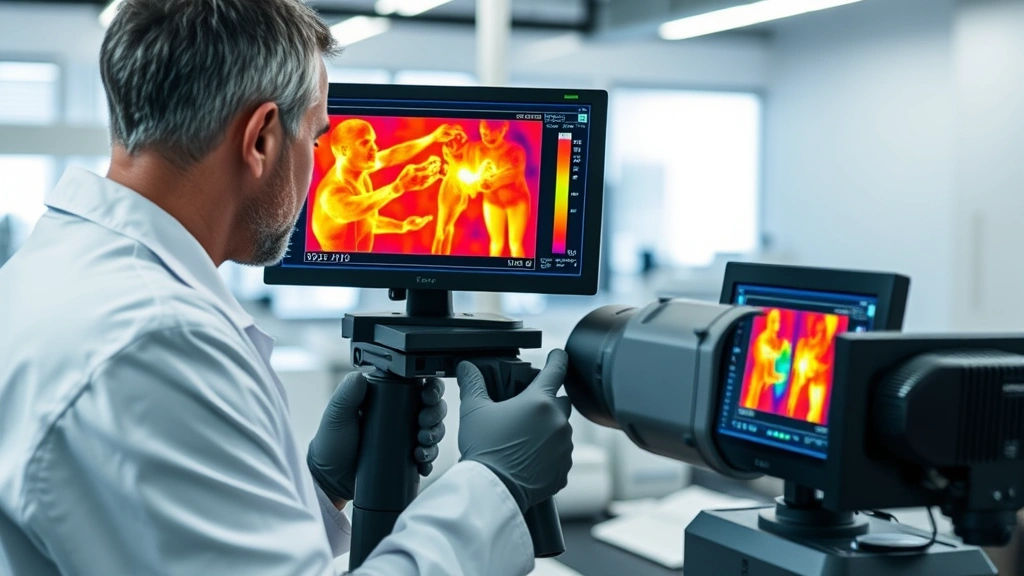
Wien’s Displacement Law, a fundamental principle in physics and thermodynamics, has surprisingly relevant applications within legal contexts, particularly in scientific evidence presentation, expert testimony, and cases involving thermal analysis. While primarily a scientific concept, understanding this law becomes essential for legal professionals dealing with cases that involve infrared imaging, thermal detection, scientific research disputes, and technology-related litigation. This comprehensive guide explores Wien’s Displacement Law from a legal perspective, examining how courts evaluate scientific evidence based on this principle and what attorneys need to know when navigating cases with thermal or radiation-based evidence.
The intersection of scientific law and legal proceedings creates unique challenges for attorneys, judges, and juries who must evaluate complex technical evidence. When thermal imaging, infrared technology, or radiation detection becomes central to a case—whether in environmental law, property disputes, criminal investigations, or patent litigation—a foundational understanding of Wien’s Displacement Law becomes crucial. This article provides legal professionals with the knowledge necessary to effectively challenge, present, or evaluate scientific evidence grounded in this principle.
What is Wien’s Displacement Law and Its Scientific Foundation
Wien’s Displacement Law, formulated by physicist Wilhelm Wien in 1893, establishes a mathematical relationship between the temperature of an object and the wavelength of electromagnetic radiation it emits. The law states that the peak wavelength of radiation emitted by a black body is inversely proportional to its absolute temperature. In practical terms, hotter objects emit radiation at shorter wavelengths, while cooler objects emit radiation at longer wavelengths.
For legal professionals, the significance of this law extends beyond theoretical physics. When thermal imaging technology is used in investigations—whether to detect concealed individuals, identify heat sources in environmental investigations, or analyze thermal patterns in property disputes—the underlying science relies on Wien’s Displacement Law. Understanding this relationship helps attorneys evaluate the reliability and accuracy of thermal evidence presented in court.
The mathematical expression of Wien’s Displacement Law (λ_max = b/T, where λ_max is peak wavelength, b is Wien’s constant, and T is absolute temperature) provides a precise framework for understanding how thermal detection equipment functions. This precision is particularly important when challenging the admissibility of thermal evidence, as courts increasingly scrutinize the scientific basis for technological evidence under the Daubert standard.
The law applies to all objects above absolute zero, making it universally relevant to any case involving thermal detection or infrared analysis. From identifying hidden spaces in buildings to detecting unauthorized manufacturing operations, thermal imaging based on Wien’s Displacement Law has become a standard investigative tool. However, this widespread use makes it essential for legal professionals to understand both the capabilities and limitations of this technology.
Legal Applications in Court Proceedings
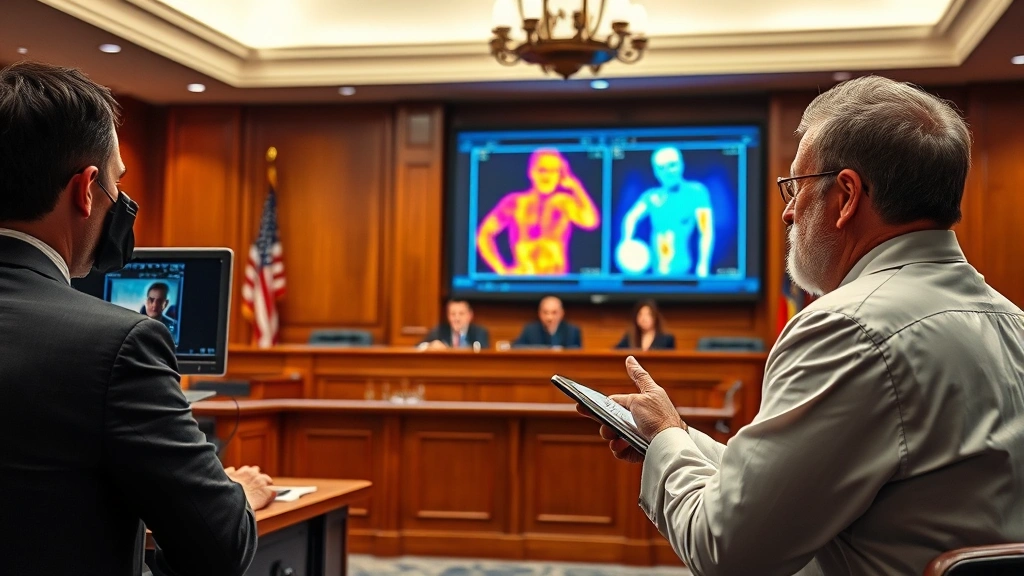
Wien’s Displacement Law becomes legally significant when thermal imaging or infrared evidence enters the courtroom. Federal and state courts have increasingly admitted thermal imaging evidence, but only when it meets established standards for scientific reliability. The Daubert standard, established in Daubert v. Merrell Dow Pharmaceuticals, Inc., requires that expert testimony based on scientific principles must be relevant, reliable, and properly grounded in accepted scientific methodology.
When thermal imaging evidence is presented, courts examine whether the expert witness properly understands Wien’s Displacement Law and can explain how thermal detection equipment applies this principle. An expert must demonstrate that the equipment functions according to established scientific principles, that the methodology was properly applied, and that the conclusions drawn are supported by the science. Attorneys challenging such evidence often focus on whether the expert adequately explains the relationship between temperature measurement and wavelength detection.
The relevance of Wien’s Displacement Law extends to cases involving consumer protection claims related to thermal products, patent disputes over infrared technology, and environmental litigation involving heat signatures. In each context, the admissibility of thermal evidence depends partly on the expert’s ability to explain the scientific foundation—Wien’s Displacement Law—in terms the court can understand and evaluate.
Different jurisdictions may weight scientific evidence differently, but the underlying principle remains consistent: thermal imaging technology must be validated through proper application of established scientific principles. This means attorneys need to understand not just what thermal evidence shows, but why it works according to Wien’s Displacement Law.
Expert Testimony and Scientific Evidence Standards
Expert witnesses in cases involving thermal imaging must satisfy rigorous qualification standards. Courts require experts to demonstrate comprehensive knowledge of Wien’s Displacement Law, thermal physics, and the specific equipment used. When presenting evidence, the expert must clearly explain how Wien’s Law applies to the technology used and why the conclusions drawn are scientifically sound.
The qualification process for thermal imaging experts typically includes examination of their educational background in physics or engineering, their practical experience with thermal equipment, their understanding of the equipment’s limitations, and their ability to testify about the specific conditions under which the thermal images were captured. An expert must explain how environmental factors—ambient temperature, humidity, emissivity of surfaces, and atmospheric conditions—affect thermal imaging results and how these factors were controlled or accounted for in the analysis.
Daubert challenges to thermal evidence often focus on whether the expert adequately understands the scientific principles underlying the technology. Attorneys questioning such experts should explore whether they can explain Wien’s Displacement Law in their own words, whether they understand the mathematical relationship between temperature and wavelength, and whether they can articulate the limitations of thermal detection. A qualified expert should be able to discuss how the sensitivity of thermal cameras, the accuracy of temperature measurements, and the interpretation of thermal patterns all relate to the underlying science.
Courts increasingly recognize that proper application of Wien’s Displacement Law requires accounting for surface emissivity—the efficiency with which different materials emit radiation. Different materials at the same temperature emit different amounts of radiation at different wavelengths. An expert witness must demonstrate understanding of how emissivity affects thermal imaging interpretation and how this was considered in the analysis. Without this understanding, thermal evidence may be deemed unreliable.
Thermal Imaging Evidence in Criminal Cases
Thermal imaging has become a significant tool in criminal investigations, particularly in cases involving drug manufacturing, indoor agriculture operations, and other activities that generate distinctive heat signatures. However, the use of thermal imaging raises important Fourth Amendment concerns regarding warrantless surveillance, making it essential for attorneys to understand both the science and the law.
In Kyllo v. United States, the Supreme Court ruled that using thermal imaging to detect heat patterns inside a home without a warrant constitutes an unreasonable search under the Fourth Amendment. This landmark decision established that while Wien’s Displacement Law explains how thermal imaging works, constitutional protections limit when this technology can be legally employed. The decision hinged partly on recognizing that thermal imaging reveals information about the interior of homes that would otherwise be private.
For attorneys defending clients in cases where thermal imaging was used, understanding Wien’s Displacement Law helps establish whether the imaging was properly conducted and whether the conclusions drawn are scientifically sound. Defense counsel may challenge the reliability of thermal imaging evidence by questioning whether the equipment was properly calibrated, whether environmental conditions were properly controlled, or whether alternative explanations exist for the heat signatures detected. This requires understanding how thermal physics works and where thermal imaging analysis might be vulnerable to challenge.
Prosecutors using thermal imaging evidence must ensure that it was obtained lawfully and that expert testimony properly explains the scientific basis for conclusions. When thermal imaging is used in conjunction with other investigative techniques, the prosecution must clearly separate the thermal evidence from other evidence and explain what conclusions can reliably be drawn from thermal data alone.
Property and Environmental Disputes Involving Thermal Analysis
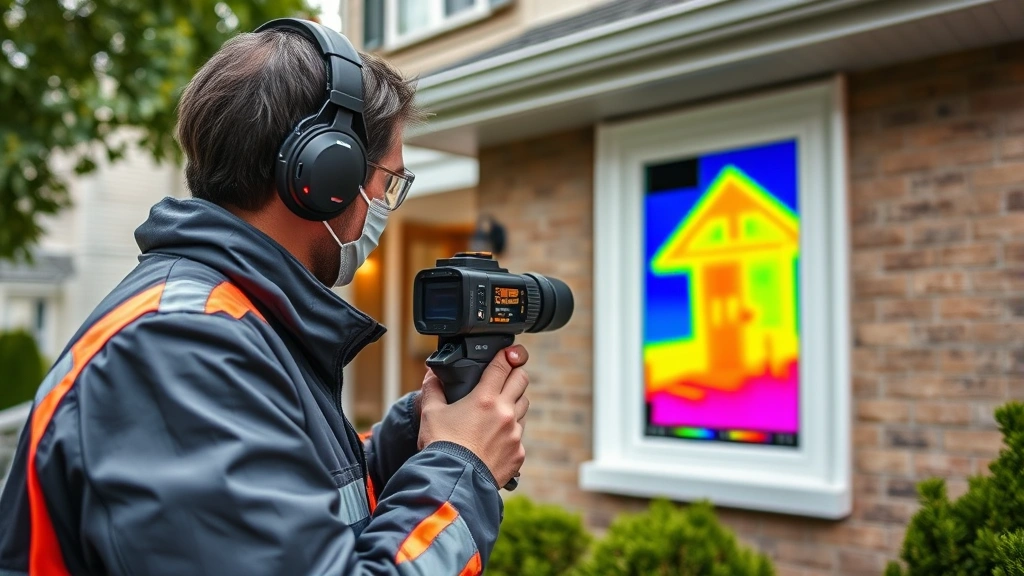
Thermal imaging and analysis based on Wien’s Displacement Law frequently appears in property disputes, particularly cases involving building envelope integrity, insulation effectiveness, and energy efficiency claims. When homeowners dispute contractor work or manufacturers make claims about product performance, thermal imaging may be presented as evidence of how well a building retains heat.
In these cases, understanding Wien’s Displacement Law helps both sides evaluate whether thermal images accurately reflect actual energy performance. An expert must explain how thermal patterns relate to underlying heat loss, how environmental conditions affect the thermal signature, and what limitations exist in drawing conclusions from thermal data. For instance, a thermal image showing temperature variation on a wall surface does not automatically prove insulation failure—the expert must explain the relationship between surface temperature, heat flow, and Wien’s Displacement Law principles to support such conclusions.
Environmental litigation sometimes involves thermal analysis to detect unauthorized emissions, identify heat sources contributing to environmental damage, or document thermal pollution in water bodies. In these contexts, Wien’s Displacement Law provides the scientific foundation for thermal detection. However, attorneys must understand that thermal imaging shows surface temperature, not necessarily the source or cause of heat. An expert must clearly explain these distinctions and limitations when presenting environmental thermal evidence.
Corporate liability cases may involve thermal imaging when disputes arise over equipment failure, manufacturing defects, or workplace safety violations. Thermal evidence might show that equipment was operating at abnormal temperatures, but establishing liability requires connecting the thermal evidence to specific defects or violations. The expert must explain how Wien’s Displacement Law supports conclusions about equipment condition and what other factors might explain the observed thermal patterns.
Challenging Scientific Evidence Based on Wien’s Law
Attorneys seeking to challenge thermal imaging evidence should focus on several key areas. First, examine whether the expert adequately understands Wien’s Displacement Law and can explain it clearly. An expert who cannot articulate the basic science may not be qualified to interpret thermal images. Second, investigate the equipment used—was it properly calibrated, maintained, and certified? Third, examine the conditions under which thermal images were captured. Environmental factors significantly affect thermal imaging results, and failure to control or account for these factors undermines reliability.
Challenge the expert’s methodology for interpreting thermal data. Wien’s Displacement Law explains how thermal cameras detect radiation, but interpreting that radiation requires assumptions about surface emissivity, environmental conditions, and what heat signatures mean. An expert who makes unsupported assumptions or fails to consider alternative explanations may be vulnerable to cross-examination. Request detailed information about how the expert accounted for emissivity variations, atmospheric interference, and other factors affecting thermal image interpretation.
Question whether the expert properly considered limitations of thermal imaging technology. Even properly functioning thermal cameras have accuracy ranges, spatial resolution limitations, and sensitivity thresholds. An expert who presents thermal evidence as definitive proof without acknowledging these limitations may be subject to Daubert challenge. Ask whether the expert conducted validation testing, whether the equipment was appropriate for the specific application, and whether the expert has documented experience with this type of analysis.
Examine the chain of custody and documentation for thermal imaging. Thermal images can be manipulated, and the processing software used to analyze thermal data can affect results. Ensure that the expert can document how images were captured, processed, and analyzed. Request information about software settings, calibration procedures, and quality assurance measures. An expert who cannot provide detailed documentation of methodology may be vulnerable to reliability challenges.
Patent Litigation and Thermal Technology
Patent disputes involving thermal imaging technology, infrared sensors, and related devices frequently require discussion of Wien’s Displacement Law. When patents claim innovations in thermal detection, imaging, or analysis, the patent examiner and litigants must evaluate whether the claimed technology represents a non-obvious advancement in the field. Understanding Wien’s Displacement Law and its applications helps attorneys evaluate the scope and validity of thermal technology patents.
In patent infringement cases involving thermal technology, defendants often argue that the patented technology simply applies well-known scientific principles without meaningful innovation. To counter this argument, patent holders must demonstrate that their application of Wien’s Displacement Law, or their implementation of thermal detection technology, represents genuine innovation. This requires expert testimony explaining how the patented technology advances beyond straightforward application of established science.
Licensing disputes in thermal technology also require understanding Wien’s Displacement Law. When companies license technology based on thermal imaging or infrared detection, the scope of the license may depend on how broadly or narrowly Wien’s Displacement Law applies to the technology. Attorneys negotiating or litigating thermal technology licenses should understand the underlying science to properly evaluate what rights are being granted or disputed.
Prior art analysis in thermal technology patents requires examining existing applications of Wien’s Displacement Law. Patent examiners and litigants must determine whether a claimed thermal technology represents a patentable advance over prior thermal applications. This analysis depends on understanding how Wien’s Law has been applied in previous technologies and what innovations the new patent claims to introduce.
Understanding the distinction between theoretical application of Wien’s Law and practical implementation of thermal technology is crucial in patent litigation. A patent may be valid even if it applies well-known science in a novel way, if that application produces unexpected results or solves a previously unsolved problem. Attorneys in thermal technology patent cases should focus on whether the patent claims represent genuine innovations in applying Wien’s Displacement Law to practical problems.


