
Mandatory Labor Law Posters: Compliance Checklist
Workplace compliance begins with visibility. Mandatory labor law posters serve as the foundation of employer accountability, communicating critical employee rights and workplace regulations directly where employees spend their working hours. Federal, state, and local governments require employers to display specific posters addressing minimum wage, workplace safety, anti-discrimination protections, and other essential labor standards. Failure to post these required notices can result in significant penalties, citations, and legal liability.
Understanding which posters your organization must display is not merely a regulatory formality—it is a fundamental obligation that protects both employees and employers. This comprehensive guide provides a detailed compliance checklist for mandatory labor law posters, helping you navigate the complex landscape of workplace posting requirements and avoid costly violations.
Federal Mandatory Labor Law Posters
Federal law mandates that all employers display specific posters in the workplace, regardless of company size or industry. The U.S. Department of Labor and various federal agencies establish these requirements to ensure employees understand their fundamental rights and protections. Understanding statutory law requirements is essential for compliance, as federal posting mandates are codified in the U.S. Code and enforced through agency regulations.
The Fair Labor Standards Act (FLSA) Poster is perhaps the most fundamental federal requirement. This poster informs employees about minimum wage, overtime pay, recordkeeping, and child labor provisions. Employers covered under the FLSA—which includes most private employers—must display this poster in a conspicuous location where employees can readily observe it. The poster explains that employees must receive at least the federal minimum wage for all hours worked and overtime compensation at one-and-a-half times their regular rate for hours exceeding forty per week.
The Occupational Safety and Health Act (OSHA) Poster communicates workplace safety rights and responsibilities. This poster, titled “It’s the Law,” informs employees of their right to safe working conditions, their right to report hazards without retaliation, and their right to request OSHA inspections. Employers must display this poster in a prominent location accessible to all employees. OSHA also requires posting of workplace injury and illness notices, including the OSHA 300 Log summary during specific periods.
Title VII of the Civil Rights Act Poster addresses equal employment opportunity protections. This poster explains that employers cannot discriminate based on race, color, religion, sex, or national origin. The Equal Employment Opportunity Commission (EEOC) enforces these requirements, and employers must display the poster where applicants and employees can observe it. This aligns with broader legal system principles protecting individual rights in employment relationships.
The Americans with Disabilities Act (ADA) Poster notifies employees of their protections against discrimination based on disability and their right to reasonable accommodations. The EEOC enforces ADA requirements, and employers must display this poster alongside other EEO notices. The poster clarifies that the ADA applies to employers with fifteen or more employees and covers qualified individuals with disabilities.
Family and Medical Leave Act (FMLA) Poster informs eligible employees of their rights to unpaid, job-protected leave for qualifying medical and family reasons. The U.S. Department of Labor requires this poster in workplaces covered by the FMLA. Covered employers include those with fifty or more employees within seventy-five miles of a work site. The poster explains eligible reasons for leave, including the employee’s serious health condition, family member care, and military family leave.
The Genetic Information Nondiscrimination Act (GINA) Poster protects employees from discrimination based on genetic information. While less commonly referenced than other federal posters, GINA protections are critical in modern workplaces where genetic testing and family medical history information may become relevant. The EEOC enforces GINA requirements.
The Uniformed Services Employment and Reemployment Rights Act (USERRA) Poster protects employees who serve in the military. This poster informs employees of their rights to military leave and reemployment protections when returning from military service. The Department of Labor enforces USERRA requirements.
The Employee Polygraph Protection Act (EPPA) Poster informs employees of restrictions on workplace polygraph testing. Most private employers cannot require polygraph tests as a condition of employment, though certain exemptions exist for security-sensitive positions and investigations. The Department of Labor enforces these requirements.
The Fair Credit Reporting Act (FCRA) Poster notifies employees and applicants of their rights regarding background checks and consumer reports. When employers use third-party services to conduct background investigations, they must provide notice of FCRA protections and obtain written consent from the individual being investigated.

State and Local Posting Requirements
Beyond federal requirements, states and localities impose additional mandatory posting obligations that employers must observe. State labor departments establish requirements addressing state-specific minimum wage, overtime rules, workers’ compensation, unemployment insurance, and state-level anti-discrimination protections. This layered regulatory environment requires employers to maintain current knowledge of requirements in every jurisdiction where they operate.
State Minimum Wage Posters communicate state-specific minimum wage rates, which often exceed federal minimums. Many states update their minimum wage annually, requiring employers to replace posters regularly. States like California, New York, and Massachusetts maintain among the highest minimum wage requirements, and employers operating in multiple states must display the applicable rate for each location.
Workers’ Compensation Notices are mandatory in nearly all states. These posters inform employees of their rights to workers’ compensation benefits, the process for reporting injuries, and information about the workers’ compensation insurance carrier. Many states require specific language and formatting, and some mandate that notices be provided in multiple languages reflecting the workplace population.
Unemployment Insurance Posters inform employees of unemployment benefits eligibility and the process for filing claims. State workforce agencies typically provide these posters, which must be displayed prominently in the workplace. The information addresses eligibility requirements, benefit amounts, and appeal procedures.
State Anti-Discrimination and Harassment Posters communicate protections against discrimination and sexual harassment beyond federal Title VII requirements. Many states protect additional categories such as sexual orientation, gender identity, marital status, and political affiliation. Some states require specific harassment prevention training notices and posters addressing retaliation protections.
Paid Leave and Wage Replacement Posters inform employees of state-mandated paid sick leave, family leave, or paid medical leave programs. States including California, New York, and Connecticut require employers to post notices about these benefits, including accrual rates, usage procedures, and carryover rules. Some jurisdictions mandate notices in multiple languages.
Wage and Hour Notices provide state-specific information about wage payment, deductions, final paycheck requirements, and overtime calculations. Many states impose requirements stricter than federal FLSA standards, including mandatory notice of wage rates, pay schedules, and deduction policies.
Right-to-Know and Safety Notices inform employees of hazardous substance exposure and workplace safety rights. States with their own occupational safety programs (such as California, Washington, and New York) impose additional posting requirements beyond federal OSHA standards.
Domestic Violence and Sexual Assault Leave Notices increasingly appear in state requirements. Many states now mandate posting of information regarding leave rights for employees experiencing domestic violence, sexual assault, or stalking, including provisions for safety accommodations and confidentiality protections.
Local and Municipal Requirements add additional layers of complexity. Major cities including San Francisco, Los Angeles, New York, and Chicago impose local minimum wage requirements, paid leave mandates, and anti-discrimination notices that exceed state standards. Employers in these jurisdictions must display local-specific posters in addition to state and federal requirements.
Posting Location and Display Standards
Regulatory agencies provide specific guidance regarding where and how mandatory labor law posters must be displayed. Proper placement ensures employees can readily observe the information and serves as evidence of employer compliance during inspections.
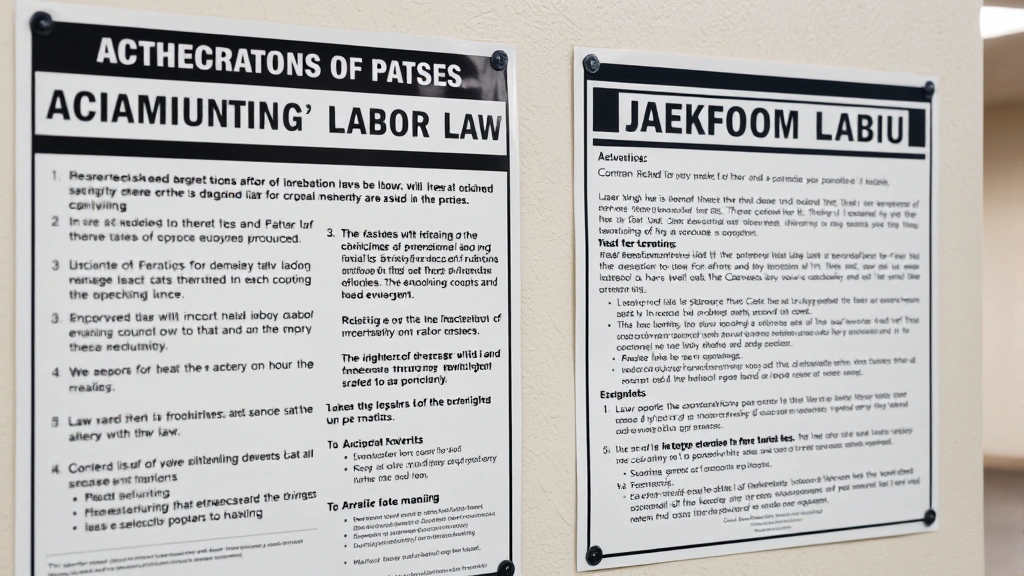
Prominent Location Requirements mandate that posters be displayed in areas where employees frequently gather and can easily read the notices. Common locations include break rooms, employee entrances, near time clocks, in personnel offices, and in areas where work assignments are posted. The specific location must be accessible to all covered employees and easily visible without obstruction.
Multiple Location Requirements apply in larger facilities. Employers with multiple work sites, shifts, or departments should post notices at each location where employees work. Facilities with different employee populations may need to post notices in multiple languages. Large manufacturing facilities, for example, should post notices in production areas, shipping departments, and administrative offices.
Posting Format and Condition requirements specify that posters must be posted in their entirety and remain legible. Posters cannot be altered, defaced, or covered. Employers must replace worn, faded, or damaged posters promptly. Posting partial or incomplete notices violates compliance requirements and may result in citations.
Size and Visibility Standards require that posters be large enough to read from a reasonable distance. Most federal posters are 8.5″ x 14″ or larger, ensuring visibility from several feet away. Posters should be positioned at eye level when possible, though this is not always a strict requirement. The key standard is that employees can readily observe and read the information.
Language Requirements mandate that posters be displayed in languages employees understand. In workplaces where significant employee populations speak languages other than English, employers may be required to post notices in Spanish, Chinese, Vietnamese, or other languages. The EEOC and state agencies provide guidance on language access requirements based on workforce composition.
Posting Duration varies by poster type. Most federal and state posters must remain posted year-round. However, certain notices such as OSHA injury and illness summaries must be posted only during specific periods (typically November through January). Employers must understand the applicable posting periods for each required notice.
Digital and Remote Workplace Compliance
The expansion of remote and hybrid work arrangements has created new compliance challenges regarding mandatory labor law poster requirements. Regulatory agencies have issued guidance addressing how employers can comply with posting requirements in digital work environments.
Electronic Posting Options are now permitted by many regulatory agencies for remote workers. The Department of Labor and OSHA have clarified that employers can satisfy posting requirements by displaying notices on company intranets, email, or other electronic platforms accessible to remote employees. However, the electronic notice must be as accessible and prominent as physical posting would be.
Email Distribution can satisfy certain posting requirements when notices are sent to all employees with reasonable frequency. However, email alone may not satisfy all requirements without supplemental physical posting at any physical work locations. Employers should maintain documentation showing when notices were distributed electronically and to which employees.
Company Intranet and Portal Posting allows employers to maintain a dedicated section for mandatory notices accessible to all employees. This approach works well for primarily remote organizations but should be supplemented with physical posting at any office locations, even if minimal.
Hybrid Workplace Requirements demand that employers post notices both physically and digitally. Employees who work on-site need access to physical posters, while remote employees need access to electronic versions. This dual approach ensures compliance regardless of work arrangement.
Documentation and Accessibility require employers to maintain records showing that notices were provided to all employees. For digital posting, this includes maintaining copies of electronic notices, distribution records, and evidence that notices remained accessible. For remote workers, employers should verify that employees have accessed or been informed of the digital notice location.
Compliance Checklist and Implementation
Implementing a comprehensive mandatory labor law poster compliance program requires systematic planning and ongoing management. The following checklist provides a framework for ensuring your organization meets all applicable requirements.
Step 1: Identify Applicable Requirements
- Determine your business size and industry classification
- Identify all states and localities where you operate
- Review federal requirements based on employee count and business type
- Research state-specific requirements for each jurisdiction
- Check local municipal requirements in major cities
- Document special industry requirements (construction, healthcare, etc.)
Step 2: Obtain Current Posters
- Access federal posters through the Department of Labor website
- Download OSHA posters from osha.gov
- Obtain state posters from state labor department websites
- Acquire local posters from municipal labor offices
- Ensure all posters are current and reflect recent legal changes
- Maintain backup copies for replacement when posters are damaged
Step 3: Determine Posting Locations
- Identify all physical work locations requiring posted notices
- Map posting locations in each facility
- Determine if multiple language versions are necessary
- Plan for digital posting if remote workers are employed
- Document posting locations for compliance verification
Step 4: Install and Display Posters
- Post all required notices in complete, legible condition
- Position posters at eye level in visible, accessible locations
- Ensure posters are not obstructed or covered
- Post notices in applicable languages
- Photograph posted notices for documentation
Step 5: Establish Maintenance Procedures
- Assign responsibility for poster maintenance and replacement
- Schedule quarterly inspections of posted notices
- Replace damaged, faded, or outdated posters immediately
- Maintain inventory of current poster versions
- Update posters when legal requirements change
Step 6: Create a Compliance Calendar
- Track annual minimum wage adjustments in each jurisdiction
- Note OSHA posting period requirements (typically November-January)
- Monitor regulatory agency websites for requirement changes
- Schedule regular compliance audits
- Set reminders for posting requirement updates
Step 7: Document Compliance Efforts
- Maintain copies of all posted notices
- Keep photographs of posting locations
- Document the date notices were posted
- Record compliance audits and inspections
- Save communications with regulatory agencies
For employers seeking to understand the legal framework underlying these requirements, consulting resources on legal analysis and documentation can help develop comprehensive compliance strategies. Additionally, understanding alternative dispute resolution mechanisms can help employers address compliance disputes constructively when they arise.
Common Violations and Penalties
Regulatory agencies actively enforce mandatory posting requirements, and violations can result in significant financial penalties and legal consequences. Understanding common violations helps employers avoid compliance failures.
Failure to Post Required Notices is the most common violation. When employers fail to display required posters, they face citations from the Department of Labor, OSHA, state labor agencies, or local enforcement authorities. Penalties typically range from $100 to $500 per violation, though amounts vary by jurisdiction and violation severity. Repeated violations can result in substantially higher penalties.
Posting Outdated or Incorrect Notices violates compliance requirements. When minimum wage rates change or legal requirements are updated, employers must post current notices. Displaying outdated information can result in citations and penalties, even if the outdated notice technically addresses a required topic.
Posting Incomplete or Altered Notices constitutes a violation. Regulatory agencies require that posters be displayed in their entirety without alteration, redaction, or modification. Employers cannot remove sections of posters or add supplemental information that changes the meaning of required notices.
Inadequate Posting Locations violate requirements when notices are posted in locations where employees cannot readily observe them. Posting a single notice in a manager’s office when the workplace includes multiple production areas violates requirements. Regulatory agencies expect notices to be posted wherever employees work.
Language Access Violations occur when employers fail to post notices in languages employees understand. In workplaces with significant non-English-speaking populations, posting only in English may violate requirements. Agencies increasingly enforce language access requirements to ensure effective communication of employee rights.
Retaliation for Poster-Related Complaints is illegal and creates severe liability. When employees complain about missing or inadequate posters, employers cannot retaliate through termination, demotion, reduced hours, or other adverse actions. Retaliation claims can result in damages far exceeding posting penalties.
Failure to Update Posters Timely creates violations when regulatory changes occur. Employers have limited time to implement new posting requirements once they take effect. Delays in updating notices can result in citations and penalties.
Penalties for posting violations vary significantly by jurisdiction and violation type. Federal OSHA violations typically range from $100 to $13,000 per violation, depending on violation classification. State agencies may impose different penalty structures. Some jurisdictions allow private lawsuits for posting violations, creating additional liability beyond regulatory penalties.
FAQ
What are the consequences of not posting mandatory labor law posters?
Failure to post mandatory labor law posters can result in regulatory citations, civil penalties ranging from $100 to $13,000 per violation, private lawsuits in some jurisdictions, and reputational damage. Additionally, employees may have grounds for claims if they suffer harm from lack of notice regarding their rights. Employers cannot use lack of knowledge of posting requirements as a defense against violations.
Do I need different posters for different employee locations?
Yes, if you operate multiple locations, you should post notices at each work site where employees are employed. Additionally, if your workforce speaks multiple languages, you may need to post notices in multiple languages. Federal and state agencies expect notices to be accessible to all employees regardless of their work location or language proficiency.
Can employers post notices digitally instead of physically?
Many regulatory agencies now permit digital posting for remote workers, but physical posting is still required at any physical work locations. Employers should verify current guidance from the Department of Labor and relevant state agencies. Digital posting must be as accessible and prominent as physical posting, and employers should maintain documentation of electronic distribution.
How often should I update mandatory labor law posters?
You should review and update posters at least annually, particularly before January when many wage and hour changes take effect. Additionally, whenever regulatory requirements change—such as minimum wage increases or new legal protections—you should update notices immediately. Regulatory agencies expect current notices to be posted at all times.
Who is responsible for compliance with posting requirements?
Employers are legally responsible for compliance with posting requirements. While HR departments or compliance officers often manage the actual posting and maintenance, ultimate responsibility rests with the employer organization. Directors, officers, and managers can face personal liability in some jurisdictions for posting violations.
What documentation should I maintain for posting compliance?
Employers should maintain copies of all posted notices, photographs of posting locations, records of posting dates, documentation of updates and replacements, and any communications with regulatory agencies regarding posting requirements. This documentation serves as evidence of good faith compliance efforts if violations are alleged.
Are there exemptions from mandatory posting requirements?
Most mandatory posting requirements apply to all employers in covered industries, with limited exemptions. Very small employers (those with fewer than a certain number of employees) may be exempt from some requirements like FMLA, but federal requirements like FLSA and OSHA apply broadly. Employers should verify specific exemptions for their business structure and industry.
What should I do if an employee reports missing or inadequate posters?
Take all employee complaints about posting requirements seriously. Investigate the complaint promptly, address any deficiencies immediately by posting required notices, and document your corrective actions. Do not retaliate against the employee who reported the violation, as retaliation is illegal and creates significant liability. Use the complaint as an opportunity to audit your entire posting compliance program.


