California Window Tint Law: Legal Overview
Window tinting has become increasingly popular among California vehicle owners seeking enhanced privacy, reduced heat, and improved aesthetics. However, California maintains strict regulations governing window tint darkness, reflectivity, and application to ensure driver visibility and public safety. Understanding these legal requirements is essential for vehicle owners to avoid citations, fines, and potential vehicle impoundment. This comprehensive guide explores California’s window tint laws, permissible specifications, exemptions, penalties, and practical compliance considerations.
California’s Vehicle Code establishes specific standards for window tint that all drivers must follow. The state balances individual preferences with safety concerns, allowing some tinting while maintaining visibility standards that protect drivers and law enforcement. Non-compliance can result in citations classified as infractions, leading to fines ranging from $25 to $100 per violation. Beyond financial penalties, excessive tinting can complicate traffic stops and may contribute to accident liability claims if visibility impairment contributes to collisions.
California Window Tint Legal Standards
The California Vehicle Code, specifically Vehicle Code Section 26700-26708, establishes comprehensive regulations for window tinting. These standards apply to all motor vehicles registered in California, including sedans, SUVs, trucks, and commercial vehicles. The law distinguishes between different windows, applying stricter requirements to windshields and front side windows while allowing darker tinting on rear windows.
California’s approach prioritizes driver and public safety by maintaining adequate visibility standards. Law enforcement officers must be able to see inside vehicles during traffic stops, and drivers must maintain sufficient visibility of the road and surrounding traffic. The state’s regulations align with federal safety standards while accommodating aesthetic and functional preferences within permissible limits.
The law applies to aftermarket window tinting applied by professional installers or vehicle owners. Original equipment manufacturer (OEM) tinting that meets California standards is generally compliant, though some newer vehicles may exceed legal limits and require modification. Vehicle owners are responsible for ensuring compliance regardless of who applied the tinting or when the vehicle was manufactured.
Visible Light Transmission Requirements
Visible Light Transmission (VLT) percentage measures how much visible light passes through tinted windows. California establishes specific VLT requirements for different vehicle windows:
- Windshield: Only non-reflective tint is permitted on the upper six inches of the windshield. The remainder must allow 70% light transmission, meaning no darker tint is legal on the main windshield area.
- Front Side Windows: Must allow at least 70% of visible light to pass through. This represents the most restrictive requirement and significantly limits darkness on driver and front passenger windows.
- Rear Side Windows: Must allow at least 50% light transmission. This permits notably darker tinting compared to front windows, reflecting California’s recognition that rear window visibility is less critical for vehicle operation.
- Rear Window: Must allow at least 50% light transmission. Similar to rear side windows, this permits moderate darkness while maintaining visibility for drivers following behind.
These percentages mean that front windows must remain relatively transparent, permitting only light tinting that reduces glare and heat without significantly darkening the window. Rear windows allow considerably darker tinting, enabling enhanced privacy for rear passengers and cargo areas. Vehicle owners frequently apply maximum allowable darkness to rear windows while maintaining minimal tinting on front windows for legal compliance.
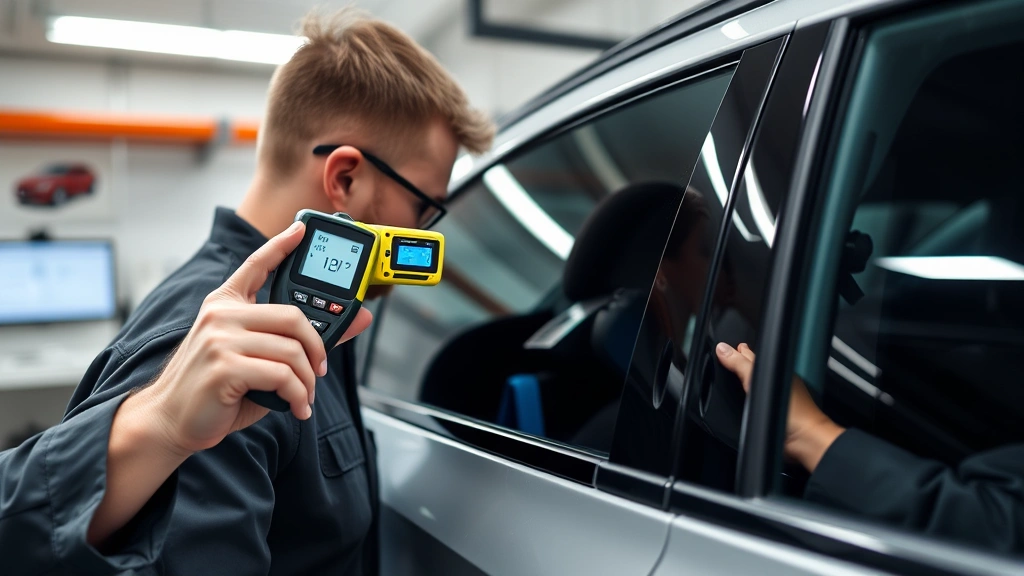
Testing VLT compliance requires specialized light meter equipment. Law enforcement uses calibrated devices to measure light transmission during traffic stops. Professional tinting installers typically possess testing equipment and can verify compliance before installation. Vehicle owners uncertain about existing tint darkness should seek professional measurement to ensure legal status.
Reflectivity and Metallic Tint Regulations
Beyond darkness requirements, California regulates window tint reflectivity to prevent dangerous glare that affects other drivers. Reflective or metallic window tints create mirror-like surfaces that can obscure vehicle interiors while reflecting sunlight dangerously onto following vehicles and pedestrians.
California law prohibits:
- Reflective window tint on any window
- Metallic or mirrored coatings that create reflective surfaces
- Tint materials that increase window reflectivity beyond factory specifications
This prohibition applies uniformly across all vehicle windows. Even if darkness requirements are met, reflective tint violates California law. Professional tinting companies understand these restrictions and use non-reflective materials compliant with state regulations. Vehicle owners applying tint themselves must select materials explicitly labeled as non-reflective and compliant with California standards.
The reflectivity prohibition aims to prevent distracted driving among other motorists and eliminate visibility hazards created by mirror-like window surfaces. Law enforcement can cite drivers for reflective tint violations independent of darkness measurements, making material selection critically important for legal compliance.
Exemptions and Medical Exceptions
California recognizes certain medical circumstances justifying window tint darker than standard legal limits. The state permits medical exceptions for individuals with documented conditions requiring sun protection.
Medical Exemption Requirements:
- Documented medical condition requiring protection from ultraviolet (UV) light exposure
- Physician’s statement supporting the medical necessity
- Registered exemption permit from the California Department of Motor Vehicles (DMV)
- Visible exemption sticker displayed on the vehicle
Qualifying medical conditions include:
- Photosensitivity disorders causing severe reactions to sunlight
- Lupus and related autoimmune conditions
- Severe acne rosacea
- Porphyria cutanea tarda
- Other documented conditions where UV exposure poses serious health risks
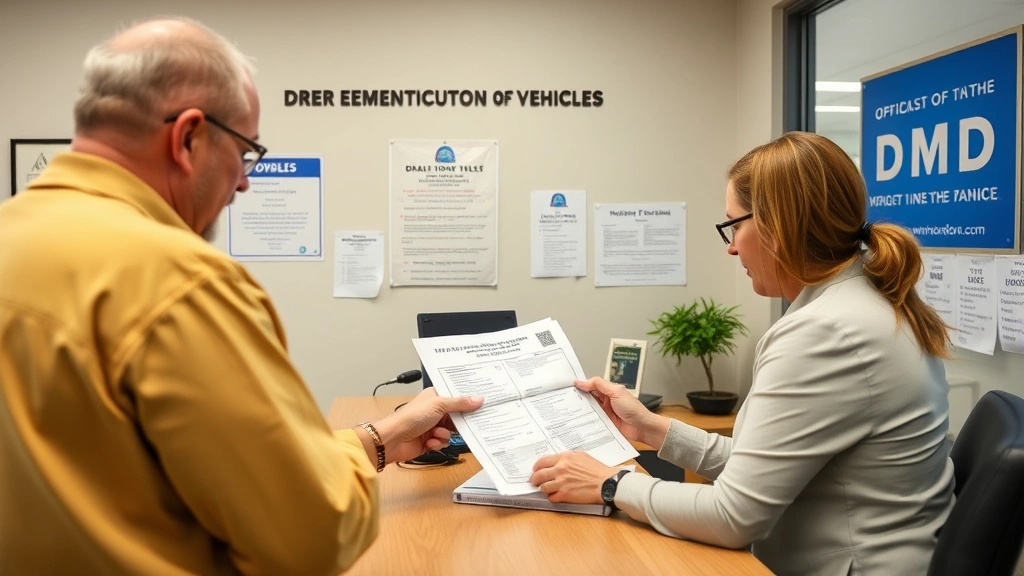
Vehicle owners seeking medical exemptions must obtain a letter from their physician documenting the medical necessity. The DMV reviews medical documentation and issues exemption permits allowing darker tinting than standard regulations permit. The exemption sticker must be displayed prominently, informing law enforcement of the medical exception status.
Medical exemptions do not eliminate all legal requirements. Even with exemptions, tinting must maintain minimum visibility standards and cannot utilize reflective materials. The exemption permits darker tinting but not complete privacy windows. Vehicle owners with medical exemptions remain subject to traffic enforcement and must maintain the exemption documentation in their vehicle.
Understanding vehicle safety regulations extends beyond window tinting to comprehensive vehicle operation standards. Compliance demonstrates responsible vehicle ownership and reduces legal exposure.
Penalties and Enforcement
California classifies window tint violations as infractions, the least severe traffic violations. However, infractions carry financial consequences and potential vehicle impoundment in extreme cases.
Violation Penalties:
- Base Fine: $25 to $100 per violation
- Penalty Assessment: Additional surcharges typically doubling or tripling the base fine
- Total Cost: $50 to $300+ depending on jurisdiction and surcharges
- Court Costs: Additional fees if the citation is contested in traffic court
Law enforcement officers can cite window tint violations during traffic stops or during vehicle inspections. California Highway Patrol and local police departments actively enforce window tint regulations, particularly in areas with frequent non-compliance. Some jurisdictions prioritize tint enforcement more heavily than others, creating geographic variation in enforcement intensity.
Repeated violations can accumulate, increasing financial liability. Vehicle owners receiving citations should address tinting non-compliance promptly by removing or adjusting tint to meet legal standards. Continued violations after receiving citations may result in enhanced penalties and potential vehicle impoundment.
Contesting window tint citations requires demonstrating legal compliance through light meter measurements or professional documentation. Vehicle owners who believe citations are erroneous can request traffic court hearings to present evidence of compliance. However, burden of proof rests on the vehicle owner to demonstrate legal status.
Window tint violations, while appearing minor, can escalate to more serious legal matters. If a traffic stop involving tint violations leads to discovery of additional violations or criminal activity, the initial tint violation becomes part of a larger legal case. Understanding violation classification and potential consequences helps vehicle owners appreciate the importance of compliance.
Compliance and Best Practices
Achieving and maintaining California window tint compliance requires understanding specifications and selecting appropriate materials and installation methods.
Compliance Strategies:
- Professional Installation: Licensed tinting professionals understand California requirements and utilize compliant materials. Professional installation includes measurement verification and compliance documentation.
- Material Selection: Choose tint materials explicitly labeled as California-compliant. Reputable manufacturers produce non-reflective tints meeting state standards.
- Light Meter Testing: Request professional light meter measurements confirming VLT compliance before final installation. This verification prevents future enforcement action.
- Documentation: Retain installation receipts and compliance documentation. If cited, documentation demonstrates good-faith compliance efforts.
- Regular Inspection: Monitor tint condition and darkness. Deteriorating tint or fading may alter light transmission characteristics.
- Removal Capability: Maintain ability to remove tint if compliance issues arise. Professional removal services can restore windows to factory condition.
Professional tinting typically costs $150 to $400 depending on vehicle size and tint quality. This investment ensures proper installation, material compliance, and professional documentation. DIY tinting risks non-compliance, improper installation, and future enforcement action.
Vehicle owners considering window tinting should research local regulations before proceeding. While California maintains statewide standards, some municipalities impose additional restrictions. Consulting with professional installers familiar with local enforcement patterns helps ensure full compliance.
California’s Department of Motor Vehicles provides official guidance on window tinting regulations. The DMV website includes exemption procedures and medical exception requirements. Vehicle owners with specific compliance questions should consult official DMV resources or licensed automotive professionals.
Compliance with window tint regulations reflects broader vehicle code adherence. Vehicle owners demonstrating compliance with safety regulations establish patterns of responsible vehicle operation. This compliance becomes relevant in accident litigation, insurance claims, and traffic court proceedings where vehicle condition and legal status factor into liability assessment. Similar attention to detail applies to other vehicle modifications and safety equipment, ensuring comprehensive legal compliance.
FAQ
Can I have completely dark windows on my rear windows?
No. California requires rear windows to allow at least 50% visible light transmission. This means even rear windows cannot be completely darkened or opaque. However, 50% VLT permits notably darker tinting than front windows, providing enhanced privacy while maintaining some visibility.
What happens if I get pulled over for illegal window tint?
Law enforcement will issue a citation for a window tint violation, typically an infraction. You’ll receive a citation with a fine, usually $25 to $100 plus surcharges. You can pay the fine, contest it in traffic court, or request tint removal and present evidence of compliance. Some jurisdictions offer fix-it tickets allowing compliance demonstration to dismiss citations.
Can I get a medical exemption for window tint?
Yes. If you have a documented medical condition requiring UV protection, you can obtain a medical exemption from the DMV. You’ll need a physician’s letter documenting medical necessity and must display an exemption sticker. Medical exemptions permit darker tinting than standard regulations allow but don’t eliminate all requirements.
How much does professional window tinting cost in California?
Professional window tinting typically costs $150 to $400 depending on vehicle size, window count, and tint quality. Premium tints or specialty vehicles may cost more. This investment ensures professional installation, compliant materials, and verification documentation.
Will my factory tint meet California standards?
Most factory tinting meets California standards, but some newer vehicles may exceed legal limits, particularly on rear windows. Check your vehicle’s specifications or request professional measurement if uncertain. Factory tint exceeding legal limits may require professional adjustment or removal.
Can law enforcement test my tint darkness during a traffic stop?
Yes. Law enforcement carries calibrated light meters and can test window tint darkness during traffic stops. If tint doesn’t meet California standards, officers can issue citations. Testing is non-invasive and takes only minutes.
What’s the difference between VLT percentage and reflectivity?
VLT (Visible Light Transmission) measures how much visible light passes through tint, expressed as a percentage. Reflectivity measures how much light reflects off the tint surface. California regulates both—requiring minimum VLT percentages and prohibiting reflective tinting entirely.
How do I know if my tint is reflective?
Reflective tint creates mirror-like or shiny surfaces that reflect light and images. Non-reflective tint appears dark but doesn’t reflect images or create mirror effects. Professional installers use non-reflective materials compliant with California law. If unsure, ask your installer about material specifications.
Can I contest a window tint citation in court?
Yes. You can request a traffic court hearing and present evidence demonstrating legal compliance. This requires professional light meter measurements or installation documentation proving VLT standards were met. The burden of proof rests on you to demonstrate compliance.
Does window tint darkness affect insurance rates?
Insurance companies generally don’t directly penalize window tinting, but non-compliant tinting increasing accident risk could indirectly affect rates. More importantly, illegal tinting complicates accident claims if visibility impairment contributed to collisions. Maintaining compliance protects insurance coverage.


