
California Knife Laws: Legal Expert Guide
California has some of the most restrictive knife laws in the United States, with regulations that govern everything from blade length to carry methods. Whether you’re a chef, outdoor enthusiast, collector, or self-defense advocate, understanding these laws is essential to avoid serious legal consequences. This comprehensive guide breaks down California’s knife legislation, helping you navigate the complex landscape of what’s legal and what’s prohibited.
Knife laws in California have evolved significantly over the years, with recent changes affecting both open and concealed carry regulations. The state distinguishes between different types of knives, carry methods, and specific circumstances where possession may be lawful or unlawful. Violating these statutes can result in misdemeanor or felony charges, depending on the offense and your criminal history.
Overview of California Knife Statutes
California’s knife laws are codified primarily in the Penal Code, with several sections addressing different aspects of knife possession and carry. The state’s approach focuses on restricting certain blade types, limiting how knives can be carried, and prohibiting possession in specific locations. Understanding the statutory framework is crucial for compliance.
The California Penal Code Section 21510 addresses dirks and daggers, Section 21520 covers switchblades, and Section 21510 prohibits carrying certain concealed weapons. These statutes have been refined through court interpretations, with some provisions recently modified to be more permissive regarding open carry while maintaining restrictions on concealed carry.
One of the most significant changes came through recent legislative updates that clarified open carry rights for certain knives. However, California still maintains strict prohibitions on specific blade types and carry methods, making it essential to understand which knives fall into protected categories and which remain entirely prohibited.
The state recognizes that knife ownership serves legitimate purposes, including culinary work, hunting, fishing, camping, and collection. However, the regulations attempt to balance these interests with public safety concerns by restricting access to weapons specifically designed for combat or concealment.
Prohibited Knives and Blades
California law prohibits ownership and possession of several specific knife types regardless of intent or carry method. These prohibitions apply statewide and are among the most heavily enforced knife regulations in the country.
Switchblades and automatic knives remain completely prohibited under California Penal Code Section 21510. These knives, which open automatically with a button or trigger mechanism, cannot be legally owned, carried, or transported in California. This includes automatic knives commonly referred to as OTF (out-the-front) knives. The prohibition applies even if the knife is kept at home and never carried publicly.
Bowie knives and large blades historically faced restrictions, though recent legislative changes have clarified that simply owning a Bowie knife is not illegal. However, carrying one concealed remains prohibited. The distinction between what you can own versus what you can carry is critical in California’s knife law framework.
Ballistic knives are explicitly prohibited under California law. These weapons, which propel the blade away from the handle using spring mechanisms or other mechanical means, cannot be possessed anywhere in the state. Possession of a ballistic knife is a felony offense.
Disguised blades such as cane swords, lipstick knives, belt buckle knives, and other weapons disguised as everyday objects are prohibited. These deceptive weapons are considered particularly dangerous because they’re designed to evade detection.
Undetectable knives made primarily of plastic or other non-metal materials that can bypass metal detectors are also prohibited. These weapons are banned specifically because they’re designed to avoid security screening.
Understanding legal immunity concepts may help you understand why certain knife prohibitions exist, as they relate to government safety interests. The state’s authority to regulate weapons stems from public safety doctrine.
Carry Laws and Restrictions
California distinguishes between open carry and concealed carry of knives, with significantly different legal standards for each method. The state’s approach has shifted in recent years, becoming more permissive on open carry while maintaining strict concealed carry restrictions.
The fundamental principle underlying California’s carry laws is that certain knives may be openly carried in public, while concealed carry remains heavily restricted. This distinction reflects the state’s philosophy that transparency about weapon possession is preferable to concealment, though enforcement varies by jurisdiction.
Local jurisdictions in California can impose additional restrictions beyond state law. Cities and counties may prohibit open carry entirely or restrict it to certain areas, so even if state law permits open carry, your local municipality might not. This creates a patchwork of regulations that residents must navigate carefully.
Open Carry Regulations
Recent changes to California law have clarified that ordinary pocket knives and kitchen knives can be openly carried in public spaces. This represents a significant shift from earlier interpretations that were more restrictive. However, specific limitations still apply.
Fixed-blade knives with blades longer than 2.5 inches can generally be openly carried in public under California law, provided the knife is not a prohibited type. However, local ordinances may impose stricter requirements. San Francisco, for example, prohibits carrying knives with blades longer than 3 inches in public.
Pocket knives and folding knives are generally legal to openly carry, regardless of blade length, as long as they’re not switchblades or other prohibited types. This includes multi-tools with knife blades, though some jurisdictions have specific restrictions on these items.
Kitchen knives can be transported openly in public, such as when carrying groceries or traveling to a restaurant or catering event. However, carrying kitchen knives specifically for self-defense purposes may violate concealed weapons laws if they’re hidden, and could invite legal challenges if openly carried in certain contexts.
The key legal distinction is between ordinary knives used for legitimate purposes and weapons carried with intent to harm. Open carry of non-prohibited knives is generally protected, but displaying a knife in a threatening manner or carrying it with apparent intent to use as a weapon can result in charges under California’s disturbing the peace or brandishing statutes.
Concealed Carry Requirements
Concealed carry of knives in California faces strict restrictions that are more onerous than open carry requirements. California Penal Code Section 21510 specifically addresses the concealed carry of dirks and daggers, which the statute broadly defines.
What constitutes concealed carry under California law includes carrying a knife on your person in a way that’s not immediately visible, such as in a pocket, bag, or under clothing. The statute prohibits carrying dirks or daggers concealed, with limited exceptions for legitimate occupational purposes.
Dirks and daggers defined in California law include any knife with a blade designed for stabbing, having a sharp point and edge. This definition is broad and has been interpreted to include many common knives that wouldn’t be considered dirks or daggers in other states. Fixed-blade knives carried concealed are particularly at risk of being classified as illegal dirks under this statute.
Legitimate occupational exceptions exist for certain professionals, including law enforcement officers, security personnel, military members, and individuals working in occupations where knives are necessary tools. A chef carrying kitchen knives to work, for example, may have a legitimate occupational defense, though this requires careful documentation and context.
The distinction between common law versus statutory law is relevant here, as California’s knife regulations stem from statutory law that has evolved significantly through legislative amendments and court decisions.
Workplace and School Restrictions
California law imposes specific restrictions on knife possession in certain locations, regardless of whether the knife is otherwise legal to own or carry.
Schools and educational institutions prohibit all knives on campus, including pocket knives and utility knives. This applies to both K-12 schools and colleges. Students and staff cannot bring any knife to school without explicit authorization, and even then, exceptions are extremely limited.
Courthouses and government buildings prohibit weapons including knives. Security screening is standard at court facilities, and attempting to bring a knife through security can result in criminal charges. Government buildings typically have posted weapon prohibitions.
Airports and transportation facilities follow federal TSA regulations prohibiting knives in carry-on luggage. Pocket knives and utility knives can be packed in checked luggage with specific restrictions on blade length and locking mechanisms. Understanding federal transportation security rules is essential when traveling by air.
Private property restrictions allow business owners to prohibit weapons on their premises. Signs indicating “no weapons” create legal notice that knives are prohibited. Entering a business knowing about such restrictions and carrying a knife can result in trespassing charges in addition to weapons charges.
Bars and alcohol establishments prohibit weapons including knives. Carrying a knife while under the influence or in a bar creates additional legal liability under California’s general weapons statutes.
Exceptions and Legal Uses
California recognizes legitimate uses for knives and provides certain exceptions to general prohibitions. Understanding these exceptions is crucial for lawful knife ownership and use.
Hunting and fishing represent legitimate purposes for knife possession. Hunters and anglers can carry fixed-blade knives as tools for field dressing game and processing catch. These tools are considered necessary equipment rather than weapons in hunting contexts, though they must not be carried into prohibited locations like schools.
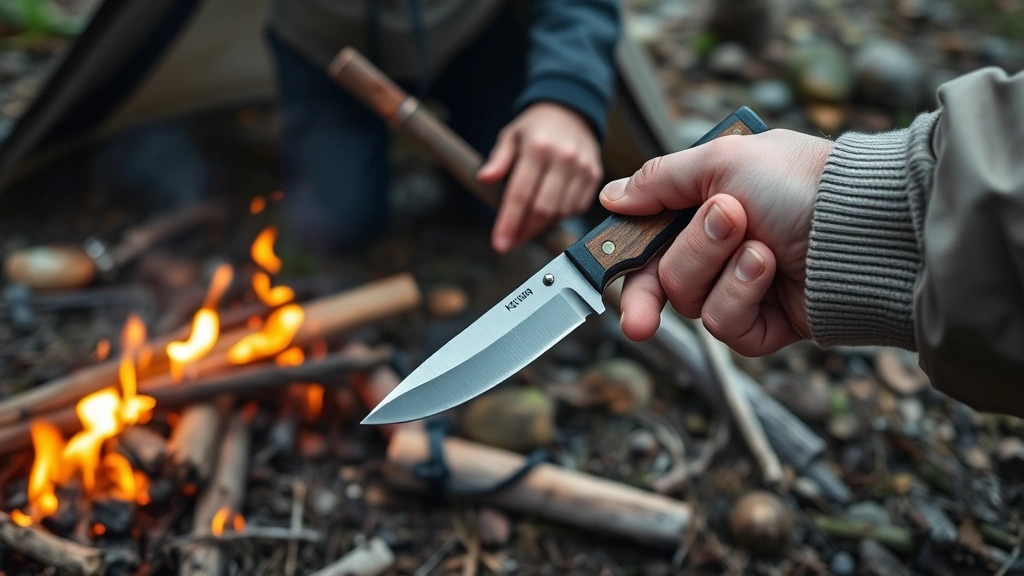
Camping and outdoor recreation similarly justify knife carry. Backpackers, hikers, and campers can carry knives as camping tools. Multi-tools with knife components are particularly common in outdoor settings and generally legal to possess and use for legitimate purposes.
Professional and occupational use allows certain workers to carry knives as job-related equipment. Chefs, butchers, landscapers, and construction workers can carry knives necessary for their work. However, this exception typically requires that the knife is openly carried or stored at the workplace, not concealed on the person throughout the day.
Knife collecting is a legitimate hobby in California. Collectors can own knives that might be prohibited for carry, including certain vintage or rare knives. However, collectors must ensure that prohibited knife types like switchblades are stored securely and not carried in public.
Educational and ceremonial purposes may provide exceptions in limited circumstances. Martial arts instruction using training knives, cultural ceremonies involving traditional blades, and similar activities may have defenses, though each situation requires careful legal analysis.

Penalties and Criminal Consequences
Violating California’s knife laws can result in serious criminal penalties ranging from misdemeanors to felonies, depending on the specific violation and circumstances.
Switchblade possession is typically prosecuted as a misdemeanor, carrying penalties of up to six months in county jail and/or fines up to $1,000. However, possession with intent to use as a weapon or prior convictions can elevate charges to felony level.
Concealed dirk or dagger charges are generally misdemeanors punishable by up to six months jail and $1,000 fine. However, if the knife was carried with intent to assault or if you have prior weapons convictions, felony charges are possible.
Ballistic knife possession is prosecuted as a felony under California Penal Code Section 21510, carrying penalties of 16 months, two years, or three years in county jail. This reflects the state’s particularly serious view of ballistic weapons.
Brandishing a knife (California Penal Code Section 417) involves displaying a weapon in a rude, angry, or threatening manner. This is typically a misdemeanor but can be charged as a felony if the knife was drawn in a threatening manner or if you have prior convictions. Penalties include up to six months jail and $1,000 fine for misdemeanor conviction.
Carrying a concealed weapon charges may apply if you carry a prohibited knife concealed, with similar misdemeanor penalties. Repeat offenses or aggravating circumstances can result in felony charges.
Additional consequences beyond criminal penalties include:
- Criminal record that affects employment, housing, and professional licensing
- Firearm prohibitions if convicted of certain weapons felonies
- Immigration consequences for non-citizens
- Enhanced penalties if the knife was used in connection with other crimes
- Restitution and court fines
- Probation requirements and conditions
If charged with a knife-related offense, consulting with a criminal defense attorney experienced in California weapons law is essential. Many charges can be reduced or dismissed through proper legal representation, and defenses based on legitimate occupational use or other exceptions may be available.
Frequently Asked Questions
Can I legally carry a pocket knife in California?
Yes, you can openly carry a pocket knife in California as long as it’s not a switchblade or other prohibited type. Concealed carry of pocket knives depends on the blade length and type; folding knives with shorter blades are generally legal to carry concealed, but fixed-blade knives or longer folding knives may violate concealed weapons statutes. Local ordinances may impose additional restrictions.
Are Bowie knives legal in California?
Owning a Bowie knife is legal in California, but carrying one concealed is prohibited. You can openly carry a Bowie knife in most areas, though some cities have specific restrictions. Always check local ordinances before carrying any large knife in public.
Can I carry a knife for self-defense?
While you can legally own knives in California, carrying a knife specifically for self-defense purposes creates legal complications. Concealing a knife with intent to use for self-defense violates concealed weapons statutes. If used in self-defense, you may face assault or weapons charges even if the force was justified, requiring a criminal defense in court.
What about kitchen knives when traveling?
Kitchen knives can be transported in vehicles if they’re not concealed and you’re traveling to a legitimate destination like home or a restaurant. However, carrying kitchen knives openly on public transportation or into prohibited locations creates legal risk. For air travel, pack kitchen knives in checked luggage, not carry-on.
Can I carry a knife at work?
This depends on your occupation and employer policies. Chefs, hunters, construction workers, and others whose jobs require knives can generally carry them at work. However, you must comply with workplace policies, cannot carry prohibited knife types, and cannot carry knives into locations like schools or government buildings regardless of occupation.
What’s the difference between a knife and a dirk?
Under California law, a dirk is broadly defined as any knife with a blade designed for stabbing, having both a sharp point and edge. The legal definition is much broader than the common understanding of “dirk,” potentially including many ordinary knives. This broad definition is why concealed carry of fixed-blade knives is particularly risky in California.
Are there any recent changes to California knife laws?
Yes, California has made several recent modifications to knife laws, generally becoming more permissive regarding open carry while maintaining restrictions on concealed carry and prohibited knife types. Check current legislation and consult legal resources to understand recent amendments affecting your specific situation.
What should I do if arrested for a knife-related charge?
Exercise your right to remain silent and request an attorney immediately. Do not discuss the circumstances of your arrest with police or anyone else. Contact a criminal defense attorney experienced in California weapons law to discuss your case and potential defenses. Many knife charges can be reduced or dismissed with proper legal representation.
Can local cities restrict knives beyond state law?
Yes, California allows local jurisdictions to impose stricter knife regulations than state law. Cities and counties can prohibit open carry of certain knives or restrict carry in specific areas. Always research local ordinances for the cities where you plan to carry a knife, as state law compliance doesn’t guarantee compliance with local regulations.
Are there defenses to knife charges?
Potential defenses include legitimate occupational use, proper transportation to lawful destinations, lack of knowledge regarding local restrictions, and challenges to police search and seizure procedures. Additionally, if charged with brandishing, you may have a self-defense claim. An attorney can evaluate whether specific defenses apply to your situation.
California’s knife laws are complex and continue to evolve through legislation and court decisions. Whether you’re a professional who uses knives as tools, an outdoor enthusiast, or a collector, understanding current regulations is essential for legal compliance. When in doubt about whether a particular knife or carry method is legal, consult local law enforcement or an attorney specializing in weapons law. The cost of legal consultation is minimal compared to the consequences of violating these statutes. For additional information on criminal law matters, consider reviewing resources like probate law concepts that apply in criminal estate cases, or intellectual property protections if you’re developing knife designs or collecting rare blades.
External Resources for California Knife Law:


