
Texas Infant Car Seat Laws: Lawyer’s Overview
Child safety in vehicles remains one of the most critical legal and moral responsibilities for parents and guardians in Texas. The state has established comprehensive infant car seat laws designed to protect the youngest and most vulnerable passengers on the road. Understanding these regulations is essential for compliance, as violations can result in fines, traffic citations, and more importantly, leave children at serious risk of injury or death during accidents.
Texas Transportation Code Section 545.412 mandates specific requirements for child safety restraints, with particular emphasis on infants and young children. These laws evolve periodically as safety research advances, and staying informed about current regulations helps parents and caregivers meet their legal obligations while prioritizing child welfare. This comprehensive guide examines Texas infant car seat laws, enforcement procedures, penalties, and practical implementation strategies for families and childcare providers.
Texas Infant Car Seat Requirements and Age Guidelines
Texas law requires that all children under a specific age and weight must be secured in an appropriate child safety seat. For infants, the law generally applies to children under 8 years of age or those who have not reached a height of 4 feet 9 inches tall. However, the specific type of car seat required depends on the child’s age, weight, and developmental stage.
For infants from birth to approximately 2 years of age (or until they reach the maximum weight and height limits for their car seat), Texas law mandates the use of a rear-facing infant car seat. These seats are engineered specifically for the anatomical needs of infants, whose spinal columns are still developing and require protection during front and side impacts. The rear-facing position is considered the safest orientation for young children because it distributes crash forces across the entire back and head of the car seat, rather than concentrating force on the child’s neck and spine.
Manufacturers and the National Highway Traffic Safety Administration (NHTSA) provide specific weight and height limits for each car seat model. Parents must consult the car seat’s instruction manual to determine when their child has outgrown the seat. It is illegal in Texas to use a car seat that the child has exceeded the maximum specifications for, as this compromises the safety features designed into the seat.
The Texas Transportation Code does not distinguish between front-seat and back-seat placement for infants; however, the National Highway Traffic Safety Administration strongly recommends that all children ride in the rear seat until age 13, as this significantly reduces injury risk. While Texas law permits infants to sit in the front seat if properly restrained, this practice is not advisable from a safety perspective.
Rear-Facing Car Seats: Legal Standards and Safety Benefits
Rear-facing infant car seats represent the gold standard for child passenger safety in Texas and across the United States. The American Academy of Pediatrics (AAP) recommends keeping children in rear-facing seats as long as possible, ideally until age 2 or until they reach the maximum height and weight limits of their seat. Texas law aligns with this recommendation by requiring rear-facing restraints for infants.
The scientific rationale for rear-facing seats is compelling. During a frontal collision, a rear-facing seat cradles the child’s head, neck, and spine, distributing the force of impact across the entire back surface of the seat. In contrast, forward-facing seats can subject an infant’s developing neck to forces it cannot withstand, potentially resulting in severe spinal injuries or death. Research consistently demonstrates that rear-facing seats reduce the risk of death or serious injury by approximately 71% compared to forward-facing seats for children under age 3.
Modern rear-facing infant car seats come in two primary configurations: infant-only seats and convertible seats. Infant-only seats are designed exclusively for rear-facing use and typically accommodate children from birth to 30-35 pounds. Convertible seats can transition from rear-facing to forward-facing, allowing parents to use the same seat as their child grows. Both types must meet Federal Motor Vehicle Safety Standard (FMVSS) 213, which establishes minimum safety performance requirements for child restraint systems.
Texas law does not specify which brand or model of car seat parents must purchase, provided the seat meets federal safety standards and is appropriate for the child’s age and size. However, the seat must be properly installed according to the manufacturer’s specifications. Installation errors are disturbingly common; studies indicate that approximately 85% of car seats are installed incorrectly in some way, ranging from minor issues to critical errors that compromise safety.
Installation Requirements and Inspection Services
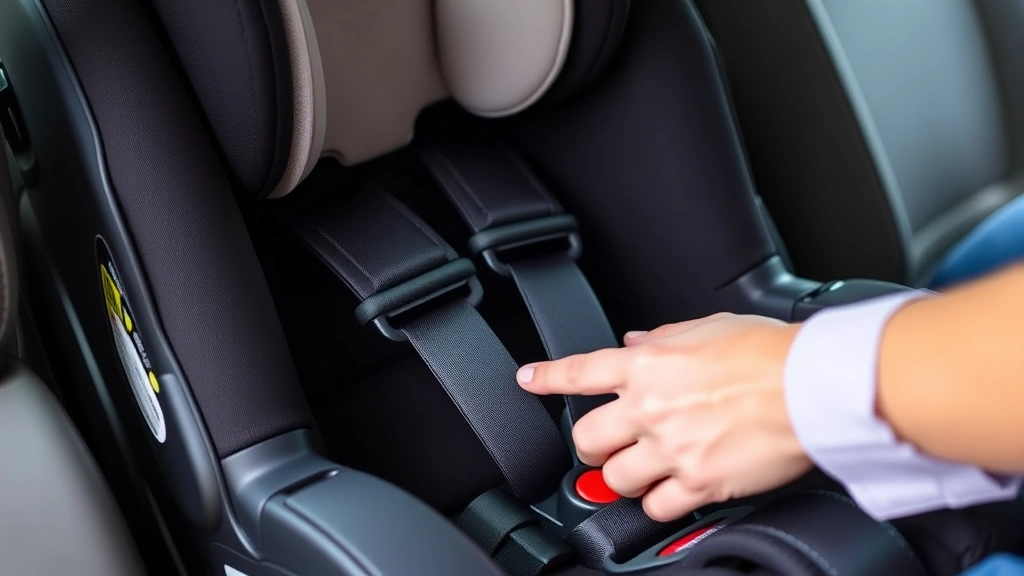
Proper installation of an infant car seat is legally mandated in Texas and is critical to the seat’s effectiveness. The law requires that car seats be installed in accordance with the manufacturer’s instructions and the vehicle owner’s manual. Parents and caregivers must review both documents carefully before installing the seat for the first time.
Texas offers free car seat inspection and installation services through Certified Child Passenger Safety Technicians (CPS Technicians). These professionals are trained and tested by the National Highway Traffic Safety Administration to ensure proper installation. Many Texas law enforcement agencies, fire departments, and children’s hospitals offer these services at no cost to the public. Parents can locate a certified technician through the NHTSA’s Car Seat Finder database, which provides contact information for inspection stations throughout Texas.
The installation process typically involves securing the car seat to the vehicle using either the vehicle’s seat belt system or the LATCH (Lower Anchors and Tethers for Children) system, which is standard on all vehicles manufactured after 2002. LATCH systems provide attachment points built into the vehicle’s rear seats, eliminating the need for seat belts. Both methods are legally acceptable in Texas, provided they are used correctly.
Common installation errors include failing to tighten the seat belt or LATCH connection adequately, incorrect positioning of the seat in the vehicle, and failure to recline the seat to the proper angle for infants. These errors can significantly reduce the car seat’s protective capabilities. Having a certified technician inspect the installation provides peace of mind and ensures compliance with Texas law.
Penalties and Legal Consequences for Non-Compliance
Violations of Texas infant car seat laws carry meaningful legal and financial consequences. Parents or guardians who fail to properly restrain a child in an appropriate car seat may face traffic citations and fines. Understanding the specific penalties can motivate compliance and highlight the seriousness with which Texas law treats child passenger safety.
A first-time violation of Texas Transportation Code Section 545.412 is classified as a moving violation and can result in a fine of up to $250. If the violation occurs in a school zone, the fine may be doubled. Subsequent violations within a certain time period may result in higher fines and potential criminal charges, particularly if the violation is part of a pattern of reckless behavior regarding child safety.
Beyond financial penalties, violations can affect insurance rates and driving records. Additionally, if a child is injured or killed in an accident and an investigation reveals that the child was not properly restrained, law enforcement and prosecutors may pursue criminal negligence charges, particularly if the crash was caused by the driver’s negligent or reckless conduct. These charges carry far more severe consequences than simple traffic violations.
Texas law also permits law enforcement to issue citations for car seat violations during traffic stops for other reasons. An officer who observes an improperly restrained child may issue a separate citation specifically for the car seat violation, in addition to citations for other traffic violations. This means that a parent pulled over for speeding might face an additional fine for improper child restraint if the infant car seat is not properly installed or secured.
For those seeking to understand more about the legal framework surrounding child safety and liability, understanding civil vs criminal law distinctions can provide helpful context for how these violations are prosecuted.
Exceptions and Medical Waivers in Texas
While Texas law is comprehensive in requiring infant car seats, narrow exceptions exist for specific medical situations. The state recognizes that in rare circumstances, a child’s medical condition may make it unsafe or inadvisable to use a standard car seat as designed. In these cases, parents may seek a medical waiver from their child’s physician.
Medical exemptions typically apply when a child has a condition such as severe burns, recent surgery, or skeletal abnormalities that would make normal car seat use painful or medically contraindicated. To obtain a medical waiver, the child’s physician must document that the standard car seat use would be harmful to the child’s health. The parent or guardian should carry this medical documentation in the vehicle and be prepared to present it to law enforcement if questioned during a traffic stop.
Even with a medical waiver, parents are expected to use the safest alternative restraint method available. For example, if a child cannot be placed in a standard rear-facing seat due to a medical condition, the parent might use a special car bed designed for medically fragile infants, or a forward-facing seat if the child’s condition permits. The waiver does not eliminate the obligation to restrain the child; it only permits deviation from the standard requirement.
Obtaining a medical waiver requires proactive communication between parents and healthcare providers. Simply having a medical condition does not automatically qualify for an exemption; the condition must make standard car seat use specifically contraindicated by a licensed physician. Parents should not assume their child qualifies for a waiver without explicit medical guidance and documentation.
Booster Seats and Transition Requirements
As infants grow and eventually transition out of infant car seats, Texas law requires the use of booster seats for children who have outgrown their convertible or infant-only seats but who are still too small to safely use adult seat belts alone. Understanding the transition points and requirements ensures continuous legal compliance as children develop.
Typically, children transition from rear-facing infant seats to forward-facing car seats or booster seats between ages 2 and 4, depending on their weight and height. The specific transition point is determined by the maximum specifications of the infant car seat being used. Once a child exceeds these limits, continuing to use the same seat is illegal and unsafe.
Booster seats are designed for children who weigh between approximately 30 and 100 pounds and who are typically between 4 and 8 years old. These seats elevate the child so that the vehicle’s adult seat belt fits properly across the child’s chest and lap. Without a booster seat, an adult seat belt may cross the child’s neck or abdomen, creating injury risks during a collision.
Texas law requires the use of an appropriate restraint system—whether a forward-facing car seat or booster seat—until the child reaches 8 years of age or attains a height of 4 feet 9 inches, whichever comes first. Parents should not transition children to adult seat belts prematurely, even if the child is tall for their age, as this can result in both legal violations and reduced safety protection.
The transition from one type of seat to another should be guided by the child’s measurements against the maximum specifications of the current seat and the minimum specifications of the next seat type. Consulting with a Certified Child Passenger Safety Technician can help parents make informed decisions about when and how to transition to the next restraint system.

Understanding the full scope of child safety regulations helps parents navigate not only car seat requirements but also the broader legal landscape affecting children. For those interested in understanding how legal systems work more broadly, exploring Law Hub resources can provide additional context about legal structures and processes.
FAQ
What is the minimum age for a child to stop using an infant car seat in Texas?
Texas law does not specify a minimum age for transitioning out of an infant car seat; rather, it bases the requirement on the child’s weight and height relative to the car seat’s maximum specifications. Most infant car seats accommodate children up to 30-35 pounds, which typically corresponds to ages 2-3. Once a child exceeds these limits, the parent must transition to a forward-facing car seat or booster seat.
Can I use a used infant car seat in Texas?
Texas law does not prohibit the use of used car seats, provided the seat has not been in an accident, is not expired, and meets all current federal safety standards. However, purchasing used car seats carries risks: you may not have complete documentation of the seat’s history, and seats more than 6-10 years old may have outdated safety features. The safest approach is to purchase new seats, though quality used seats from trusted sources can be acceptable alternatives for budget-conscious families.
What should I do if I receive a citation for improper car seat use in Texas?
If you receive a citation for violating Texas car seat laws, you have several options. You can pay the fine, contest the citation in traffic court, or request a deferred disposition (where the charge is dismissed if you comply with certain conditions for a specified period). Consulting with a traffic attorney can help you understand your options and potentially reduce penalties, particularly if this is your first violation or if you can demonstrate that you have since corrected the violation.
Are there specific car seat brands that Texas law requires?
Texas law does not mandate any specific brand or model of car seat. The law only requires that the seat meet federal safety standards (FMVSS 213) and be appropriate for the child’s age and size. Parents can choose from numerous manufacturers and models, provided they select a seat that complies with federal standards and is properly installed.
Do I need to report my child’s car seat installation to authorities?
No, Texas does not require parents to formally report car seat installations to any government agency. However, obtaining a free inspection from a Certified Child Passenger Safety Technician is strongly recommended and provides documentation that the seat was installed correctly. This can be helpful if questions arise during a traffic stop or if you need to demonstrate compliance with the law.
What happens if my child is injured in an accident and was not properly restrained?
If your child is injured in an accident and was not properly restrained, you may face criminal charges for child endangerment or negligence, depending on the circumstances. Additionally, if the accident was caused by another driver, your failure to properly restrain your child could be used in liability or insurance proceedings to argue comparative negligence. Proper car seat use is essential both legally and for your child’s safety.
Can I place an infant car seat in the front seat of my vehicle in Texas?
Texas law permits front-seat placement of properly installed infant car seats. However, the National Highway Traffic Safety Administration and the American Academy of Pediatrics recommend that all children under age 13 ride in the rear seat, as this significantly reduces injury risk. If your vehicle has an active front-seat airbag, front-seat car seat placement may be less safe, and rear-seat placement is strongly advised.


