
Whiskey Laws Explained: Attorney Guide
Whiskey production, distribution, and consumption are governed by a complex web of federal, state, and local regulations that attorneys must understand to advise clients effectively. Whether representing distilleries, retailers, importers, or consumers, legal professionals need comprehensive knowledge of the intricate regulatory framework surrounding whiskey. From federal excise taxes to state-specific licensing requirements, the laws whiskey industry operates under have evolved significantly since Prohibition’s repeal and continue to change with modern regulatory trends.
The whiskey industry represents a substantial economic sector in the United States, generating billions in revenue annually while supporting thousands of jobs across production, distribution, and retail sectors. However, this lucrative market comes with significant legal obligations and potential liabilities. Understanding these regulations is essential for businesses seeking compliance and for attorneys advising clients on regulatory matters, contract negotiations, and dispute resolution within this highly regulated industry.
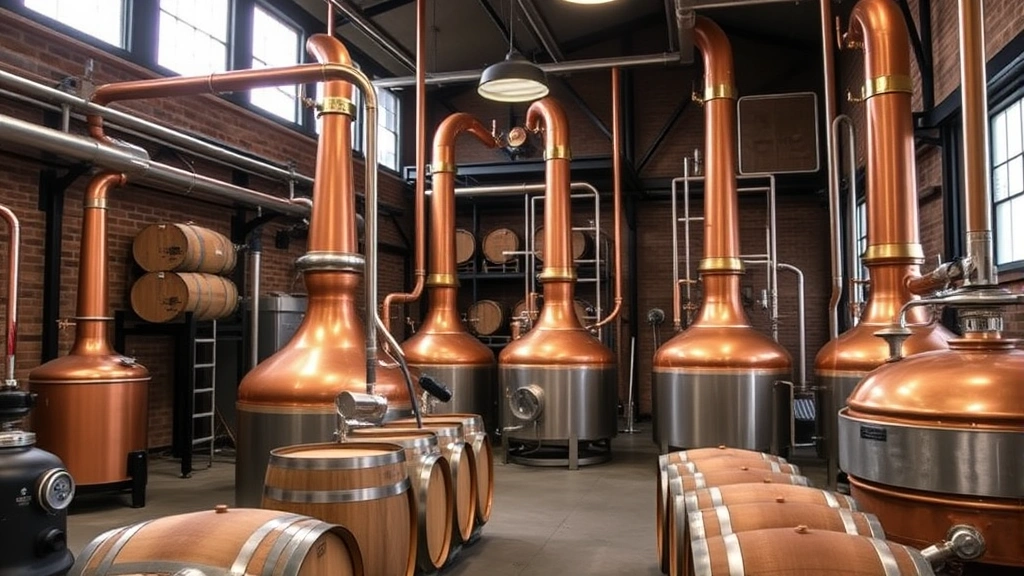
Federal Whiskey Regulations
The Alcohol and Tobacco Tax and Trade Bureau (TTB), operating under the Department of Justice, serves as the primary federal agency regulating whiskey production and distribution. The TTB enforces regulations established under the Federal Alcohol Administration Act, which provides the foundational legal framework for the entire industry. These federal regulations establish standards for what qualifies as whiskey, production methods, aging requirements, and labeling specifications that apply uniformly across all states.
Federal law defines whiskey as a spirit distilled from fermented grain mash at no more than 190 proof, aged in new charred oak barrels (for straight whiskey) or used barrels (for other whiskey types), and bottled at no less than 80 proof. These technical requirements are legally binding and violations can result in significant penalties. Distilleries must comply with the Alcohol and Tobacco Tax and Trade Bureau regulations regarding production facilities, equipment specifications, and record-keeping requirements.
The federal government also regulates interstate commerce in whiskey through various provisions. The Federal Alcohol Administration Act prohibits certain trade practices, including tied-house arrangements where producers control retailers, exclusive dealing requirements, and discriminatory pricing. Understanding these restrictions is crucial for attorneys advising on commercial law matters within the alcohol industry, as violations can trigger federal enforcement actions and civil litigation.
Federal regulations also establish strict requirements for distillery operations, including facility registration with the TTB, maintenance of detailed production records, and periodic inspections. Distilleries must obtain a Distilled Spirits Permit before commencing operations, and this permit comes with extensive compliance obligations. The TTB monitors production volumes, aging periods, and product movements through a sophisticated reporting system designed to prevent tax evasion and ensure regulatory compliance.
State and Local Whiskey Laws
While federal law provides the baseline regulatory framework, individual states maintain substantial authority over whiskey regulation within their borders. State laws vary dramatically, creating a patchwork of requirements that producers and distributors must navigate carefully. Some states maintain strict monopoly systems where the state government controls all spirits distribution, while others allow private sector involvement with varying degrees of regulation.
Control states, including Pennsylvania, North Carolina, and seventeen others, operate government-run monopolies for spirits distribution and retail sales. These states purchase whiskey from producers or wholesalers and resell it through state-operated stores, giving the state complete control over product selection, pricing, and availability. Attorneys representing clients in control states must understand the unique licensing and contract requirements these systems impose, as business models differ substantially from open states.
Open states allow private sector participation in spirits distribution and retail, though still subject to regulatory oversight. These states typically require three-tier systems where producers, wholesalers, and retailers operate as separate entities with defined relationships and responsibilities. The three-tier system, mandated by federal law and reinforced by state statutes, prevents vertical integration and ensures that independent wholesalers and retailers maintain market access. This structure has significant implications for business strategy and contract negotiations within the industry.
Many states impose residency requirements for whiskey distillery licenses, restrict the number of licenses available, or establish local production minimums. Some jurisdictions prohibit direct-to-consumer shipping of spirits, while others allow it under specific conditions. These variations require careful legal analysis for each jurisdiction where a client operates or seeks to expand. Local ordinances may impose additional restrictions on distillery operations, including zoning requirements, hours of operation, and community approval processes.
Licensing and Permits Requirements
Operating a whiskey distillery, wholesaler operation, or retail establishment requires obtaining multiple licenses and permits at federal, state, and local levels. The process is complex and time-consuming, often requiring six months to over a year for approval. Federal permits from the TTB include the Distilled Spirits Permit for producers and various permits for wholesalers and retailers depending on their specific business activities.
State-level licenses vary by jurisdiction but typically include spirits manufacturing licenses for distilleries, wholesale licenses for distributors, and retail licenses for bars and stores. Many states require background checks, proof of financial resources, demonstration of compliance capability, and detailed business plans before issuing licenses. Some states impose extensive investigation periods and require local approval before state authorities will consider an application.
The licensing process often involves public notice and hearing requirements, allowing community members to voice opposition to proposed facilities. Local governments may conduct their own review processes separate from state licensing, creating dual approval requirements. Understanding procedural requirements, deadlines, and appeal processes is essential for attorneys guiding clients through the licensing process.
License renewal typically occurs annually and requires demonstration of continued compliance with all applicable regulations. Violations during the license period can result in suspension or revocation, making ongoing compliance management critical. Many states impose continuing education requirements for license holders and require regular audits to verify continued operational compliance.
Whiskey Taxation Framework
The federal excise tax on distilled spirits represents one of the most significant costs in whiskey production. Currently set at $13.50 per proof gallon, this tax applies to all domestically produced and imported whiskey. Producers must pay this tax before the product leaves the distillery, creating substantial working capital requirements for operations. Understanding the taxation framework is crucial for anyone advising on civil law matters affecting business profitability and valuation.
State excise taxes vary substantially, ranging from minimal taxes in some jurisdictions to substantial per-gallon taxes in others. Several states impose additional taxes on wholesalers or retailers, creating multiple taxation layers. Some states tie excise taxes to proof levels, creating different tax burdens for different product types. These variations significantly affect pricing strategies and profit margins across different state markets.
Tax compliance involves complex record-keeping and reporting requirements. Producers must maintain detailed records of all spirits produced, aged, and removed from bond, with documentation supporting tax payments. The TTB conducts audits to verify tax compliance, and discrepancies can result in substantial penalties plus interest. Attorneys should advise clients to implement robust accounting systems and engage experienced tax professionals familiar with alcohol industry requirements.
Federal tax credits and deductions available to small producers can significantly reduce tax burdens. The Craft Beverage Modernization and Tax Reform Act provides reduced tax rates for the first 100,000 proof gallons produced by eligible distilleries, creating substantial tax savings for qualifying operations. Understanding eligibility requirements and application procedures is essential for maximizing available benefits.
Labeling and Standards Compliance
Federal law establishes detailed labeling requirements for all whiskey products, enforced by the TTB through a comprehensive approval process. All label designs, including front and back labels, must receive TTB approval before products can be produced or sold. Labels must include specific mandatory information, including product type, alcohol content, health warnings, and producer information. Any changes to approved labels require resubmission for approval, making the labeling process ongoing and critical.
The definition of whiskey itself is legally precise and enforced through labeling standards. Only spirits meeting specific production and aging requirements can be labeled as whiskey. Straight whiskey requires minimum two-year aging in new charred oak barrels, while other whiskey types may use used barrels and have no minimum aging requirement. Blended whiskey must contain at least 20 percent straight whiskey, with the remainder consisting of neutral spirits or other whiskeys. Violating these standards through mislabeling constitutes federal fraud and can result in criminal prosecution.
Misleading claims regarding origin, production methods, or product characteristics are strictly prohibited. Statements about health benefits are generally forbidden, though warning labels are mandatory. Distilleries must avoid terms of appellation unless products meet geographic requirements, similar to regulations for wine and beer. The term “bourbon” is specifically protected and may only be used for whiskey produced in the United States, aged in new charred oak barrels, and meeting other technical requirements.
Intellectual property considerations intersect with labeling requirements, as intellectual property law principles protect brand names, logos, and distinctive label designs. Trademark registration is essential for protecting brand identity, and attorneys should advise clients to conduct thorough trademark searches before finalizing product names and designs. International trademark considerations become important for producers seeking export markets.
Import and Export Requirements
Importing whiskey into the United States requires compliance with federal customs regulations, TTB requirements, and state-specific import rules. Importers must obtain appropriate federal permits and comply with tariff classifications and duties established by U.S. Customs and Border Protection. Current tariffs on imported whiskey from certain countries have increased substantially in recent years due to trade disputes, significantly affecting import economics.
All imported whiskey must meet the same standards as domestic products regarding composition and labeling. However, foreign products may use different aging containers or production methods than domestic whiskey, provided they meet the legal definition of whiskey in their country of origin. Imported whiskey must be bottled in the United States before sale, unless imported in bulk for further processing.
Exporting American whiskey requires compliance with U.S. export regulations, foreign customs requirements, and destination country regulations. Many countries impose tariffs on American whiskey imports, and trade agreements affect tariff rates. Some countries restrict whiskey imports or impose specific labeling requirements differing from U.S. standards. Attorneys advising export clients must research destination country requirements carefully to ensure compliance.
The Foreign Trade Zone program allows importers to defer or eliminate tariffs under specific conditions, creating potential cost savings for qualifying operations. Understanding FTZ requirements and application procedures can provide significant benefits for import-focused businesses. Similarly, the Drawback program allows refunds of duties paid on imported products subsequently exported, benefiting operations engaged in further processing and re-export.
Compliance and Enforcement Actions
The TTB conducts regular inspections of distilleries, warehouses, and distribution facilities to verify compliance with federal regulations. Inspectors examine production records, verify tax payments, confirm product authenticity, and assess facility conditions. Violations discovered during inspections can result in warning letters, civil penalties, or criminal prosecution depending on violation severity.
State and local authorities also conduct inspections and enforcement activities. Many states maintain their own alcohol beverage control agencies with inspection authority and enforcement power. Local health departments may inspect facilities for sanitation compliance, and local law enforcement may investigate criminal violations. Understanding the enforcement landscape in each jurisdiction where a client operates is essential for comprehensive compliance planning.
Common violations include inaccurate record-keeping, unauthorized product movements, tax non-payment, labeling violations, and unlicensed operations. Penalties for violations range from fines to license suspension or revocation, and criminal prosecution is possible for serious or repeated violations. Civil penalties can reach thousands of dollars per violation, and criminal penalties can include imprisonment.
Attorneys representing clients facing enforcement actions should understand the administrative appeal processes available in each jurisdiction. Many states provide hearing procedures where clients can challenge violations or penalties before independent hearing officers. Federal enforcement actions may involve administrative proceedings before the TTB or litigation in federal court, depending on violation type and severity.
FAQ
What defines whiskey under federal law?
Federal law defines whiskey as a spirit distilled from fermented grain mash at no more than 190 proof, aged in oak barrels (new charred for straight whiskey), and bottled at no less than 80 proof. Specific requirements vary by whiskey type, with straight whiskey requiring minimum two-year aging in new charred oak barrels.
Do I need both federal and state licenses to operate a distillery?
Yes, virtually all jurisdictions require both federal permits from the TTB and state distillery licenses. Most also require local permits or approvals. The specific requirements vary by location, but dual licensing is standard practice. Some states impose additional local zoning approvals or community consent requirements before state licensing.
Can I ship whiskey directly to consumers?
Direct-to-consumer shipping is prohibited in most states, though some allow it under specific conditions. Federal law permits shipping only to states that allow it, and many states prohibit all direct shipment of spirits. Some states allow limited shipment for intrastate sales only. Attorneys must research specific state laws before advising clients on shipping options, as violations can result in substantial penalties.
What are the main differences between control states and open states?
Control states operate government monopolies for spirits distribution and retail sales, with the state purchasing and reselling all products. Open states allow private sector participation, typically through three-tier systems separating producers, wholesalers, and retailers. Control states offer limited product selection and state-determined pricing, while open states provide broader selection and competitive pricing through private retail.
How much does federal excise tax add to whiskey costs?
Federal excise tax is currently $13.50 per proof gallon, representing a substantial production cost. For an example 750ml bottle of 80-proof whiskey, federal excise tax alone exceeds $2.00 per bottle before state taxes, distribution costs, and retailer markup. This significant tax burden affects pricing strategy and profitability calculations for all producers.
What intellectual property protections apply to whiskey brands?
Trademark registration protects brand names, logos, and distinctive label designs under intellectual property law principles. Geographic indications like “bourbon” receive statutory protection, and trade dress protection may apply to distinctive bottle shapes or label designs. Patent protection is available for novel production processes or equipment innovations.
What happens if whiskey labeling violates federal standards?
Labeling violations can result in TTB enforcement action, including seizure of improperly labeled products, civil penalties, and potential criminal prosecution for intentional violations or fraud. Products with unapproved labels cannot legally be sold, and correcting violations requires obtaining TTB approval for revised labels and potentially relabeling existing inventory.
Are there tax incentives for small whiskey producers?
Yes, the Craft Beverage Modernization and Tax Reform Act provides reduced federal excise tax rates for eligible small distilleries on the first 100,000 proof gallons produced annually. This provision can result in substantial tax savings, but eligibility requirements must be carefully verified. Producers should consult tax professionals to ensure they qualify and properly claim available benefits.


