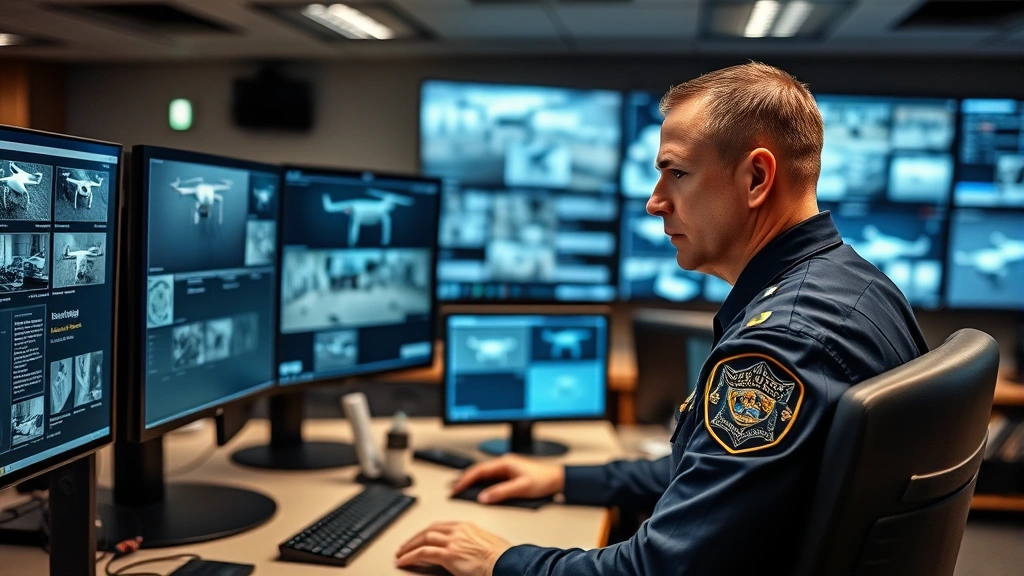
A significant legislative effort to expand local law enforcement’s surveillance capabilities has been blocked, marking a pivotal moment in the ongoing debate between public safety and privacy rights. The Senate bill that would have granted local police departments broad authority to track unmanned aerial vehicles (drones) has failed to advance, leaving questions about how communities will balance technological oversight with constitutional protections. This development has profound implications for privacy law, law enforcement procedures, and the evolving legal landscape surrounding emerging technologies.
The blocked legislation represents a clash between two compelling interests: the need for law enforcement to maintain public safety and the fundamental right to privacy that citizens expect under the Constitution. As drone technology becomes increasingly accessible to the general public, lawmakers have grappled with how to regulate this new frontier. The failure of this particular bill signals that legislators and civil rights advocates have significant concerns about the scope and safeguards proposed in the measure.
What the Blocked Senate Bill Proposed
The Senate bill in question sought to establish a comprehensive framework allowing local law enforcement agencies to deploy drone tracking technology without explicit judicial oversight in many circumstances. Under the proposed legislation, police departments would have been granted authority to track drones in real-time, identify their operators, and potentially intercept signals from unmanned aircraft. The bill included provisions that would have created a streamlined process for law enforcement to obtain information about drone operators and their flight paths.
Key provisions of the measure included the ability to track drones without a warrant in certain emergency situations, access to drone registration databases maintained by federal authorities, and coordination protocols between local and federal agencies. The bill would have required drone manufacturers to install tracking beacons or other identification systems, making it easier for police to monitor aerial activity. Additionally, it proposed penalties for individuals who attempted to disable or interfere with law enforcement drone tracking systems. Those interested in understanding how different legal specialties address technology issues should explore what is corporate law, which increasingly deals with technology regulation and compliance.
Privacy Concerns and Constitutional Issues
The primary reason for the bill’s failure centers on Fourth Amendment concerns regarding unreasonable searches and seizures. Civil liberties organizations and privacy advocates argued that the proposed tracking mechanisms would create a surveillance infrastructure capable of monitoring citizens without adequate legal protections. The Fourth Amendment protects individuals from government searches unless law enforcement obtains a warrant based on probable cause, and the bill’s provisions for warrantless tracking in “emergency situations” raised serious constitutional red flags.
Constitutional scholars pointed out that allowing law enforcement to track drones without judicial authorization could establish a dangerous precedent for other surveillance technologies. If police can monitor drones without warrants, what prevents similar authority over other devices? This slippery slope argument resonated with lawmakers concerned about expanding government surveillance powers. The bill also raised questions about location privacy and the right to move freely without government monitoring, principles deeply embedded in American constitutional law.
Additionally, the legislation failed to adequately address how personal data collected through drone tracking would be stored, shared, and protected. Privacy law requires that government agencies implement safeguards to prevent misuse of sensitive information. The bill’s lack of clear data protection standards meant that information about citizens’ locations and activities could potentially be retained indefinitely or shared with other agencies without proper oversight. This gap in privacy protections contributed significantly to the bill’s defeat.

” alt=”Professional law enforcement officer reviewing digital surveillance protocols at desk with computer monitors” style=”width: 100%; height: auto; border-radius: 8px;”>
Law Enforcement Perspectives and Public Safety Arguments
Despite the bill’s failure, law enforcement agencies presented compelling arguments about why drone tracking authority is necessary. Police departments argued that unauthorized drones pose genuine public safety threats, from potential aerial surveillance of homes and businesses to interference with police operations and emergency response efforts. In several high-profile incidents, drones have interfered with firefighting operations, endangered manned aircraft, and been used for criminal reconnaissance.
Law enforcement emphasized that the bill included emergency provisions specifically designed to address immediate threats to public safety. If a drone was observed surveilling a school, targeting critical infrastructure, or assisting in criminal activity, police argued they should have rapid response capabilities without waiting for judicial authorization. The bill’s proponents noted that it included sunset provisions and required periodic congressional review, suggesting that the tracking authority would not be permanent.
Police departments also highlighted the challenge of investigating drone-related crimes. When a drone is used to facilitate drug trafficking, conduct surveillance for burglary, or monitor law enforcement operations, investigators need tools to identify the operator. Without access to tracking technology, law enforcement argued they would be essentially helpless to address this emerging category of crime. The bill represented an attempt to balance these public safety needs with privacy protections, though critics argued the balance was struck incorrectly.
Opposition and Civil Rights Arguments
Civil rights organizations, privacy advocates, and technology companies united in opposition to the measure. Groups like the American Civil Liberties Union argued that the bill represented an unnecessary expansion of government surveillance authority that would inevitably be abused. They pointed to historical examples of law enforcement surveillance programs that were implemented with good intentions but ultimately used to monitor protected political and religious speech.
Opponents also raised practical concerns about the bill’s implementation. Drone tracking technology is still developing, and the bill would have required manufacturers to install tracking systems that might not be technically feasible or could be easily circumvented. This would place an enormous burden on the drone industry while potentially creating security vulnerabilities. Technology companies warned that mandating specific tracking protocols could compromise cybersecurity and create opportunities for malicious actors to hijack drone control systems.
Privacy advocates emphasized that the bill failed to distinguish between legitimate drone use and genuinely threatening activity. A homeowner using a drone to inspect their roof, a photographer capturing aerial images, or a researcher conducting environmental surveys would all have been subject to potential tracking and monitoring. This broad application meant that law-abiding citizens would bear the burden of expanded surveillance in the name of public safety. Those interested in learning more about how legal standards apply to technology should consider exploring consumer law attorney near me, as consumer protection extends to privacy rights in the digital age.
Current State of Drone Regulation
The Federal Aviation Administration (FAA) currently maintains primary authority over drone regulation in the United States. The FAA has established rules for recreational and commercial drone use, including registration requirements, altitude restrictions, and operational limitations. However, the FAA’s mandate focuses on airspace management and aviation safety rather than law enforcement surveillance or privacy protection.
Individual states and municipalities have attempted to fill the regulatory gap by enacting their own drone laws. Some states have passed legislation explicitly prohibiting law enforcement from using drones for surveillance without warrants. Other states have taken a more permissive approach, allowing police to use drone technology with minimal restrictions. This patchwork of state and local regulations creates uncertainty for both law enforcement and drone operators about what is legally permissible.
The blocked Senate bill would have created a uniform federal standard for drone tracking, replacing the current fragmented regulatory landscape. However, the failure to pass this legislation means that states and localities will continue to develop their own approaches. Some jurisdictions may eventually enact stricter privacy protections, while others might adopt more permissive surveillance policies. This regulatory uncertainty presents challenges for law enforcement agencies trying to operate consistently across state lines.
Legal Framework for Surveillance Technology
American surveillance law is built on foundational principles established by the Fourth Amendment and subsequent Supreme Court decisions. The landmark case Katz v. United States established that the Fourth Amendment protects not just physical spaces but also reasonable expectations of privacy. More recently, the Supreme Court’s decision in Carpenter v. United States recognized that digital location data deserves heightened privacy protection, even when collected by third parties.
These constitutional principles create a legal framework that the blocked drone tracking bill struggled to navigate. The bill attempted to create exceptions to warrant requirements in emergency situations, but courts have consistently held that emergency exceptions must be narrowly tailored and subject to subsequent judicial review. The bill’s broad emergency provisions likely would have faced constitutional challenges if enacted.
Additionally, the Electronic Communications Privacy Act (ECPA) and the Stored Communications Act (SCA) establish standards for how government agencies can access digital information. These laws require law enforcement to obtain proper legal process before compelling communications companies to disclose customer information. The drone tracking bill would have created a parallel system for accessing drone operator information, but critics argued it would have bypassed the protections built into existing privacy statutes.
For those interested in how legal professionals navigate complex regulatory issues, labor law attorney near me services often address how technology regulations affect workplace policies and employment law. Similarly, is law school worth it becomes a relevant question when considering careers in technology law and emerging regulatory fields.

” alt=”Aerial view of cityscape with modern buildings and infrastructure representing urban surveillance and law enforcement jurisdiction” style=”width: 100%; height: auto; border-radius: 8px;”>
Future Implications for Law Enforcement
The failure of the drone tracking bill has significant implications for how law enforcement will operate in the coming years. Police departments will need to continue working within existing legal frameworks, which generally require warrants for surveillance activities. This means that even when law enforcement has legitimate concerns about unauthorized drones, they may need to obtain judicial authorization before deploying tracking technology.
However, the bill’s failure does not prevent law enforcement from addressing drone-related crimes through other legal mechanisms. Police can still investigate drone operators using traditional investigative techniques, including obtaining warrants based on probable cause. If a drone is used to facilitate a crime, law enforcement can pursue criminal charges against the operator. These traditional approaches may be slower and more cumbersome than the streamlined process the bill would have created, but they provide important constitutional safeguards.
Law enforcement agencies may now pursue alternative strategies, such as developing partnerships with private drone manufacturers to establish reporting mechanisms for suspicious activity. Some police departments are investing in counter-drone technology that can disable or ground unauthorized drones without necessarily identifying the operator. These alternative approaches avoid the privacy concerns that doomed the Senate bill while still addressing legitimate public safety needs.
What Happens Next
The blocked Senate bill will likely be reintroduced in some form during future legislative sessions. Lawmakers may attempt to address the privacy concerns that caused the initial bill to fail by incorporating stronger safeguards, more limited emergency exceptions, and clearer data protection standards. Future versions might require that drone tracking only occur with judicial authorization or in truly exigent circumstances with mandatory post-action judicial review.
Meanwhile, state and local governments will continue developing their own drone regulations. Some states are likely to enact legislation restricting law enforcement drone surveillance, creating privacy protections that exceed the federal baseline. Other states might attempt to authorize drone tracking within their jurisdictions, potentially creating legal conflicts if their regulations exceed federal authority over airspace.
Technology companies will continue innovating in drone design and control systems. As drones become more sophisticated and widely used, the pressure to regulate them will increase. The next legislative effort to address drone tracking will likely benefit from lessons learned during this failed attempt, with lawmakers working to craft language that satisfies both privacy advocates and law enforcement interests. Those considering careers in this rapidly evolving field might find law school scholarships helpful in funding legal education, as technology law is becoming an increasingly important practice area.
The broader question of how to regulate emerging surveillance technologies will continue to challenge policymakers. Artificial intelligence, facial recognition, biometric tracking, and other advanced technologies raise similar privacy versus security tensions. The drone tracking debate provides valuable lessons for how these future regulatory battles might unfold, emphasizing the importance of building strong constitutional safeguards into any surveillance framework.
FAQ
Why was the Senate bill blocking drone tracking blocked?
The bill was blocked primarily due to Fourth Amendment privacy concerns. Civil rights advocates and privacy organizations argued that the proposed warrantless tracking authority violated constitutional protections against unreasonable searches and seizures. Additionally, the bill lacked adequate data protection standards and failed to distinguish between legitimate drone use and genuinely threatening activity.
Can local law enforcement currently track drones?
Local law enforcement can attempt to track drones using traditional investigative methods, but most jurisdictions require warrants for active surveillance. The specific legal authority varies by state and locality, as drone regulation remains fragmented across different jurisdictions. Generally, police must obtain judicial authorization before deploying tracking technology.
What is the difference between drone tracking and drone detection?
Drone detection involves identifying that a drone is present in an area, while tracking involves monitoring the drone’s location and identifying its operator. Detection systems can alert law enforcement to unauthorized aerial activity without necessarily revealing the drone operator’s identity. Tracking goes further by establishing the source and destination of drone flights.
Are there any states that allow law enforcement drone tracking without warrants?
While some states have permissive drone laws, most courts have interpreted state constitutional provisions and Fourth Amendment protections to require warrants for active surveillance. However, the legal landscape varies significantly by jurisdiction, and some states may permit tracking in emergency situations or with certain limitations.
What alternatives exist for addressing drone-related crimes?
Law enforcement can pursue criminal charges against drone operators based on evidence gathered through traditional investigative techniques. Police can also work with drone manufacturers to establish reporting mechanisms, invest in counter-drone technology to disable unauthorized drones, and obtain warrants for surveillance when probable cause exists. Community awareness programs can also help identify suspicious drone activity.
How does the Fourth Amendment apply to drone surveillance?
The Fourth Amendment protects individuals from unreasonable government searches, including aerial surveillance. Courts have generally held that law enforcement must obtain warrants before conducting surveillance with drones, unless an exception applies such as exigent circumstances. The amendment protects reasonable expectations of privacy, which typically extend to activities conducted in private spaces or sensitive locations.
Will this bill be reintroduced in the future?
It is likely that future versions of drone tracking legislation will be introduced. However, any reintroduction will probably include stronger privacy protections and more limited emergency exceptions to address the concerns that caused the initial bill to fail. Lawmakers will likely work to craft language that better balances public safety needs with constitutional privacy rights.


