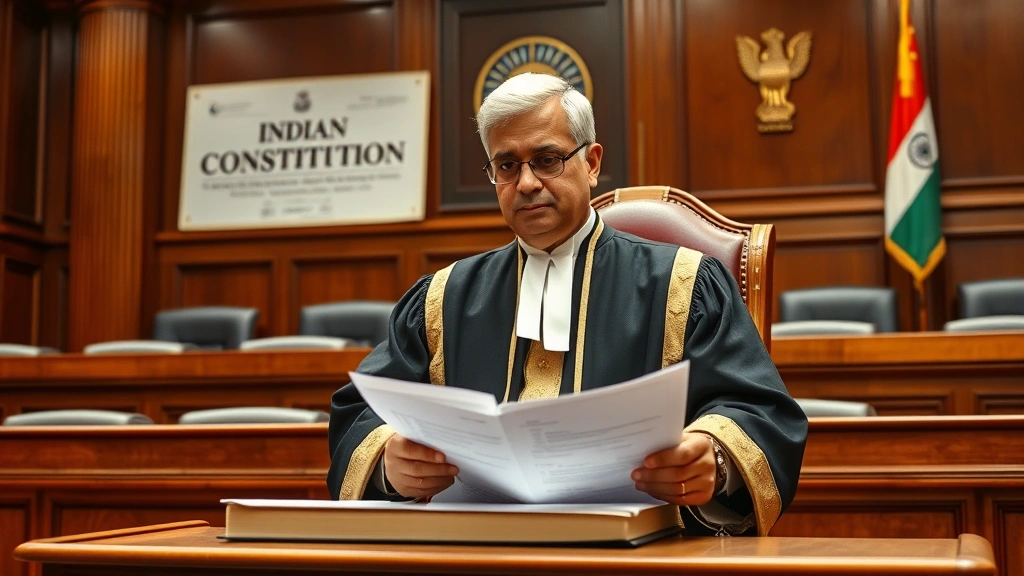
Andhra Law Times: Legal Precedents Explained
Legal precedents form the backbone of judicial decision-making in India’s legal system, and Andhra Pradesh has contributed significantly to landmark rulings that shape jurisprudence across the nation. Understanding these precedents is essential for legal professionals, law students, and citizens seeking to comprehend how courts interpret and apply the law. The Andhra Law Times represents a comprehensive resource documenting the evolution of legal principles through landmark judgments that have influenced constitutional interpretation, property rights, criminal justice, and civil remedies.
The High Court of Judicature at Hyderabad, serving Andhra Pradesh and Telangana, has delivered numerous judgments that have become binding precedents or persuasive authorities in Indian courts. These decisions reflect the judicial philosophy of successive judges and their approach to constitutional provisions, statutory interpretation, and equitable principles. By examining these precedents, legal practitioners and scholars gain valuable insights into how courts balance individual rights against state interests, interpret ambiguous legislation, and develop jurisprudential doctrines that advance the rule of law.

Understanding Legal Precedents and Their Authority
Legal precedents, also known as judicial precedents or case law, represent decisions made by courts that serve as authoritative examples for future cases involving similar legal principles or factual circumstances. In the Indian legal system, which follows the common law tradition inherited from British jurisprudence, precedents carry significant weight in judicial reasoning and legal argumentation. The doctrine of stare decisis—meaning “to stand by things decided”—ensures that once a higher court establishes a legal principle, lower courts must follow that principle in similar cases.
The hierarchy of courts in India determines the binding nature of precedents. Decisions from the Supreme Court of India are binding on all lower courts, including the High Court of Judicature at Hyderabad. Decisions from a High Court are binding on subordinate courts within its jurisdiction, though they may be persuasive in other High Courts. Understanding this hierarchy is crucial for legal professionals when conducting case research and formulating legal arguments.
Precedents function on two distinct levels: binding precedents and persuasive precedents. Binding precedents create mandatory legal obligations for lower courts, while persuasive precedents—such as decisions from courts of equal standing or foreign jurisdictions—may influence judicial reasoning without creating binding obligations. The distinction between these categories directly affects how lawyers strategize litigation and how judges approach novel legal questions.

Landmark Andhra Pradesh High Court Decisions
The High Court of Judicature at Hyderabad has pronounced several landmark judgments that have gained recognition beyond Andhra Pradesh’s borders. These decisions address diverse areas including constitutional rights, administrative law, property disputes, and criminal procedure. Many of these judgments have been cited extensively in subsequent cases and legal scholarship, demonstrating their persuasive authority and jurisprudential significance.
One significant category of precedents involves the interpretation of constitutional provisions, particularly Articles 19, 21, and 32 of the Indian Constitution. The Andhra High Court has examined the scope of fundamental rights, the reasonable restrictions that governments may impose, and the remedies available when citizens’ constitutional rights are violated. These interpretations have contributed to the development of constitutional jurisprudence that applies across India.
Another important area involves land reform and tenant protection laws, which hold particular relevance in Andhra Pradesh’s agricultural economy. The High Court has developed a substantial body of precedent regarding landlord-tenant relationships, the applicability of the Andhra Pradesh Tenancy Act, and the rights of agricultural laborers. These decisions have profound practical implications for millions of rural residents and agricultural stakeholders.
Commercial disputes have also generated significant precedents, particularly regarding contract interpretation, sale of goods, and mercantile law principles. As Andhra Pradesh developed economically, the High Court addressed increasingly complex commercial disputes, creating precedents that guide business transactions and commercial litigation. These decisions reflect the court’s attempt to balance contractual freedom with fair dealing and equitable principles.
Constitutional Interpretation Through Andhra Jurisprudence
Constitutional interpretation represents perhaps the most consequential function of higher courts, and Andhra Pradesh’s High Court has contributed meaningfully to India’s evolving constitutional jurisprudence. The court has examined fundamental rights protections, the doctrine of separation of powers, and the proper scope of state authority under the Constitution. When facing ambiguous constitutional language, judges must decide between narrow and expansive interpretations, and their choices create precedents that influence constitutional development.
The right to life and personal liberty, guaranteed by Article 21 of the Constitution, has been the subject of numerous Andhra High Court decisions. The court has expanded the traditional understanding of this right beyond mere physical survival to encompass dignity, privacy, and access to basic services. These interpretations align with Supreme Court precedents while applying constitutional principles to Andhra Pradesh’s specific circumstances.
The right to freedom of speech and expression under Article 19(1)(a) has generated significant precedent in Andhra Pradesh, particularly regarding media freedom, public discourse, and the balance between free expression and other constitutional values. The High Court has addressed questions about restrictions on press freedom, the scope of defamation law, and the protection of political speech. These decisions demonstrate how courts navigate the tension between protecting individual rights and maintaining social order.
Administrative law precedents from the Andhra High Court address the accountability of government officials, the principles governing administrative action, and the remedies available to citizens aggrieved by executive decisions. The court has developed substantial jurisprudence on the scope of administrative discretion, the requirements of natural justice, and the availability of judicial review for administrative decisions. These precedents ensure that governmental power remains subject to legal limitations and constitutional constraints.
Property Rights and Land Law Precedents
Property law and land disputes have generated a substantial body of precedent from the Andhra High Court, reflecting the fundamental importance of property rights in Indian society and the complexity of land ownership issues in an agricultural state. The court has developed detailed jurisprudence on various aspects of property law, including succession, inheritance, transfer of property, and disputes between co-owners.
The Hindu Succession Act and Muslim personal law provisions regarding inheritance have been frequently interpreted by the Andhra High Court, creating precedents that affect property devolution and family rights. These decisions balance traditional personal law principles with constitutional mandates regarding gender equality and non-discrimination. The court has progressively expanded women’s property rights while respecting the framework of personal law systems.
Disputes involving agricultural land have generated particularly significant precedents, given Andhra Pradesh’s agrarian character. The court has addressed questions regarding tenant rights, landlord obligations, the applicability of land reform statutes, and the proper procedures for land transfer. These precedents have practical significance for agricultural communities and have influenced land policy discussions.
The court has also developed important precedent regarding adverse possession, a doctrine allowing long-term occupants to acquire ownership rights under specific conditions. The Andhra High Court has clarified the requirements for establishing adverse possession, the evidence necessary to prove hostile and exclusive possession, and the circumstances under which government land may be adversely possessed. These decisions balance property rights protection with concerns about land security.
Criminal Justice and Constitutional Safeguards
The Andhra High Court has pronounced numerous decisions addressing criminal procedure, constitutional protections for accused persons, and the proper functioning of the criminal justice system. These precedents establish important safeguards against arbitrary state action and ensure that criminal proceedings follow constitutional requirements and statutory procedures. Understanding these precedents is essential for criminal defense lawyers, prosecutors, and legal professionals working within the criminal justice system.
The right to bail, guaranteed by Article 21 and the Code of Criminal Procedure, has been the subject of extensive High Court precedent. The court has established principles governing when bail may be granted, the conditions that may be imposed, and the circumstances justifying bail denial. These precedents balance the presumption of innocence against legitimate state interests in ensuring accused persons’ appearance at trial and public safety.
Confessions and custodial interrogation have generated significant precedent addressing police conduct and constitutional protections. The court has established that confessions obtained through coercion, torture, or violation of procedural requirements are inadmissible as evidence. These decisions reflect constitutional commitments to human dignity and the right against self-incrimination, even while acknowledging law enforcement’s legitimate investigative needs.
The right to legal representation and access to justice has been a recurring theme in Andhra criminal precedent. The court has addressed the quality of legal representation, the availability of free legal services to indigent defendants, and the procedures for ensuring effective assistance of counsel. These decisions recognize that formal legal rights lack practical value unless citizens can actually exercise them with competent legal representation.
Evidence law precedents from the Andhra High Court address the admissibility of various types of evidence, the standards for expert testimony, and the proper procedures for presenting evidence at trial. The court has developed jurisprudence on forensic evidence, scientific testing, and the reliability of various investigative techniques. These precedents guide evidence presentation and help ensure that verdicts rest on reliable, probative evidence rather than speculation or prejudicial material.
How to Research and Apply Legal Precedents
Effective legal practice requires the ability to research precedents efficiently and apply them persuasively to novel legal problems. When selecting legal counsel, clients should ensure their lawyers possess strong precedent research skills and case analysis capabilities. Legal professionals must understand how to locate relevant precedents, assess their binding or persuasive authority, distinguish unfavorable precedents, and analogize favorable ones to support client interests.
Multiple legal databases and resources facilitate precedent research. The Indian Kanoon website (indiankanoon.org) provides free access to Supreme Court and High Court decisions, including comprehensive collections from the Andhra High Court. The Supreme Court’s official website (supremecourtofindia.gov.in) offers decisions from India’s highest court, while the Andhra Pradesh High Court maintains its official website with recent judgments. The All India Reporter (AIR) and Supreme Court Reporter (SCR) publish authoritative versions of important decisions with editorial summaries and cross-references.
Understanding legal terminology and concepts is essential for effective precedent research. Legal professionals must recognize how courts use specific terminology to describe legal principles, enabling them to search databases using appropriate keywords and phrases. Familiarity with legal concepts helps practitioners understand how precedents relate to each other and identify the legal principles that courts emphasize in their reasoning.
When applying precedents to novel situations, lawyers must carefully analyze whether the precedent’s facts sufficiently resemble the current case’s facts. This process, called “analogizing” precedents, involves identifying similarities between cases that support applying the earlier court’s reasoning to the present dispute. Conversely, when precedents support opposing arguments, lawyers must attempt to “distinguish” them by identifying material differences that prevent the precedent’s application.
Appellate courts often revisit and refine earlier precedents, creating what practitioners call “overruling” or “distinguishing” precedents. Understanding whether a precedent remains good law—or has been limited, modified, or overruled by subsequent decisions—is crucial for legal argument. Shepardizing or KeyCiting precedents (using citation-tracking services) helps lawyers identify whether later courts have affected a precedent’s authority.
Consider alternative dispute resolution options when precedent research suggests litigation outcomes are uncertain or unfavorable. Many legal disputes can be resolved through negotiation, mediation, or arbitration without requiring precedent application in formal court proceedings. These alternatives may provide faster, more cost-effective, and more satisfactory resolutions than litigation based on precedent.
Practical application of precedents requires understanding how courts balance competing precedents and develop jurisprudence over time. When multiple precedents address similar issues but reach different conclusions, courts must determine which precedent should control or whether they should synthesize the precedents into a new rule. This process demonstrates that legal development is dynamic, with courts continuously refining and adapting precedents to address new circumstances.
The legal rights of consumers have been protected through numerous precedents addressing unfair business practices, product liability, and breach of warranty. These precedents establish remedies available to consumers and standards for business conduct. Similarly, personal injury claim procedures have been shaped by precedent establishing liability standards, damages calculations, and procedural requirements.
Legal professionals and law students should regularly consult the LegalWise Hub Blog for updates on significant precedents and legal developments. Staying current with recent High Court and Supreme Court decisions ensures that legal arguments reflect the most recent jurisprudential developments and prevents reliance on outdated or overruled precedents.
FAQ
What is the difference between binding and persuasive precedents?
Binding precedents are decisions from higher courts that lower courts must follow in similar cases. Persuasive precedents—such as decisions from courts of equal standing or different jurisdictions—may influence judicial reasoning but do not create mandatory obligations. The court’s position in the judicial hierarchy determines whether its precedents are binding or merely persuasive.
How do I find Andhra High Court precedents?
Andhra High Court decisions are available through Indian Kanoon (indiankanoon.org), the Andhra Pradesh High Court’s official website, legal databases like AIR and SCR, and commercial legal research services. These platforms allow filtering by subject matter, date, and judge, facilitating targeted precedent research.
Can precedents be overruled?
Yes, higher courts can overrule precedents established by lower courts or by themselves. When a court overrules a precedent, it explicitly rejects the earlier court’s legal reasoning and establishes a new rule. Courts may also distinguish precedents by identifying material differences that prevent their application to new cases.
What makes a precedent persuasive rather than binding?
A precedent becomes persuasive rather than binding when it comes from a court lacking hierarchical authority over the deciding court. For example, decisions from other High Courts are persuasive rather than binding in the Andhra High Court. The quality of the judicial reasoning, the precedent’s age, and whether it addresses directly analogous facts also affect persuasiveness.
How should lawyers use precedents in legal arguments?
Lawyers should identify precedents supporting their client’s position and distinguish or argue against precedents supporting opposing arguments. This requires carefully analyzing factual similarities and differences between the precedent and the current case, explaining how precedent principles apply to novel circumstances, and addressing contrary precedent through distinguishing or arguing for precedent modification.
Do Andhra High Court precedents apply outside Andhra Pradesh?
Andhra High Court precedents are not binding outside Andhra Pradesh but may be persuasive in other jurisdictions. Other High Courts may adopt similar reasoning, and Supreme Court citations to Andhra High Court decisions enhance their persuasive authority nationally. Over time, influential Andhra precedents may shape jurisprudence across India.


