
Graham’s Law: What It Means for Your Case
Graham’s Law of effusion is a fundamental principle in chemistry and physics that has significant implications in legal contexts, particularly in cases involving evidence analysis, forensic science, and expert testimony. Named after Scottish chemist Thomas Graham, this scientific law describes how gas molecules move and diffuse through various media. While it originated in the laboratory, Graham’s Law has become increasingly relevant in modern litigation, especially in cases involving environmental contamination, chemical exposure, and scientific evidence presentation.
Understanding Graham’s Law and its applications can help you better comprehend expert witness testimony, challenge scientific evidence, and make informed decisions about your case. Whether you’re dealing with a personal injury claim involving chemical exposure, an environmental lawsuit, or any litigation requiring scientific evidence, knowledge of this principle can prove invaluable. This comprehensive guide explains what Graham’s Law means, how it applies to legal cases, and what you need to know to protect your interests.
What is Graham’s Law of Effusion?
Graham’s Law of effusion states that the rate at which a gas effuses (flows through a small opening or porous barrier) is inversely proportional to the square root of its molecular weight. In simpler terms, lighter gas molecules move faster than heavier ones. This principle applies when gases pass through small openings into a vacuum or lower-pressure area, and it’s expressed mathematically as the ratio of effusion rates equals the square root of the inverse ratio of molecular weights.
Thomas Graham discovered this law in 1848 through careful experimentation with various gases. His work demonstrated that hydrogen gas, being the lightest element, effuses much faster than heavier gases like oxygen or carbon dioxide. This discovery became one of the cornerstones of gas behavior science and has applications across multiple scientific disciplines, from chemistry to physics to materials science.
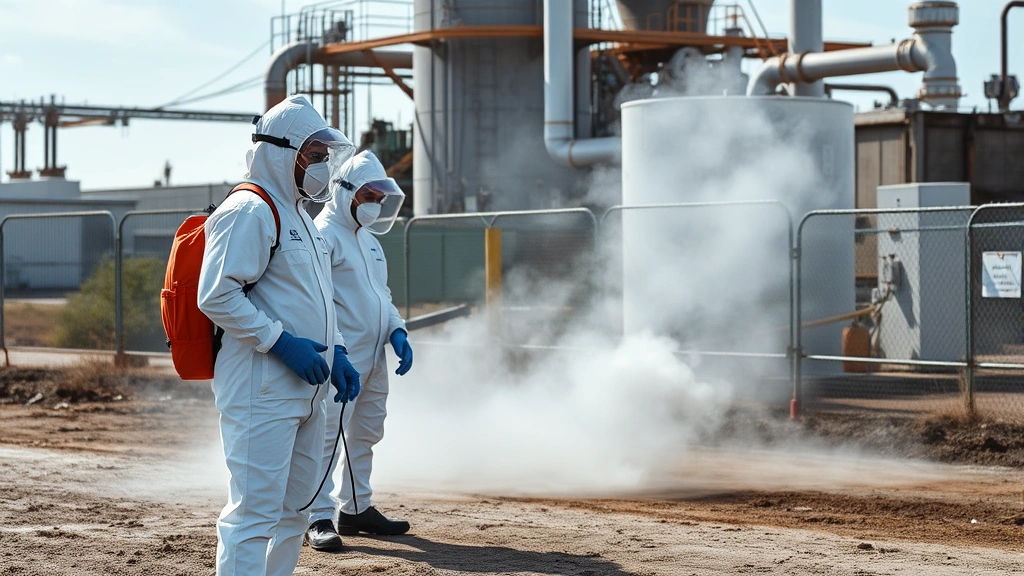
The practical implications of Graham’s Law are substantial. When a container of mixed gases develops a leak, lighter molecules escape first and faster. When toxic chemicals are released into the environment, their diffusion rate depends on their molecular weight. Understanding this principle allows scientists to predict how gases will behave in various scenarios, which directly impacts legal cases involving chemical exposure or environmental contamination.

How Graham’s Law Applies to Legal Cases
In litigation, Graham’s Law becomes relevant when expert witnesses must explain how chemical or gas exposure occurred. Courts frequently encounter cases where the movement and diffusion of chemical substances are central to determining liability and damages. Your attorney needs to understand how these scientific principles affect your case’s outcome and credibility.
When toxic gases or volatile chemicals are involved in an accident or incident, Graham’s Law helps explain the pattern of exposure and contamination. For instance, if a chemical facility releases a mixture of gases, lighter molecules will travel further and faster than heavier ones. This differential diffusion rate can affect which workers were exposed to which substances and in what concentrations. Understanding this principle helps attorneys cross-examine expert witnesses and identify inconsistencies in testimony.
The law also applies to contract disputes involving chemical suppliers, manufacturing defects in containers, or breach of safety protocols. When a defendant claims a container was properly sealed but a lighter gas somehow escaped, Graham’s Law provides a scientific framework for evaluating that claim. Conversely, if a plaintiff argues that exposure was unavoidable due to the nature of certain gases, this principle supports that argument.
Additionally, understanding Graham’s Law strengthens your position during settlement negotiations. When both parties comprehend the scientific reality of how gases behave, disputes about exposure levels and causation become more factual and less speculative. Insurance companies and defendants are more likely to settle fairly when confronted with scientifically sound explanations of how exposure occurred.
Scientific Evidence and Expert Testimony
Expert testimony is often the deciding factor in cases involving complex scientific principles. When Graham’s Law is relevant to your case, your expert witness must explain this principle clearly to the judge or jury. The ability to communicate complicated scientific concepts in accessible language can determine whether the court accepts or rejects critical evidence.
Expert witnesses typically use Graham’s Law to establish several key points: the likely path of gas dispersal, the concentration levels at different distances from the source, the timing of exposure, and the differential exposure rates for lighter versus heavier components in a gas mixture. They may create models or simulations showing how gases would behave according to Graham’s Law under the specific conditions present in your case.
When evaluating expert testimony involving Graham’s Law, courts generally apply the Daubert standard, which requires that scientific evidence be relevant, reliable, and based on sound methodology. The expert must explain the scientific basis for their opinions, including how they applied Graham’s Law to the specific facts of your case. Your attorney should be prepared to challenge expert witnesses who oversimplify the science or apply Graham’s Law incorrectly to reach predetermined conclusions.
The admissibility of scientific evidence depends heavily on proper foundation and methodology. An expert witness should be able to explain: the mathematical basis of Graham’s Law, how molecular weight affects diffusion rates, what assumptions they made in their analysis, and how those assumptions align with the facts of your case. Weaknesses in any of these areas provide opportunities for cross-examination and challenge.
Graham’s Law in Environmental Litigation
Environmental cases frequently involve Graham’s Law because many pollutants and contaminants are gases or volatile substances. When industrial facilities release chemicals, understanding how those chemicals will disperse is crucial for determining who was exposed, at what concentrations, and for how long. This information directly affects liability determinations and damage calculations.
In cases involving business law and environmental compliance, Graham’s Law helps establish whether a company’s safety measures were adequate. If a facility stored chemicals in a container and that container developed a leak, Graham’s Law can help determine whether lighter components would have escaped preferentially. This matters because it affects which toxic substances spread through the environment and which workers or residents were exposed.
Regulatory agencies like the EPA rely on principles including Graham’s Law when modeling chemical dispersal and determining safe distances from industrial facilities. When you’re involved in environmental litigation, understanding how these regulatory decisions were made strengthens your case. If regulators failed to account for Graham’s Law in their safety calculations, that failure may constitute negligence or regulatory violation.
Class action environmental cases often involve thousands of plaintiffs potentially exposed to various chemical mixtures. Graham’s Law helps establish exposure patterns and predict which individuals were most severely affected. This scientific framework supports more accurate damage calculations and helps identify which plaintiffs have the strongest claims based on their proximity to the contamination source and the specific chemicals to which they were likely exposed.
Chemical Exposure and Personal Injury Claims
Personal injury claims involving chemical exposure depend heavily on establishing that the plaintiff was actually exposed to the substance in question. Graham’s Law provides a scientific mechanism for explaining how exposure occurred and why certain individuals were affected while others were not. This is particularly important in workplace injury cases.
When a worker is injured by chemical exposure, the employer’s liability often hinges on whether the exposure was foreseeable and preventable. If lighter chemicals in a mixture diffuse faster than heavier ones according to Graham’s Law, an employer who failed to account for this differential diffusion rate may have failed to provide adequate safety measures. An expert witness can use Graham’s Law to demonstrate that the employer should have anticipated the exposure pattern that occurred.
Causation is often the most contested element in chemical exposure cases. The defendant may argue that the plaintiff was not actually exposed or was exposed to insufficient quantities to cause injury. Graham’s Law helps establish the likely exposure scenario by explaining how gases would have dispersed. If the plaintiff was in a location where lighter, more toxic components of a chemical mixture would have accumulated, this strengthens the causation argument.
Medical causation also benefits from Graham’s Law analysis. If a plaintiff developed respiratory problems or chemical sensitivity, an expert can use Graham’s Law to explain how the plaintiff would have inhaled lighter, more volatile compounds that might cause such symptoms. This scientific explanation helps bridge the gap between exposure and injury, making the causal chain more convincing to the jury.
Challenging Scientific Evidence in Court
Understanding Graham’s Law allows you to effectively challenge flawed expert testimony. If the opposing party’s expert witness misapplies this principle or makes unsupported assumptions, your attorney can expose these weaknesses during cross-examination. Common errors include ignoring temperature effects, failing to account for wind direction, or oversimplifying the behavior of gas mixtures.
Graham’s Law applies most accurately in controlled laboratory conditions with pure gases in a vacuum or near-vacuum. Real-world scenarios involving industrial accidents, chemical spills, or facility leaks are far more complex. Environmental factors like temperature, atmospheric pressure, wind, humidity, and obstacles significantly affect how gases actually disperse. An expert who applies Graham’s Law without accounting for these variables may be providing testimony that sounds scientific but lacks real-world relevance.
When challenging expert testimony, focus on the assumptions underlying their Graham’s Law calculations. Did they assume still air when wind was present? Did they assume constant temperature when conditions varied? Did they ignore the effects of moisture on certain gases? These are legitimate questions that can undermine the reliability of their opinions.
You should also consider whether the expert properly accounted for the molecular weight differences relevant to your case. Graham’s Law compares the square root of molecular weights, which creates significant differences between very light and very heavy gases but smaller differences between gases of similar weight. If the expert treated all gases as if they diffuse at similar rates, this represents a fundamental misapplication of the principle.
Working with Expert Witnesses
Selecting the right expert witness is crucial in cases where Graham’s Law is relevant. Your expert should have credentials in chemistry, physics, chemical engineering, or environmental science. They should have experience in cases involving gas diffusion, chemical dispersal, or industrial accidents. Their ability to explain complex scientific principles in understandable terms is equally important as their technical knowledge.
When preparing your expert witness, ensure they understand the specific application of Graham’s Law to your case. They should be able to explain not just what Graham’s Law states, but why it matters to the specific facts and circumstances you’re addressing. Your expert should prepare visual aids, models, or simulations that help the jury understand how gases behave according to this principle.
Your expert should also be prepared to address the limitations of Graham’s Law. A credible expert acknowledges that real-world conditions don’t perfectly match laboratory conditions where Graham’s Law was developed. This honesty about limitations actually strengthens credibility rather than weakening it. Juries are more likely to trust experts who acknowledge complexity and uncertainty than experts who oversimplify.
Communication between you, your attorney, and your expert witness is essential. The expert needs to understand the legal theories of your case, not just the scientific facts. Conversely, you and your attorney need to understand the scientific limitations that might affect your legal strategy. Regular meetings and detailed discussions ensure that scientific evidence and legal arguments work together effectively.
FAQ
What exactly is Graham’s Law?
Graham’s Law states that the rate of gas effusion is inversely proportional to the square root of the gas’s molecular weight. In practical terms, lighter gas molecules escape through small openings or diffuse through barriers faster than heavier molecules. This principle helps predict how gases will behave when they escape from containers or mix in the atmosphere.
Why does Graham’s Law matter in legal cases?
Graham’s Law matters because many lawsuits involve chemical or gas exposure. Understanding how different chemicals disperse helps establish who was exposed, at what concentrations, and whether the exposure was foreseeable or preventable. This information affects liability determinations and damage calculations in personal injury and environmental cases.
Can Graham’s Law be used to challenge an expert’s testimony?
Yes. If an expert witness applies Graham’s Law incorrectly, oversimplifies its application, or fails to account for real-world variables like temperature and wind, you can challenge their testimony. Understanding the principle allows your attorney to ask pointed questions that expose weaknesses in the expert’s methodology and conclusions.
How does Graham’s Law apply to common law principles?
Graham’s Law itself doesn’t directly apply to common law principles, as it’s a scientific rather than legal concept. However, understanding scientific principles like Graham’s Law strengthens your ability to evaluate expert testimony and scientific evidence in any type of litigation, including cases involving state-specific legal doctrines.
What questions should I ask my expert witness about Graham’s Law?
Ask your expert to explain how Graham’s Law applies specifically to your case, what assumptions they made in their analysis, how they accounted for real-world conditions, what the limitations of their analysis are, and how confident they are in their conclusions. Request that they explain their methodology in terms a jury can understand.
How do courts evaluate scientific evidence involving Graham’s Law?
Courts use the Daubert standard to evaluate scientific evidence. This requires that expert testimony be based on sound scientific methodology, that the expert properly applied that methodology to the case facts, and that the testimony will help the jury understand important issues. Expert witnesses must explain the scientific basis for their opinions and acknowledge limitations in their analysis.


