
Law and Order has captivated audiences for decades with its unflinching portrayal of the criminal justice system. As new seasons premiere, viewers often find themselves curious about the legal procedures, criminal statutes, and courtroom dynamics depicted on screen. This article explores what to expect from Law and Order storylines through the lens of actual legal practice, examining how the show reflects real-world legal processes while highlighting where television takes creative liberties.
Whether you’re a longtime fan or new to the franchise, understanding the legal concepts portrayed in Law and Order can deepen your appreciation for both the show and the actual justice system. From arrest procedures to prosecution strategies, the series touches on numerous areas of criminal law that affect real people every day. This guide breaks down the key legal elements you’ll encounter in new seasons and explains what happens in actual practice.
Understanding Criminal Procedure in Law and Order
Law and Order episodes typically follow a predictable structure that mirrors actual criminal procedure: the crime occurs, detectives investigate, suspects are identified and arrested, and prosecutors build a case for trial. However, the compressed timeline in television doesn’t reflect reality. What takes months or years in actual practice happens in 42 minutes of screen time.
Criminal procedure in the United States is governed by constitutional protections, statutory law, and case precedent. The Department of Justice oversees federal criminal law, while states maintain their own criminal codes. When watching Law and Order, you’re primarily seeing New York state criminal procedure, though the fundamental principles apply nationwide.
The show accurately depicts that prosecutors must prove guilt “beyond a reasonable doubt,” the highest standard in the American legal system. However, Law and Order episodes often compress the discovery process, plea negotiations, and pretrial motions that consume most of a real case’s timeline. Understanding the difference between felony and misdemeanor charges helps viewers grasp why certain cases receive different treatment.
One critical element the show addresses is the burden of proof. Prosecutors cannot simply believe someone committed a crime; they must present admissible evidence that convinces a jury beyond a reasonable doubt. This standard protects defendants from wrongful conviction and is a cornerstone of American justice.
The Investigation Phase: What Really Happens
The investigation phase depicted in Law and Order SVU and the original series shows detectives following leads, interviewing witnesses, and building circumstantial cases. In reality, investigations can be far more methodical and time-consuming than television suggests. Detectives must document everything, maintain chain of custody for evidence, and follow proper procedures to ensure evidence remains admissible in court.
Real investigations involve numerous dead ends, false leads, and procedural requirements that would bore television audiences. Detectives must obtain warrants before searching homes or conducting wiretaps, a protection established by the Fourth Amendment. Law and Order occasionally shows warrant applications, but often glosses over the legal standards required to obtain them.
Witness interviews, which appear straightforward on screen, involve complex considerations in reality. Witnesses may be unreliable, have ulterior motives, or misremember details. Defense attorneys will aggressively challenge witness testimony, examining memory, bias, and the conditions under which statements were made. The show captures some of this cross-examination drama but rarely delves into the psychological research on eyewitness reliability.
DNA evidence, which has revolutionized criminal investigation since the 1990s, features prominently in newer Law and Order episodes. However, DNA is not the “silver bullet” television often portrays. DNA evidence must be properly collected, stored, analyzed, and interpreted. Contamination, degradation, or laboratory errors can render DNA evidence inadmissible or inconclusive. The show generally handles DNA evidence responsibly, though it sometimes oversimplifies the science.
Arrest and Miranda Rights Explained
When Law and Order detectives arrest a suspect, they must inform the individual of their Miranda rights. These rights—the right to remain silent, the warning that statements can be used in court, the right to an attorney, and the right to a court-appointed attorney if indigent—stem from the landmark 1966 Supreme Court case Miranda v. Arizona. The show accurately depicts this requirement, though it sometimes understates the importance of invoking these rights.
Miranda rights apply only when someone is in custody and subject to interrogation. A person stopped on the street and asked questions isn’t “in custody” for Miranda purposes. Conversely, someone detained at the police station typically is. Once a suspect requests an attorney, questioning must cease immediately. Law and Order detectives sometimes ignore this requirement for dramatic effect, but in real courts, statements obtained after a suspect requests counsel are inadmissible.
The show frequently depicts suspects confessing during interrogation. In reality, false confessions do occur, particularly when suspects are vulnerable, confused, or poorly advised. Research has documented that innocent people confess to crimes they didn’t commit, especially when facing aggressive interrogation. Confessions are not automatically true, and juries are instructed to scrutinize them carefully.
After arrest, a defendant must be brought before a judge for an initial appearance, typically within 24-72 hours. At this hearing, the judge informs the defendant of charges, advises of rights, and addresses bail or release conditions. Law and Order occasionally shows bail hearings, where prosecutors and defense attorneys argue about whether the defendant poses a flight risk or danger to the community.
The Role of Detectives vs. Prosecutors
A fundamental dynamic in Law and Order is the tension and cooperation between detectives and prosecutors. Detectives investigate crimes and gather evidence; prosecutors decide whether to charge suspects and build cases for trial. In reality, this relationship is more collaborative and legally structured than television suggests.
Detectives report to police departments and must follow investigative protocols. Prosecutors, who are lawyers licensed to practice law, have independent authority and ethical obligations. A prosecutor cannot charge someone without probable cause that a crime occurred and the defendant committed it. If evidence is insufficient, a prosecutor should decline prosecution, regardless of detectives’ beliefs in guilt.
The show portrays prosecutors attending crime scenes, interviewing witnesses, and shaping investigations. While prosecutors do consult with detectives, they typically don’t investigate directly. This is a deliberate television condensation. In reality, detectives and prosecutors work in separate agencies with distinct responsibilities, though they must coordinate effectively.
When evidence is obtained improperly—through illegal searches, coercive interrogation, or violation of rights—prosecutors face a dilemma. Evidence obtained in violation of constitutional protections is inadmissible, called “fruit of the poisonous tree.” A prosecutor cannot use tainted evidence, even if it proves guilt. Law and Order occasionally addresses this issue, showing prosecutors frustrated when evidence is suppressed due to procedural violations.
Courtroom Dynamics and Trial Procedures
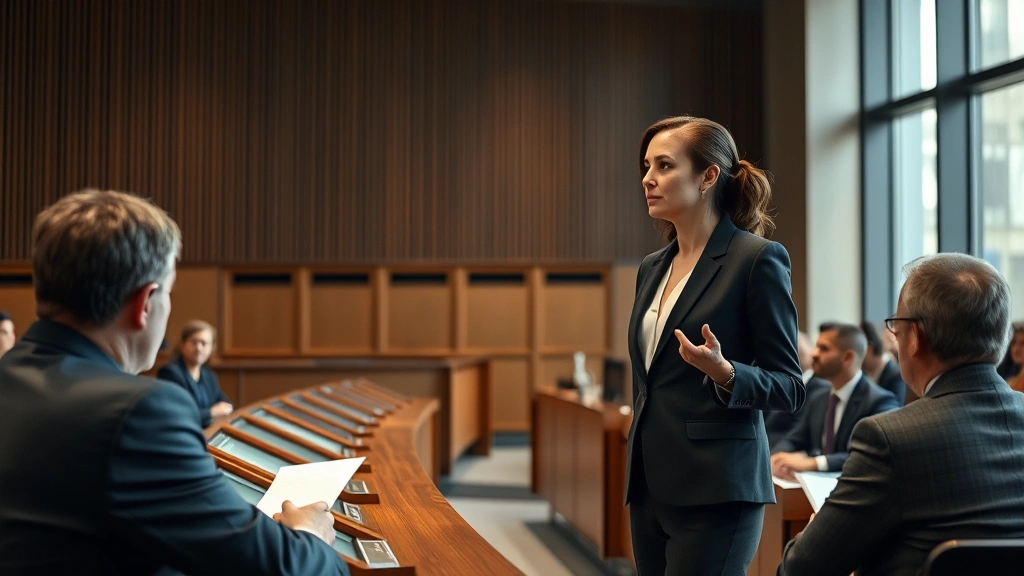
Trial scenes in Law and Order capture the adversarial nature of American criminal procedure. Prosecutors present evidence and witnesses; defense attorneys challenge credibility and legality. Judges rule on evidentiary questions and legal issues. Juries determine guilt or innocence based on evidence presented in court.
The show generally depicts proper trial procedures. Opening statements outline what attorneys will prove; prosecutors present their case through witness testimony and physical evidence; defense attorneys cross-examine prosecution witnesses and present their own evidence; closing arguments summarize evidence and legal instructions. The judge instructs jurors on applicable law, and jurors deliberate privately before returning a verdict.
One area where Law and Order takes liberties is jury deliberation. The show occasionally shows jurors discussing cases in the hallway or jury room, sometimes with surprising detail about how they view evidence. Real juries deliberate in secret, and jurors are prohibited from discussing cases until deliberation begins. Furthermore, judges provide specific legal instructions that constrain how jurors may evaluate evidence.
Expert witnesses appear frequently in Law and Order episodes. Forensic experts, psychologists, medical examiners, and other specialists testify about technical matters beyond lay knowledge. In reality, expert witnesses must be qualified through education and experience, and their testimony must meet strict standards for reliability. The show sometimes accepts expert testimony that wouldn’t survive scrutiny in actual court.
The legal terms glossary can help viewers understand terminology used in courtroom scenes. Terms like “hearsay,” “chain of custody,” “burden of proof,” and “beyond a reasonable doubt” have specific legal meanings that constrain what evidence is admissible and how juries must evaluate it.
Special Victims Unit Legal Considerations
Law and Order: SVU focuses on crimes of sexual violence, abuse, and exploitation. These cases present unique legal challenges reflected in the show’s storylines. Sexual assault prosecutions often depend on victim testimony, and juries must evaluate credibility in sensitive circumstances.
Consent is a critical legal issue in sexual assault cases. The defendant’s subjective belief in consent is irrelevant; what matters is whether the defendant’s conduct was reasonably understood as non-consensual. Modern consent law recognizes that consent requires affirmative agreement and can be withdrawn at any time. Law and Order: SVU has increasingly reflected this understanding, showing how consent is determined through evidence of the complainant’s words and actions.
Child abuse and exploitation cases present additional complexity. Children are particularly vulnerable victims, and the law provides special protections. Hearsay rules, which generally exclude out-of-court statements, are relaxed for certain child statements. The show accurately depicts that child witnesses require special handling to avoid re-traumatization while ensuring fair prosecution.
Domestic violence cases, which frequently appear in SVU episodes, involve unique dynamics. Victims may recant, minimize injuries, or decline prosecution due to economic dependence, fear, or emotional bonds with abusers. The show captures these complexities, showing how prosecutors sometimes proceed without victim cooperation. Understanding how to file for a restraining order is crucial for victims seeking legal protection outside the criminal system.
Victim advocacy has become increasingly important in the criminal justice system. Victim advocates support complainants through investigation, prosecution, and trial. They explain procedures, help victims access services, and ensure victims’ interests are considered. While Law and Order: SVU occasionally shows victim advocates, it often underplays their critical role.
Organized Crime and White Collar Cases
The Law and Order franchise has explored organized crime, white-collar fraud, and complex financial crimes. These cases differ significantly from street crimes depicted in the original series, involving sophisticated schemes, multiple defendants, and extensive documentation.
Organized crime prosecutions often rely on RICO (Racketeer Influenced and Corrupt Organizations Act) statutes, which allow prosecutors to charge a pattern of racketeering activity. RICO cases typically involve years of investigation, wiretaps, undercover operations, and cooperation from informants. The show occasionally depicts these elements but rarely captures the full scope of resources required.
White-collar crime cases involve fraud, embezzlement, securities violations, and tax evasion. These prosecutions depend on financial records, expert testimony, and often cooperation from insiders. Unlike violent crimes, white-collar cases rarely involve eyewitness testimony. Instead, prosecutors must prove intent through circumstantial evidence and documentary proof of fraudulent schemes.
Corporate liability presents unique legal issues. Corporations can be prosecuted for crimes committed by employees acting within the scope of employment. However, proving corporate intent requires showing that high-level managers authorized or were aware of criminal conduct. The show sometimes simplifies corporate criminal liability, portraying it as straightforward when it’s actually quite complex.
Cases involving construction law issues occasionally appear in Law and Order episodes, particularly when fraud, bribery, or safety violations are involved. Construction industry crimes often intersect with organized crime, labor racketeering, and environmental violations, making them multifaceted prosecutions.
Workplace crime, including workplace harassment and discrimination, has both criminal and civil dimensions. While Law and Order typically focuses on criminal prosecution, victims may also pursue civil suits for damages. The show rarely explores this civil dimension, focusing instead on criminal investigation and prosecution.
Corruption cases, particularly involving government officials, public corruption prosecutors, and law enforcement misconduct, represent a significant category of serious crimes. The show has depicted police corruption, judicial misconduct, and prosecutorial abuse. These cases are particularly sensitive because they undermine public trust in the justice system itself.
Asset forfeiture, which allows government seizure of property connected to crime, appears occasionally in Law and Order episodes. In reality, asset forfeiture is controversial, with critics arguing it can be abused. Defendants have limited ability to recover seized property, and the standard of proof is lower than in criminal cases.
Key Legal Principles Depicted in Law and Order
Several fundamental legal principles recur throughout Law and Order episodes. The presumption of innocence means defendants are innocent until proven guilty, and the burden rests entirely on the prosecution. Juries must acquit if they have reasonable doubt, not if they believe the defendant is innocent beyond all possibility.
The right to counsel is paramount in criminal procedure. Every defendant has the right to an attorney, and if indigent, the state must provide one. The show depicts both public defenders and private attorneys, and the quality of representation can significantly affect outcomes. Ineffective assistance of counsel is grounds for appeal if it materially affects the verdict.
Plea bargaining is ubiquitous in real criminal practice but underrepresented in Law and Order. The vast majority of cases are resolved through plea agreements, not trials. In a plea bargain, the defendant agrees to plead guilty to certain charges in exchange for the prosecutor dropping other charges or recommending a lighter sentence. The show occasionally depicts plea negotiations but emphasizes trial drama instead.
Sentencing is a complex process governed by sentencing guidelines, mandatory minimums, and judicial discretion. Judges must consider numerous factors, including the defendant’s criminal history, the offense severity, and aggravating or mitigating circumstances. Law and Order episodes rarely explore sentencing in depth, typically ending with a guilty verdict.
Appeals are a critical part of the criminal justice system but rarely appear in Law and Order episodes. Defendants have the right to appeal convictions based on legal errors, insufficiency of evidence, or ineffective assistance of counsel. Appeals focus on law, not facts, and appellate courts review trial records without hearing new evidence.
FAQ
How accurate is Law and Order to real criminal procedure?
Law and Order is generally accurate regarding procedural requirements and legal standards. However, it compresses timelines, emphasizes dramatic trial scenes over routine pretrial procedures, and occasionally takes creative liberties with evidence rules or investigative procedures for entertainment value. The show serves as a reasonable introduction to criminal justice but shouldn’t be relied upon for actual legal guidance.
Can confessions obtained without Miranda warnings be used in court?
No. If a defendant is in custody and subject to interrogation, police must provide Miranda warnings before questioning. Statements obtained in violation of Miranda are generally inadmissible. However, exceptions exist, such as statements made voluntarily without interrogation or public safety exceptions in limited circumstances. This is why Law and Order detectives often read suspects their rights before questioning.
What happens if evidence is obtained illegally?
Illegally obtained evidence is inadmissible in court. This includes evidence from searches without warrants, interrogations without Miranda warnings, or other constitutional violations. Defense attorneys file motions to suppress such evidence, and judges must exclude it if obtained improperly. This principle, known as the exclusionary rule, protects constitutional rights but can frustrate prosecutors when crucial evidence is suppressed.
How do jury verdicts work in criminal cases?
In criminal cases, jury verdicts must be unanimous. All 12 jurors must agree on guilt or innocence. If jurors cannot reach unanimity, it’s a mistrial, and the prosecution can retry the case. This requirement for unanimity protects defendants by ensuring conviction requires overwhelming agreement that guilt is proven beyond reasonable doubt.
What is the difference between acquittal and dismissal?
Acquittal occurs when a jury returns a not guilty verdict after trial. Once acquitted, a defendant cannot be retried for the same offense (double jeopardy protection). Dismissal occurs when charges are dropped before or during trial, often due to insufficient evidence or legal defects. A dismissed case can potentially be refiled, though procedural issues may prevent this.
Can prosecutors appeal acquittals?
No. The Double Jeopardy Clause prohibits retrying a defendant after acquittal. Prosecutors cannot appeal a not guilty verdict, even if they believe the jury made a mistake. This protection prevents the government from using unlimited resources to pursue convictions through repeated trials.
How are expert witnesses qualified in court?
Expert witnesses must be qualified through education, training, and experience in their field. The opposing party can challenge the expert’s qualifications, and the judge determines whether the witness is sufficiently qualified. The expert’s testimony must also meet standards for reliability, typically the Daubert standard, which examines whether the methodology is scientifically sound and relevant to the case.


