Understanding Law of Sines & Cosines: Math Insights for Legal Professionals
Mathematical principles have long served as foundational tools across numerous disciplines, including legal analysis and courtroom applications. The law of sines and law of cosines represent critical trigonometric concepts that extend far beyond classroom mathematics. For legal professionals seeking to understand evidence presentation, accident reconstruction, and property boundary disputes, these mathematical frameworks provide essential analytical capabilities.
While the practice of civil law versus common law systems differs significantly across jurisdictions, both rely heavily on precise measurements, angles, and spatial relationships when evaluating evidence. Understanding these mathematical principles strengthens a lawyer’s ability to challenge or support expert testimony, particularly in cases involving engineering, architecture, or accident reconstruction. This comprehensive guide explores how these trigonometric laws function, their practical applications in legal contexts, and their relevance to modern legal practice.
What is the Law of Sines?
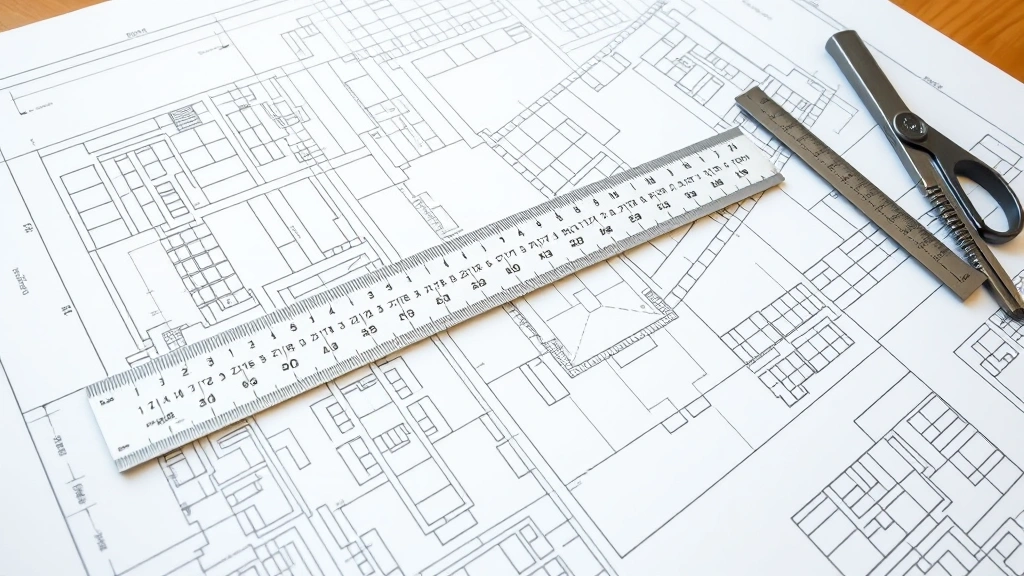
The law of sines establishes a fundamental relationship between the sides and angles of any triangle. Expressed mathematically as a/sin(A) = b/sin(B) = c/sin(C), this principle states that the ratio of any side to the sine of its opposite angle remains constant throughout the triangle. This elegant relationship enables professionals to solve triangles when given limited information, making it invaluable for spatial analysis in legal investigations.
In practical terms, if a legal professional or expert witness knows two angles and one side of a triangle, they can calculate all remaining sides and angles with absolute precision. This capability proves particularly useful when analyzing accident scenes, where vehicles or objects form triangular relationships with fixed landmarks. The law of sines works specifically well with acute and obtuse triangles, allowing investigators to reconstruct events with mathematical certainty.
The application of the law of sines in legal contexts often involves accident reconstruction specialists who map collision points, vehicle trajectories, and victim positions. When these elements form triangular relationships with fixed environmental features—such as intersection markings, utility poles, or building corners—the law of sines provides mathematical verification of proposed scenarios. Expert witnesses frequently employ this principle to demonstrate the feasibility or impossibility of defendant claims regarding accident dynamics.
Understanding this mathematical principle strengthens a lawyer’s capacity to cross-examine expert witnesses. By grasping the underlying mathematics, attorneys can identify computational errors, question methodological assumptions, or validate expert conclusions with greater authority. This knowledge proves especially relevant in corporate law disputes involving construction defects or engineering failures where spatial relationships determine liability.

Understanding the Law of Cosines
The law of cosines extends trigonometric analysis to situations where the law of sines proves insufficient. Expressed as c² = a² + b² – 2ab·cos(C), this formula relates all three sides of a triangle to one of its angles. When professionals lack information about angles opposite to known sides, the law of cosines becomes the essential analytical tool for solving triangular problems.
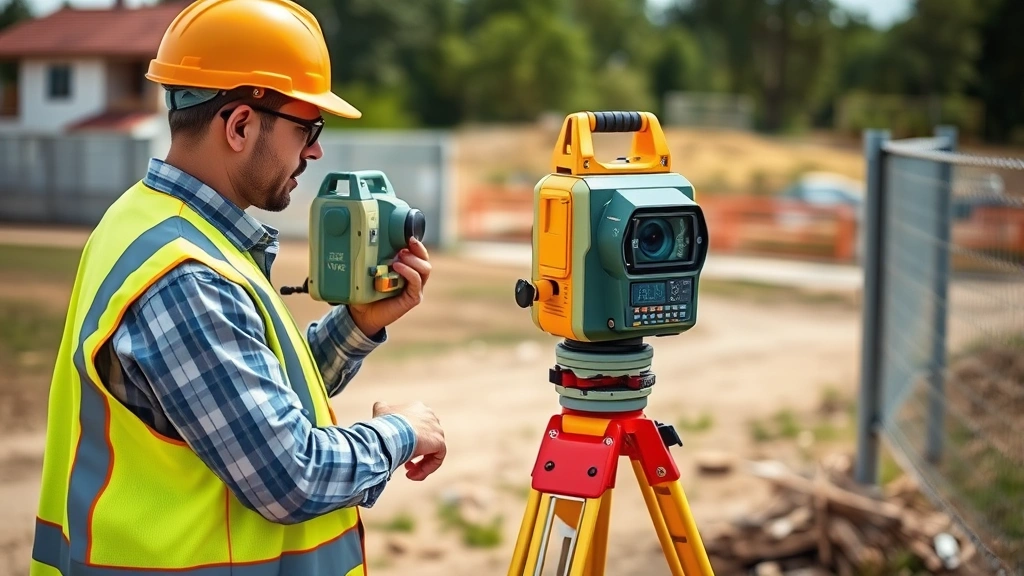
This principle proves particularly valuable when dealing with obtuse triangles or situations involving three known sides but unknown angles. Legal professionals encounter such scenarios frequently in property boundary disputes, where surveyors must verify whether existing boundaries match recorded descriptions. By applying the law of cosines to measurements of three property sides, surveyors can calculate corner angles and identify discrepancies between current conditions and legal descriptions.
The relationship expressed in the law of cosines also provides a mathematical foundation for understanding spatial relationships in accident reconstruction. When an investigator knows the distances from a collision point to various environmental markers but lacks direct angle measurements, the law of cosines permits calculation of those angles. This capability enables reconstruction of vehicle positions, impact angles, and pre-collision trajectories with mathematical precision.
Insurance companies and defense attorneys frequently challenge accident reconstruction conclusions by questioning the mathematical validity of expert calculations. Knowledge of the law of cosines empowers legal professionals to verify whether experts properly applied this principle or made computational errors. Additionally, understanding this formula helps attorneys recognize when experts may have oversimplified complex spatial relationships or failed to account for three-dimensional elements in otherwise two-dimensional analyses.
The law of cosines also relates directly to the Pythagorean theorem, which represents a special case where the angle in question equals 90 degrees. This mathematical relationship demonstrates how trigonometric principles build upon fundamental geometric concepts, providing lawyers with a framework for understanding increasingly complex spatial problems encountered in litigation.
Practical Applications in Legal Cases
Legal professionals regularly encounter situations requiring trigonometric analysis, though they may not consciously recognize the mathematical frameworks underlying expert testimony. Personal injury cases, property disputes, and criminal investigations frequently depend upon precise spatial measurements and angular relationships that these mathematical principles govern. Developing familiarity with the law of sines and cosines enables attorneys to evaluate expert evidence with greater sophistication.
In family law matters involving property division, particularly real estate with irregular boundaries, trigonometric analysis becomes essential. Surveyors and real estate experts employ these principles to verify property descriptions, identify boundary encroachments, and calculate precise acreage. Attorneys representing clients in property disputes must understand whether expert calculations correctly applied these mathematical principles.
Construction defect litigation provides another context where trigonometric knowledge proves invaluable. When structural failures occur, engineers reconstruct load paths, stress distributions, and failure sequences using mathematical models that incorporate the law of sines and cosines. Defense attorneys challenging these expert opinions must possess sufficient mathematical literacy to question methodological assumptions and computational accuracy.
Environmental contamination cases often involve spatial analysis of pollution plumes, groundwater flow patterns, and exposure zones. Experts calculate these relationships using trigonometric principles applied to three-dimensional environmental data. Attorneys representing affected parties must evaluate whether expert testimony properly applies these mathematical tools to environmental conditions.
Criminal investigations frequently employ triangulation methods based on the law of sines to establish suspect positions, weapon trajectories, or victim locations. Forensic experts use these principles to reconstruct crime scenes, calculate bullet trajectories, and establish sight lines. Prosecutors and defense counsel must equally understand the mathematical validity of such reconstructions to effectively present or challenge forensic evidence.
Evidence Presentation and Expert Testimony
Expert witnesses regularly testify regarding measurements, calculations, and spatial relationships that depend upon trigonometric principles. Effective cross-examination of such witnesses requires attorneys to understand the mathematical frameworks underlying their opinions. This knowledge permits identification of flawed methodologies, computational errors, or unsupported assumptions that may undermine expert credibility.
When evaluating expert testimony involving the law of sines or cosines, attorneys should consider several critical questions: Did the expert properly identify all available measurements and angles? Did the calculations correctly apply the appropriate mathematical formula? Were assumptions about measurement accuracy and precision clearly stated and justified? Did the expert account for potential measurement errors or environmental variables affecting accuracy?
The proper evaluation of expert opinions extends beyond accepting or rejecting testimony wholesale. Attorneys must develop sufficient technical competence to identify logical gaps, methodological weaknesses, or computational inaccuracies. This requires understanding not merely what an expert concluded, but how they reached that conclusion through mathematical analysis.
Jury presentation of trigonometric evidence requires careful translation of mathematical concepts into accessible language. Effective trial lawyers demonstrate these principles through visual aids, physical models, and simplified explanations that communicate mathematical validity without overwhelming jurors unfamiliar with trigonometry. The law of sines and cosines, properly explained, provide powerful tools for establishing credibility and demonstrating the scientific basis for expert conclusions.
Defense attorneys challenging expert testimony must prepare thoroughly by consulting with their own experts regarding alternative interpretations of mathematical data. By presenting competing expert opinions grounded in equally valid mathematical analysis, defense counsel can demonstrate that expert conclusions represent one possible interpretation rather than mathematical certainty. This approach often proves more effective than attempting to discredit mathematics itself, which juries inherently trust.
Property Disputes and Boundary Calculations
Real estate litigation frequently involves disputes regarding property boundaries, easements, or survey discrepancies. These disputes often hinge upon precise mathematical calculations of property dimensions, corner angles, and relative positions. The law of sines and cosines provide the mathematical framework for converting recorded property descriptions into precise physical locations.
Surveyors employ trigonometric principles to establish baseline measurements from fixed reference points, then calculate property corners using the law of cosines when the relationship between known distances and angles must be determined. When recorded property descriptions specify distances and bearings, surveyors can reconstruct intended property locations and identify where current physical boundaries deviate from legal descriptions.
Encroachment disputes typically require mathematical verification that structures violate recorded boundary lines. By applying the law of sines and cosines to measurements from fixed environmental features to the disputed structure, surveyors establish whether encroachments actually exist and quantify their extent. Attorneys must evaluate whether survey calculations correctly applied these mathematical principles and whether measurement methodologies produced reliable results.
Easement disputes similarly depend upon precise spatial analysis. When disputes arise regarding easement location, width, or extent, trigonometric calculations determine whether current usage complies with recorded easement descriptions. The law of cosines proves particularly useful for calculating corner angles and verifying whether survey monuments accurately reflect recorded easement specifications.
Attorneys representing parties in property disputes should request detailed survey documentation explaining the mathematical basis for boundary calculations. Understanding the specific application of trigonometric principles to survey data enables attorneys to identify potential sources of error, question methodological choices, or support expert conclusions with greater authority. This knowledge transforms mathematical calculations from incomprehensible expert testimony into understandable evidence supporting legal positions.
Accident Reconstruction and Liability
Motor vehicle accident reconstruction represents perhaps the most common legal application of trigonometric principles. Accident reconstruction specialists employ the law of sines and cosines to establish vehicle positions, impact angles, pre-collision trajectories, and post-collision movements. These mathematical reconstructions often prove decisive in determining liability and establishing factual sequences that support or contradict party testimony.
The reconstruction process begins with physical evidence collection: vehicle damage patterns, skid marks, final resting positions, and environmental features. Specialists then apply trigonometric analysis to these measurements, using the law of sines to establish relationships between known distances and angles, and the law of cosines to calculate unknown angles or distances when three measurements are known.
When vehicle skid marks form angles with intersection markings or environmental features, the law of sines enables calculation of pre-skid vehicle positions and trajectories. This mathematical analysis often contradicts driver testimony regarding vehicle speeds, collision timing, or evasive maneuvers. Juries frequently find such mathematical reconstructions more credible than conflicting eyewitness accounts, particularly when experts present findings clearly and logically.
Defense attorneys challenging accident reconstructions must evaluate whether experts properly applied trigonometric principles and whether underlying measurements possessed sufficient accuracy. Measurement errors, assumptions about road surface conditions, or failure to account for vehicle deformation can compromise reconstruction validity. By consulting with defense experts, attorneys can identify methodological weaknesses and present competing reconstructions based on alternative mathematical interpretations of physical evidence.
The symbolism and authority of mathematical evidence requires careful handling by trial attorneys. While jurors respect mathematical analysis, they also recognize that mathematical conclusions depend entirely upon underlying assumptions and measurement accuracy. Effective cross-examination exposes these dependencies, demonstrating that alternative mathematical approaches might produce different conclusions from identical physical evidence.
Pedestrian accident reconstruction similarly employs trigonometric principles to establish sight lines, vehicle positions at impact, and victim trajectories. By calculating angles between vehicle travel paths and pedestrian positions, experts reconstruct collision sequences and evaluate whether drivers possessed adequate opportunity to perceive and avoid pedestrians. These reconstructions frequently determine whether negligence or comparative fault contributed to injuries.

FAQ
How do the law of sines and cosines differ in practical application?
The law of sines applies when you know either two angles and one side, or two sides and an angle opposite one of them. The law of cosines applies when you know three sides or two sides and the included angle. In legal contexts, accident reconstruction often uses the law of sines for trajectory analysis, while property surveys frequently employ the law of cosines for corner angle calculations.
Can attorneys without mathematical backgrounds effectively cross-examine expert witnesses using trigonometric evidence?
Yes, attorneys can develop sufficient competence to evaluate trigonometric evidence by consulting with qualified experts during case preparation. Understanding the basic principles—that the law of sines relates sides to opposite angles, and the law of cosines relates all three sides to one angle—enables attorneys to identify when experts may have applied incorrect formulas or made computational errors. Effective cross-examination focuses on methodological assumptions rather than mathematical complexity.
What measurement accuracy standards apply to trigonometric calculations in legal proceedings?
Courts generally require that expert testimony regarding measurements and calculations meet the Federal Rules of Evidence standards for reliability and relevance. Experts should disclose measurement methodologies, equipment precision limitations, and potential sources of error. The accuracy requirements depend upon the specific case context; accident reconstruction might tolerate greater measurement variation than property surveys, which typically require precision to within fractions of inches.
How do three-dimensional accident reconstructions employ trigonometric principles?
Three-dimensional reconstructions extend the law of sines and cosines into space by calculating vertical angles in addition to horizontal angles. This permits analysis of vehicles on sloped terrain, impacts involving vehicles at different elevations, or trajectories involving vertical components. The mathematical principles remain identical; only the additional vertical dimension complicates the calculations and increases the importance of precise measurements.
What role does the education provided at institutions like Hastings Law School play in preparing attorneys for technical evidence evaluation?
Leading law schools increasingly recognize that modern litigation requires technical competence in mathematics, engineering, and scientific methodology. While legal education traditionally emphasized doctrinal analysis, contemporary legal practice demands that attorneys understand expert evidence sufficiently to evaluate its reliability. Continuing legal education programs and expert consultation during case preparation help attorneys develop this competence regardless of their educational background.
Can mathematical reconstructions prove liability conclusively, or do they represent one perspective among several?
Mathematical reconstructions provide powerful evidence regarding spatial relationships and physical sequences, but they depend entirely upon underlying assumptions and measurement accuracy. Courts and juries should recognize that multiple mathematical interpretations of the same physical evidence might produce different conclusions. Effective trial presentation acknowledges these limitations while demonstrating the reliability of the specific mathematical approach employed in the case.



