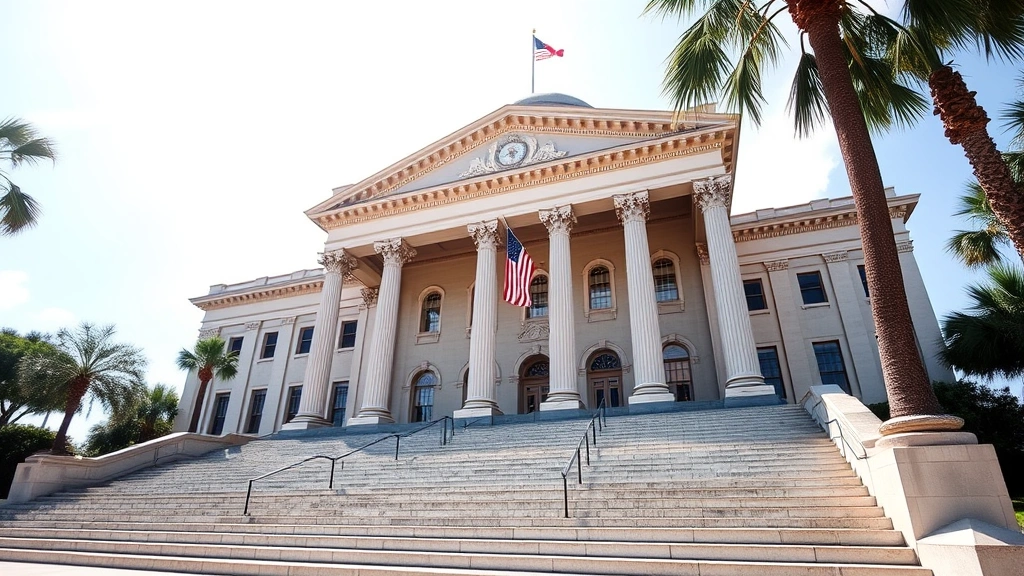
Florida Immigration Law: Supreme Court Insight
Florida’s immigration landscape has undergone significant transformation through pivotal Supreme Court decisions that shape how immigration matters are handled within the state. Understanding these landmark rulings is essential for immigrants, legal professionals, and policymakers navigating the complex intersection of federal immigration law and Florida’s state-specific regulations. The Supreme Court’s interventions have clarified jurisdictional boundaries, established precedents for immigrant rights, and influenced how Florida courts address immigration-related disputes.
The relationship between federal immigration authority and state immigration law remains contentious and evolving. Florida, as a state with one of the largest immigrant populations in the United States, has been at the forefront of immigration law development. Supreme Court decisions have repeatedly addressed whether states can enforce immigration-related provisions, how immigration status affects eligibility for state benefits, and what protections exist for undocumented immigrants under Florida law. These rulings have profound implications for millions of residents and have set national precedents that other states follow.
Federal Preemption and State Authority in Immigration
The foundational principle governing immigration law in Florida involves understanding federal preemption doctrine. The Supreme Court has consistently held that immigration matters fall primarily within federal jurisdiction, yet states retain authority to regulate certain aspects affecting their residents. This delicate balance has been tested repeatedly through Florida cases that challenge the extent of state power in immigration enforcement and policy.
The Commerce Clause and the Supremacy Clause of the U.S. Constitution establish federal dominance in immigration regulation. However, the Supreme Court has recognized that states possess legitimate interests in regulating immigration’s effects on employment, education, healthcare, and public welfare. Florida has attempted to exercise this authority through various legislative measures, some of which have faced constitutional challenges. Courts must determine whether state laws conflict with federal immigration policy or impermissibly regulate immigration itself versus regulating conduct incidental to immigration status.
When examining state immigration laws, courts apply a three-part test derived from Supreme Court precedent. First, they determine whether the state law regulates immigration directly or addresses legitimate state concerns. Second, they assess whether the law conflicts with federal immigration statutes or regulations. Third, they consider whether the law imposes an undue burden on interstate commerce or federal interests. Florida courts have applied these principles to various state statutes addressing employment verification, public benefits eligibility, and law enforcement cooperation with federal immigration authorities.
Understanding these constitutional principles is critical for anyone involved in immigration matters. Learning more about legal terminology can clarify complex constitutional concepts. Additionally, choosing an immigration attorney with expertise in both federal and Florida law is essential for navigating these jurisdictional complexities.
Landmark Supreme Court Cases Affecting Florida
Several Supreme Court decisions have directly influenced how immigration law operates in Florida. The case Arizona v. United States (2012) established crucial limitations on state immigration enforcement authority. While the Court invalidated certain Arizona provisions, it upheld the state’s ability to use federal E-Verify employment verification systems and to inquire about immigration status during lawful stops. This decision created a framework that Florida courts apply when evaluating state immigration enforcement measures.
The Plyler v. Doe (1982) decision remains foundational for education-related immigration issues in Florida. The Supreme Court held that states cannot deny students access to free public K-12 education based on immigration status. This precedent prevents Florida schools from requiring proof of citizenship or immigration status for enrollment, ensuring that undocumented children can access public education. Florida courts have applied this principle to defend immigrant students’ educational rights against various restrictions.
In Toll v. Moreno (1975), the Supreme Court addressed state tuition policies and immigration status, holding that states cannot impose higher tuition rates on certain students based on immigration classification without substantial justification. While this case predates recent immigration debates, Florida courts continue citing it when evaluating education access for immigrants and determining appropriate residency classifications for tuition purposes.
The decision in Oyez v. Bowers and subsequent cases addressing immigrant eligibility for public benefits have shaped Florida’s welfare policies. The Supreme Court has held that while states may restrict certain benefits to citizens, federal law also imposes limitations on state discretion in benefit allocation based on immigration status. Florida has had to align its benefit programs with these constitutional and statutory requirements.
More recently, cases addressing immigration enforcement cooperation between state and local law enforcement have implications for Florida. The Supreme Court’s recognition that states cannot compel local police to enforce federal immigration law has influenced Florida’s approach to immigration enforcement partnerships, particularly regarding the 287(g) program and information-sharing agreements with federal immigration authorities.
Immigrant Rights and Legal Protections
Florida law provides certain protections for immigrants that derive from Supreme Court constitutional interpretations and federal statutes. The Fourteenth Amendment’s guarantee of equal protection extends to immigrants within Florida’s jurisdiction, regardless of immigration status. The Supreme Court has held that immigrants cannot be denied fundamental rights such as due process, freedom of speech, and protection against unreasonable searches and seizures.
These protections mean that undocumented immigrants in Florida retain constitutional rights when interacting with law enforcement, government agencies, and private entities. An immigrant cannot be stopped or searched without reasonable suspicion or probable cause merely because of immigration status. Additionally, immigrants have the right to legal counsel and to remain silent during questioning, rights that apply regardless of immigration status or citizenship.
Florida courts recognize that immigrants facing deportation proceedings have significant liberty interests protected by due process. The Supreme Court has emphasized that deportation constitutes a drastic consequence comparable to criminal punishment, warranting robust procedural protections. Immigrants in Florida facing removal have the right to counsel (though not at government expense), to present evidence, and to appeal adverse decisions. These protections exist even for individuals without legal status.
The issue of driver’s license eligibility has been addressed through both Supreme Court interpretation and state legislation. Florida permits certain immigrants, including those with valid work authorization or temporary protected status, to obtain driver’s licenses. These decisions reflect Supreme Court recognition that states cannot categorically deny benefits based on immigration status when doing so creates practical hardship or conflicts with federal law.
Employment and Immigration Status
Employment eligibility represents one of the most significant areas where Supreme Court decisions intersect with Florida law. The Immigration Reform and Control Act (IRCA) of 1986 established the federal E-Verify system and mandated employment verification procedures. The Supreme Court has upheld state laws requiring E-Verify verification, provided they do not conflict with federal law or create undue burdens on interstate commerce.
Florida employers must verify employment eligibility through the I-9 process and may optionally use E-Verify. The state has enacted legislation requiring certain employers to use E-Verify, particularly for public contracts and government positions. Supreme Court precedent supports these requirements when they align with federal law and do not impose discriminatory burdens on protected classes. Employers must apply these verification procedures consistently to avoid discrimination claims.
Undocumented workers in Florida retain certain employment protections despite their immigration status. The Supreme Court has recognized that federal labor laws apply broadly, and the National Labor Relations Board has held that undocumented workers can pursue certain labor claims. Florida courts have acknowledged that immigrants can recover unpaid wages, pursue workers’ compensation claims, and challenge employment discrimination. These protections exist because labor laws serve important federal interests distinct from immigration enforcement.
However, undocumented immigrants cannot be hired or continue employment, and employers who knowingly hire undocumented workers face federal penalties. The Supreme Court’s framework requires states to balance employment verification with anti-discrimination protections, ensuring that verification procedures do not facilitate discrimination against workers based on national origin or accent. Florida employers must navigate these competing requirements carefully.
Education and Immigration Eligibility
Education access represents a critical area where Supreme Court decisions have firmly protected immigrant rights. As mentioned, Plyler v. Doe guarantees free public K-12 education regardless of immigration status. Florida schools cannot require proof of citizenship, valid Social Security numbers, or immigration documentation as a condition of enrollment. This protection extends to undocumented children and ensures equal access to public education.
Higher education presents more complex issues. While the Supreme Court has not mandated in-state tuition for undocumented immigrants, it has established that states cannot deny educational access based solely on immigration status. Florida has developed policies permitting undocumented students who have attended Florida schools to pay in-state tuition rates under certain circumstances. These policies reflect Supreme Court recognition that education serves important state interests and that immigration status should not categorically exclude qualified students.
Federal financial aid eligibility remains restricted for undocumented students, a limitation rooted in federal law rather than Supreme Court constitutional interpretation. However, Florida has created state financial aid programs for undocumented students meeting certain criteria. These programs recognize that education access promotes important state interests and that immigration status should not prevent qualified students from pursuing higher education opportunities.
Students’ rights on campus are protected by constitutional principles extending to all persons within the United States. Undocumented students have free speech rights, due process protections in disciplinary proceedings, and protection against unreasonable searches. Campus law enforcement cannot inquire about immigration status or report students to immigration authorities based on immigration status alone, though cooperation with federal authorities in specific circumstances may be required.
Housing and Tenant Rights
Housing discrimination based on immigration status is prohibited under federal fair housing law, a principle the Supreme Court has supported through its equal protection jurisprudence. Florida landlords cannot refuse to rent to immigrants or impose different terms based on immigration status. Tenants, regardless of immigration status, have rights to habitability, protection against retaliatory eviction, and notice before termination of tenancy.
The Supreme Court’s recognition of property rights and due process protections extends to immigrants. Landlords must follow proper eviction procedures, and immigrants facing eviction have the right to due process, including notice and opportunity to be heard. Immigration status does not diminish these fundamental protections, though immigration enforcement actions can complicate housing situations.
Some Florida landlords have attempted to condition housing on immigration verification or proof of legal status. However, Supreme Court equal protection principles and federal fair housing law prevent categorical exclusions based on immigration status. Landlords may require proof of income and identity but cannot use immigration status as a basis for discrimination. Additionally, alternative dispute resolution mechanisms can help resolve housing disputes without litigation.
Immigration enforcement actions at residences raise significant constitutional concerns. Law enforcement cannot conduct warrantless searches of homes to enforce immigration laws. Agents must obtain judicial warrants based on probable cause, not mere immigration status. Florida courts have recognized that home privacy protections extend to all residents, regardless of immigration status, and have invalidated enforcement actions violating these constitutional protections.
Criminal Justice Implications
Criminal law and immigration law intersect significantly in Florida. A criminal conviction can trigger deportation or inadmissibility consequences, making criminal defense and immigration consequences closely linked. The Supreme Court has held that criminal defense attorneys have a duty to inform clients of immigration consequences of convictions, recognizing that deportation constitutes a severe collateral consequence comparable to direct punishment.
Florida courts must consider immigration consequences when accepting guilty pleas or imposing sentences. Judges should inform defendants of potential immigration consequences, and defense attorneys must advise clients about these risks. The Supreme Court’s decision in Padilla v. Kentucky (2010) established that failure to provide such advice constitutes ineffective assistance of counsel, entitling defendants to relief.
Certain crimes trigger automatic deportability provisions in federal immigration law. Crimes of moral turpitude, drug offenses, crimes of violence, and aggravated felonies can result in removal proceedings. Florida courts have developed practices to minimize immigration consequences through careful charge selection, sentence structuring, and plea negotiations. Experienced criminal defense attorneys in Florida consider immigration implications throughout the criminal process.
Immigration enforcement in criminal justice contexts requires careful constitutional analysis. Law enforcement cannot conduct immigration enforcement in courthouses or use court processes primarily for immigration purposes. The Supreme Court’s recognition of due process rights and separation of powers principles limits how immigration enforcement intersects with criminal justice proceedings. Florida courts have protective orders limiting immigration enforcement access in certain situations.
Undocumented immigrants in Florida facing criminal charges have the same constitutional rights as citizens, including the right to counsel, the right against self-incrimination, and due process protections. Immigration status does not diminish these fundamental rights, though it may affect case strategy and potential consequences. Consulting with attorneys experienced in both criminal and immigration law is essential for immigrants facing charges.

FAQ
Can Florida require proof of citizenship for voting or government services?
No. The Supreme Court has held that states cannot categorically require citizenship proof for benefits or services when federal law provides for broader eligibility. However, voting remains restricted to citizens, and states can verify citizenship for voting eligibility purposes. For most government services, immigration status cannot be the sole basis for denial, though certain federal programs restrict eligibility to citizens or qualified immigrants.
What happens if an undocumented immigrant is arrested in Florida?
Undocumented immigrants have constitutional rights during arrest, including the right to remain silent, the right to counsel, and protection against unreasonable searches. Immigration status does not diminish these rights. However, local law enforcement may cooperate with federal immigration authorities through various programs, potentially resulting in immigration detention and deportation proceedings. Consulting an attorney immediately is critical.
Can undocumented students attend Florida public schools?
Yes. Plyler v. Doe guarantees free public K-12 education regardless of immigration status. Schools cannot require proof of citizenship or immigration documentation. Undocumented students have the same enrollment rights as citizen students and cannot be denied education based on immigration status.
What employment protections do undocumented workers have in Florida?
Undocumented workers cannot legally be hired, but once employed, they retain certain labor protections. They can recover unpaid wages, pursue workers’ compensation claims for workplace injuries, and challenge employment discrimination. However, employers can legally terminate employment upon discovering undocumented status. Workers should consult attorneys about specific situations.
How do immigration consequences affect criminal sentencing in Florida?
Criminal convictions can trigger deportation or inadmissibility, making immigration consequences severe collateral consequences. Attorneys must advise clients of these risks, and judges should consider them during sentencing. Defense attorneys work to minimize immigration consequences through charge selection and sentence structuring when possible. The Supreme Court requires attorneys to provide competent advice about immigration consequences.
Can Florida deny driver’s licenses to immigrants?
No. Florida permits certain immigrants to obtain driver’s licenses, including those with valid work authorization or temporary protected status. States cannot categorically deny licenses based on immigration status when doing so creates practical hardship or conflicts with federal law. However, specific eligibility requirements apply, and documentation needs vary.
What happens during immigration enforcement at homes in Florida?
Law enforcement cannot conduct warrantless searches or seizures to enforce immigration law. Agents must obtain judicial warrants based on probable cause. Residents can refuse entry without a judicial warrant, and constitutional protections against unreasonable searches apply regardless of immigration status. Florida courts have protected home privacy rights even for undocumented immigrants.


