
Understanding Offside in Football: Legal Breakdown
The offside rule in football represents one of sports’ most debated regulations, serving as a fundamental principle that shapes gameplay strategy and competitive fairness. While football operates under sports governance rather than civil law, the offside rule functions similarly to legal statutes—establishing clear boundaries, requiring precise interpretation, and demanding consistent enforcement. Understanding how offside works provides valuable insights into rule-based systems, regulatory interpretation, and the importance of clear definitions in any framework, whether athletic or legal.
Like legal terms and definitions that require precise interpretation, football’s offside law has evolved significantly since its inception. The regulation demonstrates how governing bodies establish rules to maintain competitive balance, prevent exploitation of ambiguous situations, and ensure fair play. This comprehensive guide examines the offside rule from multiple angles, exploring its history, current application, enforcement mechanisms, and the controversies surrounding its interpretation.

History and Evolution of the Offside Rule
The offside rule emerged during football’s formative years in the mid-19th century when standardization of the sport became necessary. Early versions of football lacked clear regulations, allowing players to position themselves advantageously near opponent goals. The Football Association of England introduced the offside rule in 1866, establishing one of sport’s oldest continuous regulations. This historical development mirrors how legal systems evolve—beginning with basic principles and progressively refining them through experience and interpretation.
Initially, the offside rule was far stricter than modern applications. Players positioned ahead of all opponents except the goalkeeper were automatically in an offside position. This created a game focused heavily on passing backward and maintaining defensive formations. By 1925, the Football Association modified the rule, requiring at least two opposing players between an attacking player and the goal line rather than three. This single modification fundamentally transformed football, increasing scoring opportunities and making the sport more entertaining—a principle similar to how legal reforms can substantially alter legal landscapes.
Throughout the 20th century, the offside rule underwent periodic refinements as football evolved. The introduction of professional leagues, international competitions, and advancing athletic capabilities necessitated clarification of ambiguous situations. The International Federation of Association Football (FIFA) established standardized interpretations, ensuring consistency across global competitions. These regulatory bodies function analogously to legal governing institutions that establish standards and ensure uniform application of rules.
Current Offside Regulations Explained
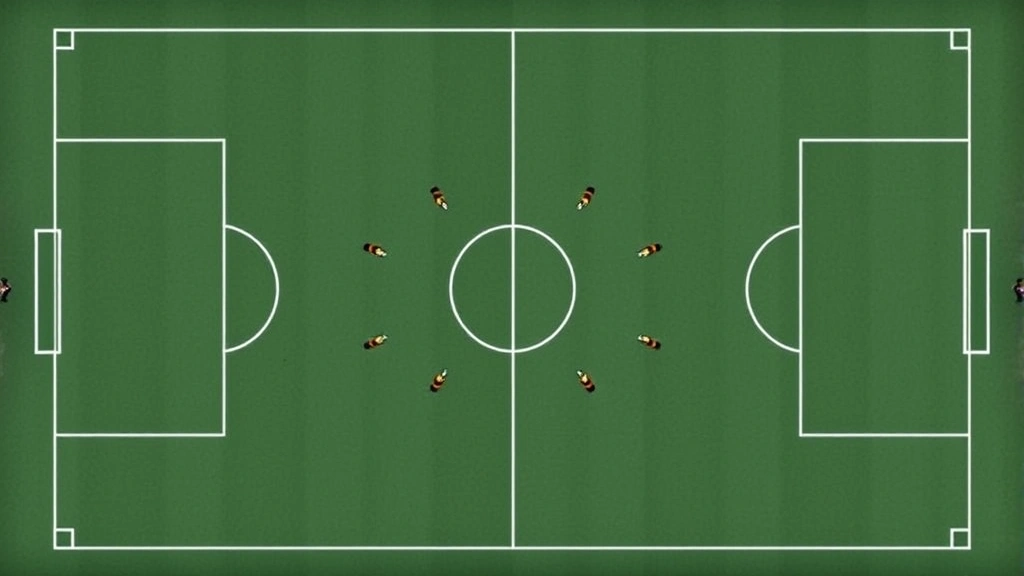
Under current FIFA regulations, a player is in an offside position if they are nearer to the opponent’s goal line than both the ball and at least two opposing players. The critical elements of this definition require careful analysis. A player must be in an offside position at the moment the ball is played by a teammate for the rule to apply. This temporal specificity resembles legal standards requiring evidence of specific moments in time—such as when a contract was formed or when a breach occurred.
The regulation explicitly states that a player is not in an offside position if they are level with the ball, the opponent’s goal line, or any two opposing players. This “level with” provision creates significant interpretation challenges. In close situations, determining whether a player’s body part is exactly level or marginally ahead demands precision. Modern technology has become essential for making these determinations, much like forensic analysis supports legal determinations in complex cases.
Importantly, certain situations exempt players from offside considerations. A player cannot be in an offside position if they receive the ball directly from a goal kick, corner kick, or throw-in. These exceptions reflect the rule’s purpose—preventing unfair positional advantages while accommodating specific game scenarios. Similarly, legal statutes contain exceptions and qualifying provisions that prevent overly rigid application in circumstances where the rule’s underlying purpose wouldn’t be served.
The offside rule applies only during active play. Players cannot be in an offside position during corner kicks, goal kicks, or throw-ins, demonstrating that the rule targets specific tactical advantages rather than penalizing all forward positioning. This nuanced approach shows sophisticated rule-making that addresses consumer and competitive fairness through contextual application rather than blanket prohibitions.
Technical Application and Player Positioning
Determining offside positions requires understanding which body parts matter for positioning assessment. According to FIFA regulations, only the head, torso, and legs are considered when determining a player’s position. Arms and hands are excluded from this assessment, reflecting the sport’s focus on ball control through feet and body rather than hands. This specificity prevents ambiguous arguments about marginal hand positioning that wouldn’t affect actual gameplay.
The ball’s position at the moment of play proves critical. If a teammate plays the ball backward or sideways to a player in an advanced position, that player isn’t in an offside position regardless of their proximity to the goal line. Conversely, if a teammate plays the ball forward to a player nearer the goal line than two opponents, the receiving player is in an offside position and cannot legally participate in the play. This distinction emphasizes that offside protects against gaining unfair advantage through forward positioning, not against being positioned forward.
Multiple attacking players in advanced positions create complex scenarios requiring careful analysis. When several teammates are positioned near the opponent’s goal, determining which players are in offside positions demands systematic evaluation of each player’s position relative to the ball and all opposing players. Referees must make instantaneous decisions about multiple players simultaneously, similar to how legal professionals must analyze complex multi-party situations with competing interests.
Passive positioning represents an evolving aspect of offside interpretation. A player in an offside position may not be penalized if they are not actively involved in play or attempting to gain an advantage from their position. This subjective element requires referees to assess player intent and involvement, adding interpretive complexity similar to determining intent in legal contexts where motive matters to liability.
VAR Technology and Modern Enforcement
Video Assistant Referee (VAR) technology has revolutionized offside enforcement, introducing precision previously impossible with human observation alone. VAR systems capture multiple camera angles, freeze-frame analysis, and computer-assisted line-drawing to determine exact player positioning at the moment the ball is played. This technological advancement parallels legal systems’ incorporation of digital evidence, forensic analysis, and advanced investigative tools to establish facts with greater certainty.
The implementation of VAR for offside decisions has proven contentious. While technology provides objective measurements of player positioning, the system has introduced new controversies. Determining the precise moment the ball is played, identifying which body parts matter, and establishing marginal differences between level positioning and being ahead all require interpretation despite technological assistance. These challenges demonstrate that technology alone cannot eliminate interpretive judgment—a lesson relevant to legal education emphasizing judgment and interpretation alongside technical knowledge.
VAR review processes have extended match duration, creating debate about whether precision justifies additional time. This represents a practical policy question similar to legal system efficiency debates—whether thorough investigation and review justify extended proceedings. Different competitions have adopted varying VAR protocols, with some using semi-automated offside technology that reduces review time while maintaining accuracy.
The human element remains central to VAR implementation. Video operators must select which angles to examine, and referees ultimately decide whether to overturn on-field decisions. This combination of technology and human judgment reflects modern legal systems’ reliance on both forensic evidence and professional interpretation. The system acknowledges that technology provides better information without eliminating the need for reasoned judgment.
Controversial Decisions and Rule Interpretations
Throughout football history, offside decisions have generated controversy and debate. The rule’s marginal nature—determining whether players are exactly level or marginally ahead—creates situations where reasonable observers disagree. These controversies illustrate how clear written rules can still produce disputed applications, a phenomenon well-known in legal interpretation where courts regularly split on statutory meaning despite precise language.
The “armpit rule” controversy emerged from strict interpretation of body positioning. When determining offside, should only torso positioning matter, or do shoulders and arms count? Different interpretations led to goals being disallowed where attacking players appeared marginally ahead by shoulder width. FIFA eventually clarified that the full torso matters, demonstrating how governing bodies must periodically clarify ambiguous language through authoritative interpretation—similar to legal clarifications distinguishing between similar categories.
The passive offside concept generated substantial debate. Players in offside positions who don’t interfere with play or attempt to gain advantage were historically not penalized. However, determining when a player is “passive” versus actively involved proved subjective. FIFA’s evolution of this rule demonstrates how sports governance bodies, like legal systems, must balance strict rule application against contextual fairness considerations.
Notable controversial decisions have influenced rule modifications. The 2010 World Cup witnessed disputed offside decisions that weren’t detected by officials, leading to increased emphasis on VAR implementation. These high-profile errors demonstrated how even experienced referees cannot reliably detect marginal offside positions, justifying technological assistance. This parallels legal systems’ adoption of improved evidence-gathering and investigative technologies when human capability proves insufficient.
Impact on Game Strategy and Tactics
The offside rule fundamentally shapes football tactics and strategy. Teams must balance attacking ambition against defensive organization, knowing that players cannot position themselves too far forward. This creates the “offside trap”—a defensive tactic where defenders collectively move forward to catch attacking players in offside positions. The tactic demonstrates how rules create strategic responses, much like how legal regulations prompt business strategies to optimize compliance.
Formation choices directly relate to offside management. Defensive formations maintain more compact shapes to keep attacking players in onside positions, while attacking formations push forward aggressively while managing offside risk. Midfield positioning becomes critical, as midfielders must judge whether to support attacking play or maintain deeper positioning. These strategic considerations create complexity analogous to how legal compliance requirements influence business operational decisions.
The offside rule encourages possession-based football and rapid transitions. Teams must maintain possession or quickly transition from defense to attack rather than attempting long passes to isolated strikers. This has contributed to modern football’s emphasis on technical ability, positioning, and quick combination play. The rule essentially incentivizes certain styles of play while penalizing others, demonstrating how regulatory frameworks shape behavior.
Coaching strategies specifically address offside management. Teams practice timing runs, coordinating attacking movements, and understanding when teammates will play the ball. Defenders learn to recognize offside trap opportunities. Players develop an intuitive sense for positioning relative to teammates and opponents. This sophisticated tactical knowledge represents accumulated expertise developed within the rule framework, similar to how legal professionals develop expertise in navigating regulatory requirements.
FAQ
What exactly is the offside rule in football?
A player is in an offside position if they are nearer to the opponent’s goal line than both the ball and at least two opposing players when the ball is played by a teammate. However, being in an offside position doesn’t automatically result in a penalty—the player must be actively involved in play or gain an advantage from the position.
Can a player be in an offside position during a corner kick?
No. Players cannot be in an offside position during corner kicks, goal kicks, or throw-ins. The offside rule applies only during open play, creating specific scenarios where forward positioning is permitted regardless of proximity to the goal line.
How does VAR determine offside positions?
VAR uses multiple camera angles, freeze-frame analysis, and computer-assisted line-drawing to determine player positioning at the exact moment the ball is played. While technology provides precise measurements, human operators and referees still exercise judgment about which frames to analyze and whether to overturn on-field decisions.
What is passive offside?
Passive offside refers to situations where a player is in an offside position but is not actively involved in play or attempting to gain an advantage. Historically, such players weren’t penalized, though FIFA’s interpretation of when a player is “passive” has evolved, creating ongoing interpretive challenges.
Why has the offside rule been modified over time?
The offside rule has been modified to balance competitive fairness, prevent exploitation of ambiguous situations, and maintain engaging gameplay. Major modifications, like the 1925 change requiring two opposing players rather than three, fundamentally transformed football’s tactical possibilities and entertainment value.
How do teams use the offside trap as a defensive tactic?
The offside trap involves defenders collectively moving forward simultaneously to catch attacking players in offside positions. This high-risk tactic can be effective against teams relying on long passes to isolated strikers but creates defensive vulnerability if executed poorly or against possession-based attacking approaches.
Are there any body parts excluded from offside positioning assessment?
Yes. Only the head, torso, and legs are considered when determining offside positions. Arms and hands are excluded from positioning assessment, preventing disputes about marginal hand positioning that wouldn’t affect actual gameplay.


