
Kepler’s Third Law Explained: Legal Context and Applications
Kepler’s Third Law, a fundamental principle in physics and astronomy, states that the square of the orbital period of a planet is directly proportional to the cube of the semi-major axis of its orbit. While this scientific principle might seem entirely removed from legal practice, understanding its mechanics and applications can provide valuable insights into how complex systems operate—knowledge that attorneys, judges, and legal professionals increasingly need in modern litigation and regulatory matters.
In an era where scientific evidence plays an increasingly critical role in legal proceedings, from patent disputes involving satellite technology to environmental regulations affecting space-based operations, legal professionals must grasp the foundational scientific principles underlying these cases. Kepler’s Third Law appears in intellectual property disputes, space law, environmental impact assessments, and even in calculating damages in cases involving orbital debris or satellite collision risks.
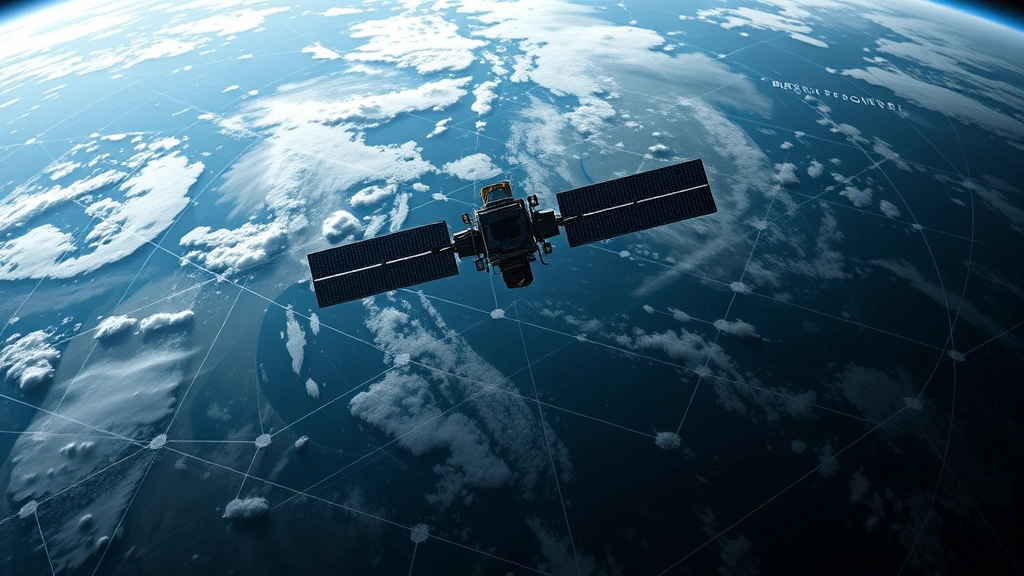
Understanding Kepler’s Third Law: Scientific Foundations
Kepler’s Third Law represents one of the cornerstones of celestial mechanics, establishing the mathematical relationship between orbital periods and orbital distances. The law can be expressed as: T² ∝ a³, where T represents the orbital period (time required for one complete orbit) and a represents the semi-major axis (average distance from the orbiting body to the central mass).
For legal professionals, understanding this principle becomes essential when examining cases involving satellite technology, space debris liability, or telecommunications infrastructure. When courts must determine liability for orbital collisions or assess damages from satellite malfunctions, expert witnesses frequently reference Kepler’s Third Law to establish predictable orbital patterns and collision probabilities.
The law applies universally to any two bodies in orbital motion, whether planets orbiting the sun, moons orbiting planets, or artificial satellites orbiting Earth. This universality makes it particularly relevant in contemporary legal disputes involving space-based assets, which represent billions of dollars in commercial value and critical infrastructure for global communications, weather monitoring, and navigation systems.

Historical Development and Johannes Kepler’s Contributions
Johannes Kepler published his three laws of planetary motion between 1609 and 1619, fundamentally transforming humanity’s understanding of celestial mechanics. His work built upon observational data collected by Tycho Brahe and represented a revolutionary departure from the prevailing geocentric model of the universe. The third law, published in his work Harmonices Mundi (The Harmony of the Worlds), established mathematical precision in describing orbital relationships.
From a legal perspective, Kepler’s work demonstrates the importance of empirical observation and mathematical rigor in establishing scientific principles—qualities that courts demand when evaluating expert testimony. When attorneys present scientific evidence, they often rely on principles with centuries of validation, as Kepler’s laws have enjoyed. This historical pedigree strengthens the credibility of expert witnesses who cite these principles in litigation involving space assets or orbital mechanics.
The development of Kepler’s laws also illustrates how scientific understanding evolves through careful observation and mathematical analysis, a principle relevant to legal standards for admitting scientific evidence. Courts applying the Daubert standard for expert testimony evaluate whether scientific principles have been tested, whether they have known error rates, and whether they enjoy general acceptance in the scientific community. Kepler’s Third Law satisfies all these criteria, making it reliable evidence in appropriate cases.
Mathematical Expression and Practical Calculations
The mathematical formulation of Kepler’s Third Law can be expressed more precisely as: T² = (4π²/GM) × a³, where G represents the gravitational constant and M represents the mass of the central body. For Earth-orbiting satellites, this simplifies to practical calculations that determine orbital periods based on altitude.
Legal applications of these calculations emerge in several contexts. When determining liability for orbital debris or collision risks, attorneys and expert witnesses use Kepler’s Third Law to calculate precise orbital positions at specific times, establishing whether collision scenarios were predictable or avoidable. Insurance companies covering space assets rely on these calculations to assess risk and set premiums for satellite operators.
In patent disputes involving satellite technology or orbital mechanics, detailed mathematical analysis based on Kepler’s Third Law helps establish whether a particular innovation represents a genuine advancement or merely applies existing principles. The U.S. Patent and Trademark Office requires applicants to demonstrate that their inventions are novel and non-obvious, often necessitating detailed scientific analysis grounded in established principles like Kepler’s laws.
Environmental impact assessments for space launches also employ Kepler’s Third Law calculations. Regulatory agencies must evaluate where launched objects will orbit, how long they will remain in orbit, and what collision risks they pose to existing satellites and space stations. These calculations directly influence licensing decisions and environmental compliance requirements.
Space Law and Orbital Mechanics
Space law, a specialized field within international law, increasingly relies on understanding orbital mechanics and Kepler’s Third Law. The Outer Space Treaty of 1967, which forms the foundation of international space law, established principles governing space activities and liability for space objects. Modern disputes involving space operations frequently require detailed orbital analysis.
When satellites collide or debris impacts operating spacecraft, determining liability depends partly on understanding predictable orbital behavior described by Kepler’s Third Law. The 2009 collision between Iridium 33 and Cosmos 2251 satellites demonstrated how orbital mechanics directly influence legal liability. Accurate calculations of orbital positions, derived from Kepler’s Third Law and related principles, proved essential in determining fault and assessing damages.
Commercial space operators must understand orbital mechanics to comply with space debris mitigation requirements and orbital slot licensing. The Federal Communications Commission and international bodies like the International Telecommunication Union regulate orbital assignments based on orbital mechanics principles. Operators who violate these regulations face penalties, license revocation, and potential liability for damages caused by non-compliant operations.
The emerging field of space traffic management will increasingly require legal frameworks grounded in orbital mechanics. As more commercial operators launch satellites and space tourism develops, regulatory agencies must establish clear rules for orbital operations. Understanding Kepler’s Third Law and its implications for orbital crowding and collision risks becomes essential for policymakers drafting these regulations.
Intellectual Property and Patent Considerations
Kepler’s Third Law appears in numerous patent applications involving satellite technology, orbital mechanics, and space-based systems. Patent examiners and judges evaluating these applications must understand whether claimed innovations genuinely advance the field or merely apply established principles in routine ways.
Consider a patent application for a satellite positioning system that claims to use novel orbital mechanics. Examiners would evaluate whether the application represents a genuine innovation beyond simply applying Kepler’s Third Law to calculate orbital positions. If the innovation merely applies established principles without meaningful advancement, the Patent and Trademark Office would likely reject it as obvious or lacking inventive step.
Conversely, innovations that genuinely improve upon existing methods—perhaps by developing more efficient algorithms for orbital calculations or novel approaches to satellite positioning—would receive patent protection. Understanding the scientific foundations, including Kepler’s Third Law, helps attorneys craft patent applications that clearly articulate why their innovations represent genuine advances.
When evaluating potential infringement claims, attorneys must determine whether competitors’ technologies rely on the same patented innovations or simply use Kepler’s Third Law and other public domain principles. This distinction critically affects whether infringement occurred and what damages might be recoverable. Detailed technical analysis, grounded in solid understanding of orbital mechanics, becomes essential in these disputes.
The intersection of patent law and scientific principles also affects how attorneys present evidence to courts. Understanding why Kepler’s Third Law is foundational knowledge helps attorneys explain to judges why certain technical aspects of a patent represent genuine innovation rather than routine application of known principles.
Environmental and Regulatory Applications
Environmental law increasingly incorporates space activities and their orbital implications. Regulatory agencies evaluating space launch licenses must assess environmental impacts, including where objects will orbit and what collision risks they pose. Kepler’s Third Law calculations inform these environmental impact assessments.
The Federal Aviation Administration and Federal Communications Commission coordinate on licensing space launch activities. These agencies require applicants to demonstrate compliance with orbital debris mitigation guidelines, which depend on understanding how long objects will remain in orbit—a calculation directly derived from Kepler’s Third Law. Applicants who cannot demonstrate adequate debris mitigation measures face license denial or restrictive conditions.
International environmental agreements increasingly address space debris and orbital pollution. The Inter-Agency Space Debris Coordination Committee has established guidelines recommending that satellites in low Earth orbit be deorbited within 25 years. Compliance with these guidelines requires accurate orbital mechanics calculations based on Kepler’s Third Law to ensure that satellites will actually deorbit within required timeframes.
When environmental organizations challenge space launch projects, they increasingly cite orbital mechanics and debris risks. Understanding and effectively countering these arguments requires detailed knowledge of Kepler’s Third Law and its implications for orbital debris accumulation. Conversely, project applicants must present compelling evidence that their operations will not create unacceptable orbital pollution risks.
Climate change litigation may eventually incorporate space-based assets and their environmental implications. Satellites provide crucial data for climate monitoring and prediction. Understanding the orbital mechanics of these satellites, including how Kepler’s Third Law determines their operational lifespan, becomes relevant to assessing the adequacy of climate monitoring infrastructure.
Expert Testimony and Scientific Evidence
When Kepler’s Third Law becomes relevant in litigation, expert witnesses must present technical information in ways that judges and juries can understand. This requires balancing scientific precision with accessibility, a challenge that attorneys must help manage through careful witness preparation and clear presentation.
Expert witnesses in space law cases typically hold advanced degrees in physics, aerospace engineering, or related fields. They must explain orbital mechanics principles, including Kepler’s Third Law, to audiences without scientific training. Effective expert testimony translates complex mathematics into understandable explanations of why orbital positions, collision risks, or satellite lifespans matter to the legal dispute.
When cross-examining expert witnesses who rely on Kepler’s Third Law, opposing counsel should understand the principle well enough to identify potential weaknesses in the expert’s analysis. Questions might address whether the expert properly accounted for orbital perturbations, atmospheric drag, or other factors that might affect real-world orbital behavior. This requires attorneys to develop sufficient technical understanding to challenge expert testimony effectively.
Courts increasingly recognize that scientific evidence requires careful scrutiny. The Federal Rules of Evidence establish standards for qualifying experts and admitting scientific evidence. Kepler’s Third Law, as a well-established scientific principle with centuries of validation, typically satisfies these standards. However, attorneys must ensure that expert application of the principle to specific facts is accurate and relevant.
Documentation and transparency in expert analysis become crucial. When experts use Kepler’s Third Law to calculate orbital positions or predict satellite behavior, they should provide detailed calculations that opposing counsel and the court can review. This transparency strengthens credibility and allows meaningful cross-examination.
The intersection of scientific expertise and legal argument creates opportunities for both persuasive presentation and critical challenge. Attorneys who understand Kepler’s Third Law can more effectively present or challenge expert testimony, identify flaws in opposing analyses, and help courts understand the significance of orbital mechanics to the legal issues at stake. This knowledge also informs settlement discussions, where accurate technical analysis might reveal that certain liability theories lack merit or that damage calculations require revision based on proper orbital mechanics analysis.
FAQ
How does Kepler’s Third Law apply to legal disputes involving satellites?
Kepler’s Third Law determines orbital periods and positions, which directly affect liability analysis in satellite collision cases. When establishing whether collisions were predictable or whether operators complied with debris mitigation requirements, courts rely on orbital mechanics calculations based on Kepler’s Third Law. These calculations also inform damage assessments and help determine whether operators negligently failed to account for foreseeable collision risks.
Can Kepler’s Third Law be used as evidence in court?
Yes, when relevant to the dispute, expert witnesses can present evidence based on Kepler’s Third Law. The principle satisfies legal standards for admitting scientific evidence because it is well-established, widely accepted in the scientific community, subject to rigorous testing, and has known reliability. However, the specific application of the principle to facts at issue must be accurate and properly explained to the court.
What is the relationship between Kepler’s Third Law and space debris liability?
Space debris liability depends on understanding orbital behavior. Kepler’s Third Law allows calculation of when debris will deorbit and what collision risks it poses to other satellites. Operators who launch objects that create excessive debris, or who fail to adequately mitigate debris risks, may face liability. Understanding orbital mechanics is essential for defending against or pursuing such claims.
How do regulatory agencies use Kepler’s Third Law in licensing decisions?
Regulatory agencies require applicants to demonstrate compliance with orbital debris mitigation guidelines. These guidelines rely on orbital mechanics calculations to ensure that satellites will deorbit within required timeframes. Applicants must show, using calculations based on Kepler’s Third Law, that their operations will not create unacceptable orbital pollution. Failure to demonstrate adequate compliance can result in license denial.
What qualifications should expert witnesses have when testifying about Kepler’s Third Law?
Expert witnesses testifying about orbital mechanics should hold advanced degrees in physics, aerospace engineering, astronomy, or related fields. They should have practical experience with orbital calculations and space operations. Courts will examine whether the expert’s background and experience qualify them to testify about technical matters involving Kepler’s Third Law and orbital mechanics analysis.
How does understanding Kepler’s Third Law help attorneys in patent disputes?
Understanding Kepler’s Third Law helps attorneys evaluate whether patent claims represent genuine innovations or merely routine applications of established principles. When examining patent applications or evaluating infringement claims, attorneys must determine whether claimed innovations advance beyond simply applying Kepler’s Third Law to solve orbital mechanics problems. This technical understanding strengthens patent prosecution and litigation strategies.
What role does Kepler’s Third Law play in international space law?
International space law treaties and agreements increasingly reference orbital mechanics principles. The Outer Space Treaty and subsequent agreements establish liability frameworks that depend partly on understanding orbital behavior. Compliance with international debris mitigation guidelines requires accurate calculations based on Kepler’s Third Law, making the principle foundational to international space law compliance and dispute resolution.


