
Understanding AUS Gun Laws: Attorney Insight
Australia maintains some of the world’s strictest firearm regulations, implemented following significant legislative reforms in the 1990s. These laws represent a comprehensive approach to gun ownership that prioritizes public safety while establishing clear pathways for legitimate firearms use. Understanding Australian gun laws requires knowledge of federal legislation, state-based regulations, licensing requirements, and the penalties associated with non-compliance. This guide provides attorneys, legal professionals, and citizens with essential insights into how AUS gun laws operate within the broader legal framework.
The regulatory landscape governing firearms in Australia is complex and multifaceted, involving coordination between federal and state authorities, strict licensing protocols, and rigorous background checks. Whether you’re a legal professional advising clients on firearms matters or seeking to understand your rights and responsibilities as a gun owner, this comprehensive overview will clarify the key aspects of Australian gun legislation and its practical applications.
The Foundation of Australian Gun Legislation
The modern framework of Australian gun laws emerged from the National Firearms Agreement (NFA) established in 1996, following the Port Arthur massacre. This watershed moment prompted all Australian states and territories to adopt uniform firearms legislation, creating one of the most restrictive gun control regimes in the developed world. The NFA established minimum standards that all jurisdictions must meet, though individual states have implemented additional regulations beyond these baseline requirements.
The fundamental principle underlying AUS gun laws is that firearm ownership is a privilege rather than a right, contingent upon demonstrating genuine need, passing rigorous background checks, and maintaining appropriate storage and handling standards. This philosophy differs markedly from jurisdictions where gun ownership is constitutionally protected. Australian legislation explicitly requires applicants to provide documented evidence of a genuine reason for requiring a firearm, whether for sport shooting, hunting, or occupational purposes such as primary production or wildlife management.
The National Firearms Agreement has been remarkably successful in its stated objectives. Since its implementation, Australia has experienced a significant decline in firearm-related homicides and suicides. Research published in peer-reviewed journals demonstrates that the comprehensive approach adopted has contributed to improved public safety outcomes. Understanding this historical context is essential for appreciating why Australian gun laws maintain their current stringency and why courts consistently uphold these regulations against constitutional challenges.
Federal Framework and State Variations
While the National Firearms Agreement provides the overarching framework, actual gun law administration occurs at the state and territory level. Each jurisdiction—New South Wales, Victoria, Queensland, South Australia, Western Australia, Tasmania, Northern Territory, and Australian Capital Territory—maintains its own legislative regime governing firearms. This creates a somewhat complex landscape where specific requirements can vary depending on your location.
The federal government’s role is primarily coordinated through the Attorney-General’s Department, which monitors compliance with the NFA and facilitates information sharing between states. However, firearms licensing, registration, and enforcement are predominantly state responsibilities. This means that if you’re relocating between states or transporting firearms across state lines, you must understand the specific requirements of each jurisdiction involved.
New South Wales administers firearms through the Firearms Registry within the NSW Police Force. Victoria operates through Victoria Police, while Queensland uses the Office of Liquor and Gaming Regulation. Each state maintains detailed online resources and can provide specific guidance on local requirements. When seeking legal advice regarding firearms matters, it’s essential to consult with an attorney familiar with your particular state’s regulations, similar to how legal tenant law matters require jurisdiction-specific expertise.
Interstate transportation of firearms is heavily regulated and requires advance notification to relevant authorities. Temporary permits may be available for legitimate purposes such as attending sanctioned shooting competitions or hunting trips, but these must be obtained before traveling. Failure to comply with interstate transportation requirements can result in serious criminal charges, including charges relating to unlawful possession of firearms.
Licensing Requirements and Categories
Australian firearm licensing operates on a categorical system, with different license types corresponding to different firearm purposes and usage patterns. The primary categories include:
- Category A and B licenses permit ownership of standard rifles and shotguns used for hunting and sport shooting, subject to strict storage requirements and legitimate need demonstrations
- Category C and D licenses are restricted to primary producers, professional pest controllers, and similar occupational users, allowing access to semi-automatic weapons
- Category H licenses are available to professional security personnel and authorized government officials, permitting handgun ownership for occupational purposes
Obtaining any license requires completion of a firearms safety course approved by your state authority. These courses cover safe handling, storage, maintenance, and legal responsibilities. Course providers are regulated, and completion certificates are mandatory before license applications are processed. The safety course requirement reflects the regulatory emphasis on ensuring that only individuals with demonstrated competency in safe firearm handling can legally possess weapons.
License applicants must provide references from responsible individuals who can attest to their character and suitability for firearm ownership. Police conduct extensive background checks examining criminal history, mental health records, domestic violence history, and other relevant factors. The entire process typically requires several months to complete, as thorough due diligence is considered essential to the licensing regime.
Once licensed, firearm owners must renew their licenses periodically—typically every five years, though this varies by state. Renewal requires ongoing compliance with storage requirements, continued legitimate need for the firearm, and absence of any disqualifying factors. A family law attorney may need to advise clients that certain family law determinations, such as restraining orders, can result in automatic firearm license cancellation.
Prohibited Firearms and Restricted Weapons
Australian law maintains a comprehensive list of prohibited firearms, reflecting the restrictive approach to weapon availability. Automatic weapons, semi-automatic rifles (with limited exceptions for occupational use), sawed-off shotguns, and various other weapons are absolutely prohibited for civilian ownership. Even licensed shooters in restricted categories cannot legally acquire completely prohibited weapons.
The prohibited weapons list is regularly updated by state authorities to address emerging threats and technological developments. Weapons modifications that convert legal firearms into prohibited categories are themselves prohibited. For example, modifying a legal shotgun into a sawed-off version creates an illegal weapon, and the modification itself constitutes an offense.
Certain weapons are restricted but not entirely prohibited. These include air rifles, crossbows, and imitation firearms that may resemble real weapons. Different states have varying rules regarding these items, and some require permits even for possession. Imitation firearms that look substantially similar to real weapons are heavily restricted because of their potential to create dangerous misunderstandings in public situations.
The definition of prohibited weapons under AUS gun laws is intentionally broad and specific, covering not just traditional firearms but also improvised weapons, weapons disguised as other objects, and weapons with no legitimate civilian purpose. Courts have consistently upheld these prohibitions against challenges, finding that the restrictions serve legitimate public safety objectives and do not violate constitutional protections.
Registration and Record-Keeping Obligations
All legally owned firearms in Australia must be registered with the relevant state authority. Registration creates an official record linking each firearm to its licensed owner, facilitating law enforcement investigations and ensuring accountability throughout the firearm’s lifecycle. The registration system is maintained as a centralized database within each state, and regular audits verify compliance with registration requirements.
Firearm owners must maintain detailed records of their weapons, including serial numbers, caliber, type, and storage location. These records must be made available to police upon request. Additionally, owners must report any changes in their circumstances that might affect their license eligibility, such as changes of address, occupational status, or criminal charges.
When a licensed firearm owner moves interstate, they must arrange for their weapons to be transported securely and notify both the originating and receiving state authorities. Failure to properly transfer registration across state lines can result in charges of unlawful possession. Similarly, if a licensed owner dies, their firearms must be surrendered to authorities or transferred to another licensed owner through proper channels—they cannot simply remain in the deceased’s estate.
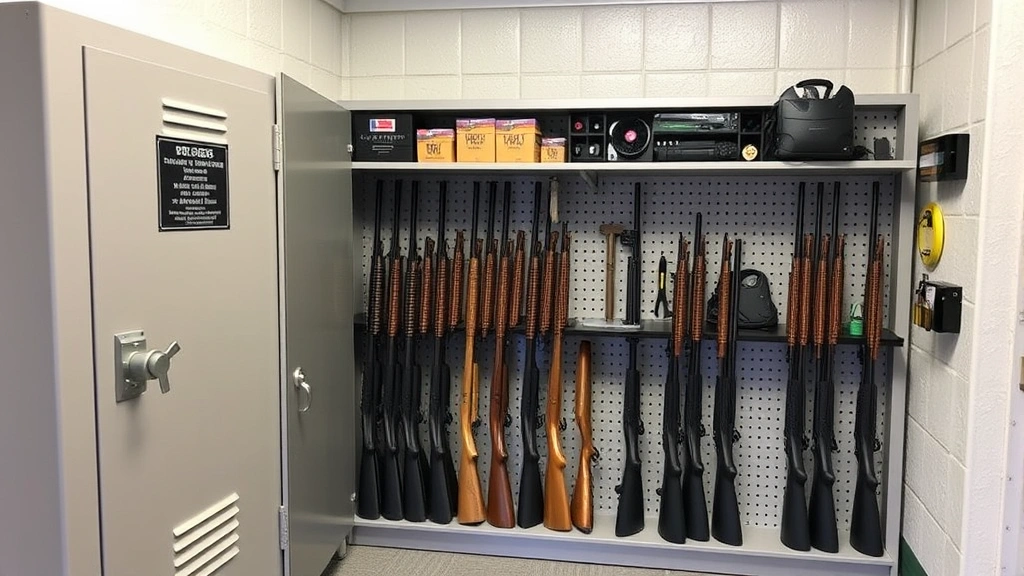
Storage requirements are rigorously enforced through registration and compliance audits. Firearms must be stored separately from ammunition in secure facilities such as locked safes or cabinets. The registration system allows authorities to verify that owners maintain compliant storage arrangements, and non-compliance can result in license cancellation and criminal charges.
Penalties and Enforcement
Violations of AUS gun laws carry severe criminal penalties reflecting the serious nature of firearms offenses. Unlawful possession of a firearm can result in imprisonment for five to fourteen years, depending on the specific circumstances and the weapon involved. These are indictable offenses prosecuted in higher courts, not minor infractions.
Manufacturing or possessing prohibited weapons attracts even more severe penalties, with potential sentences exceeding ten years imprisonment. Trafficking in firearms—selling or distributing weapons illegally—is treated as a serious organized crime offense with substantial mandatory minimum sentences in many jurisdictions.
Operating without a required license, failing to register a firearm, and breaching storage requirements are also criminal offenses. While these might attract lower maximum penalties than unlawful possession, they still carry significant prison sentences and criminal records. A criminal conviction for a firearms offense has serious collateral consequences affecting employment, professional licensing, and international travel.
Law enforcement agencies maintain specialized firearms investigation units that work closely with state and federal authorities. The Australian Federal Police, state police forces, and customs agencies coordinate to detect and prosecute firearms trafficking and illegal weapon possession. Intelligence sharing between agencies has become increasingly sophisticated, making it difficult for illegal weapons to enter or circulate within Australia undetected.
Understanding the severity of firearms offenses is crucial for legal professionals advising clients. An individual facing firearms charges should immediately consult with experienced criminal defense counsel. The complexity of firearms law, combined with the serious penalties involved, means that competent legal representation is essential. This is comparable to the importance of proper representation in complex civil matters, such as understanding what is a deposition in law and how evidence is developed in litigation.

Recent Legal Developments
Australian gun laws continue to evolve in response to emerging challenges and legislative developments. In recent years, several states have implemented enhanced background check protocols, expanded mental health screening requirements, and increased penalties for certain firearm offenses. The federal government has occasionally announced additional restrictions on specific weapon types or modifications.
Recent legislative amendments have focused on addressing ghost guns—unserialized, untraceable firearms manufactured through 3D printing or assembly from unregulated components. Several states have implemented laws specifically prohibiting the manufacture or possession of such weapons, recognizing this as an emerging threat to the existing regulatory framework. These laws make it illegal to manufacture firearms outside the licensed manufacturing sector, even for personal use.
Court decisions have consistently upheld the constitutionality of Australia’s strict gun laws. Challenges based on property rights, freedom of association, and other grounds have been rejected by courts at all levels. The High Court of Australia has affirmed that the Commonwealth and states possess the constitutional authority to implement comprehensive firearms regulation in the interests of public safety.
International developments have also influenced Australian gun policy. Australia participates in international arms control initiatives and maintains information-sharing agreements with other nations regarding illegal weapons trafficking. These international cooperation frameworks help prevent weapons from being smuggled into Australia from overseas sources.
Professional legal education has adapted to reflect the importance of firearms law knowledge. Legal professionals, particularly those in criminal law and regulatory practice, benefit from specialized training in firearms offenses and compliance requirements. Attorneys interested in this specialized area might consider exploring best law schools in US that offer advanced criminal law programs, or alternatively, pursuing continuing legal education in firearms regulation.
For those contemplating legal careers in regulatory or criminal practice, understanding the depth and complexity of firearms legislation is increasingly valuable. The question of is law school worth it often depends on one’s career aspirations, and specialized knowledge in areas like firearms law can differentiate legal professionals in the marketplace.
For comprehensive information and current updates on Australian gun legislation, consult the Australian Attorney-General’s Department, which maintains detailed resources on the National Firearms Agreement and federal firearms policy. The NSW Police Firearms Registry provides state-specific guidance for New South Wales residents. For legal research and case law analysis, the Australasian Legal Information Institute (AustLII) offers comprehensive access to Australian court decisions and legislation. Additionally, the Criminal Lawyers Association of Australia provides resources for legal professionals specializing in criminal matters, including firearms offenses. For international comparative analysis, the GunPolicy.org database offers evidence-based information on firearms regulations across jurisdictions.
FAQ
Can I legally own a firearm for self-defense in Australia?
No. Self-defense is not recognized as a legitimate reason for firearm ownership under Australian law. Licensed firearm ownership is restricted to specific purposes: sport shooting (for licensed shooting clubs), hunting, and occupational use by primary producers and similar professionals. Personal protection is not an acceptable basis for obtaining a firearms license.
What happens if I inherit a firearm from a deceased relative?
Inherited firearms must be dealt with through proper legal channels. You cannot simply retain possession of an inherited firearm unless you hold a valid firearms license for that category of weapon. Options include surrendering the firearm to police, transferring it to a licensed family member, or selling it through a licensed firearms dealer. An executor should consult with legal counsel to ensure proper compliance with firearms legislation.
Are there any exceptions to the prohibition on semi-automatic rifles?
Limited exceptions exist for licensed primary producers and professional pest controllers in Category C and D licenses, who may legally possess semi-automatic rifles for occupational purposes. However, these licenses are strictly controlled, require demonstrated occupational need, and involve extensive background checks and ongoing compliance monitoring. Civilian sport shooters cannot legally access semi-automatic rifles under any circumstances.
What are the consequences of transporting a firearm across state lines without proper authorization?
Transporting firearms across state boundaries without appropriate permits and notification to relevant authorities constitutes unlawful possession, which carries severe criminal penalties including imprisonment. Even licensed owners must obtain specific authorization before moving firearms interstate. The process requires advance notice to both originating and receiving state authorities and strict compliance with transportation protocols.
How often must firearm licenses be renewed?
Firearm license renewal requirements vary by state but typically occur every five years. Renewal requires verification that the licensee continues to meet all eligibility criteria, maintains compliant storage arrangements, and retains legitimate need for the firearm. License holders receive notification before expiration, and failure to renew on time results in automatic license cancellation and potential criminal charges for unlawful possession.
Visit the Legal Wise Hub Blog for additional resources on legal compliance and regulatory matters.