
Early Laws: What Were Caveman Rules? Expert Insight
The concept of law and order predates written civilization by thousands of years. Before the Code of Hammurabi or any formal legal document existed, our ancestors developed systems of rules, norms, and punishments to maintain social cohesion and survival. Understanding caveman rules and their punishments offers fascinating insight into how human societies evolved from tribal bands into complex legal systems. These early forms of governance laid the groundwork for the sophisticated legal frameworks we navigate today, from compulsory education laws to modern criminal codes.
Archaeological evidence, anthropological research, and studies of modern hunter-gatherer societies provide compelling clues about how prehistoric communities enforced rules and maintained order. Rather than chaotic anarchy, evidence suggests that cavemen operated within structured social systems with clear expectations, enforcement mechanisms, and consequences for violations. This article explores the origins of law, the nature of prehistoric justice, and how early punishments shaped our modern understanding of crime and consequence.
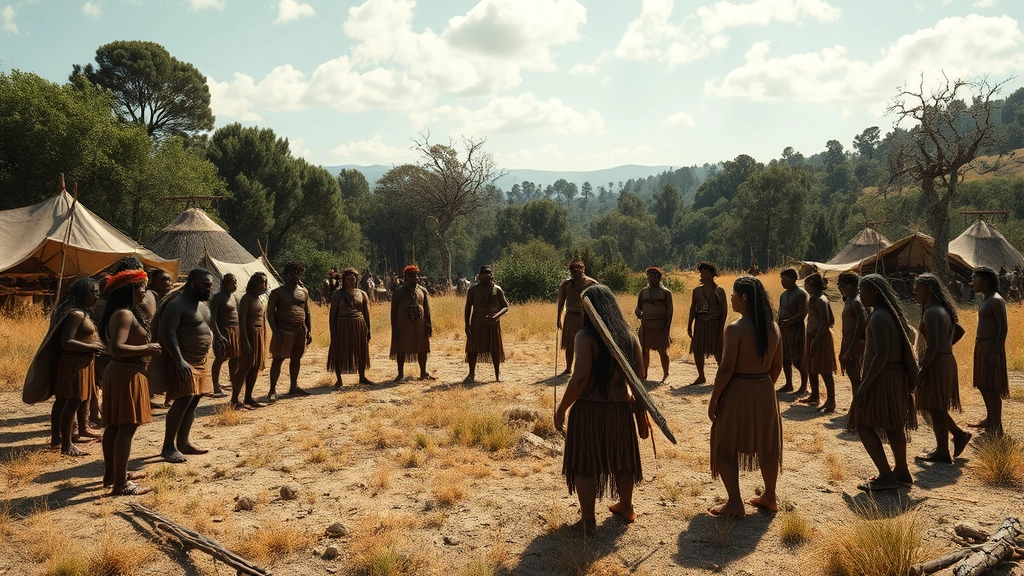
The Origins of Law: Beyond Written Code
Law did not suddenly materialize with the invention of writing. Long before humans carved legal codes into stone tablets, they developed unwritten rules governed by custom, tradition, and social pressure. The earliest laws were not written down because writing itself had not yet been invented—yet these rules were no less binding on community members. Anthropologists studying modern hunter-gatherer societies that maintain traditional lifestyles offer windows into how prehistoric peoples might have organized their social rules.
The fundamental purpose of early law was identical to modern law: establishing order, protecting property, resolving disputes, and maintaining social stability. In small tribal groups where everyone knew everyone else, reputation and social standing carried enormous weight. Violations of community norms resulted in immediate social consequences—ostracism, ridicule, or physical punishment. These informal enforcement mechanisms proved remarkably effective in societies where survival depended on group cooperation.
Historians and legal scholars recognize that the concept of law itself emerged from practical necessity rather than philosophical ideals. Early humans recognized that without rules governing resource distribution, conflict resolution, and sexual access, their communities would collapse into violence. The establishment of law represented a significant cognitive and social achievement—the ability to create abstract rules that transcended individual desires for the collective good.

Social Structure and Rule-Making in Prehistoric Communities
Caveman societies were typically organized into small bands of 20-50 individuals, often composed of related family groups. These tight-knit communities developed hierarchical structures with recognized leaders—usually older males with demonstrated hunting prowess, wisdom, or magical/spiritual authority. Leadership in prehistoric societies was not absolute; leaders maintained authority through consensus and demonstrated competence rather than through codified legal power.
Rule-making in these societies occurred organically through repeated social interactions. When conflicts arose—over hunting rights, territorial boundaries, or romantic partners—communities developed precedents for resolution. Successful solutions were repeated and eventually became customary law. These customs governed behavior as effectively as written statutes govern modern societies, because violation meant immediate social consequences in close-knit groups where reputation determined survival prospects.
Gender roles, hunting territories, marriage customs, and religious practices all fell under the umbrella of early law. Women typically held specific responsibilities and rights, though these varied significantly by geography and climate. Men’s roles centered on hunting and protection, while women managed gathering, child-rearing, and food processing. Violation of gender-specific duties could result in social sanctions, violence, or expulsion from the group.
The role of elders in early legal systems cannot be overstated. Older community members served as living repositories of precedent and tradition. Their memories of how similar disputes had been resolved in the past provided guidance for current conflicts. This reliance on elder wisdom persisted in many cultures and appears in early written legal codes, where older judges and councils made final decisions on legal matters.
Common Caveman Rules and Their Purposes
Archaeological and anthropological evidence suggests that prehistoric societies enforced rules regarding several critical areas. Understanding these categories helps illuminate how early law addressed fundamental human concerns that remain relevant in modern legal systems, even as specific rules have changed—much like how modern state regulations address contemporary issues while maintaining historical legal principles.
Property and Resource Rights: Early humans recognized concepts of ownership and territorial rights. Hunting territories belonged to specific bands, and violation of these boundaries could trigger warfare. Personal property—tools, weapons, clothing—belonged to individuals, and theft was prohibited. These rules prevented constant conflict over scarce resources essential for survival. Archaeological evidence shows that disputes over resource access motivated both rule creation and enforcement.
Sexual and Marriage Rules: Regulations governing sexual access and marriage were fundamental to early societies. Incest prohibitions appear universal across human cultures, suggesting deep evolutionary roots. Rules governing bride price, divorce, and adultery managed one of society’s most conflict-prone areas. Violation of sexual rules often resulted in severe punishment because these violations threatened paternity certainty and family stability.
Kinship Obligations: Rules specifying duties toward relatives structured early societies. Individuals had obligations to share food with family members, provide mutual defense, and participate in group rituals. Failure to fulfill kinship obligations damaged one’s reputation and could result in reduced access to group resources or expulsion.
Religious and Ritual Compliance: Many rules involved religious observance and ritual participation. Violations of taboos—whether involving food restrictions, menstrual practices, or sacred sites—were treated as serious offenses. These rules often served practical purposes (dietary restrictions prevented consumption of spoiled food) even when explained through spiritual frameworks.
Violence and Conflict Resolution: Rules prohibiting arbitrary violence within the group maintained internal stability. However, these rules typically distinguished between justified and unjustified violence. Killing in self-defense or in response to a previous killing might be permitted or even obligatory, while unprovoked murder violated community norms. This distinction between legitimate and illegitimate violence persists in modern criminal law, where we distinguish between murder and justifiable homicide.
Punishment Systems in Early Societies
Prehistoric punishment systems were remarkably diverse and generally served multiple purposes: deterrence, compensation, rehabilitation through humiliation, and in severe cases, incapacitation or execution. Unlike modern systems that emphasize rehabilitation, early punishment focused on restoring balance and preventing future violations through fear and social shame.
Physical Punishment: Beatings, mutilation, and physical pain served as primary punishment mechanisms in many early societies. Specific injuries might correspond to specific violations—hand amputation for theft, for example. The Code of Hammurabi, one of humanity’s first written legal codes, extensively detailed such punishments. Physical punishment served multiple purposes: it was immediately visible to the community, provided visceral deterrence, and required no elaborate enforcement infrastructure.
Compensation and Restitution: Many violations were addressed through payment of compensation to victims or their families. A hunter who killed another’s prized dog might be required to provide a replacement. Someone who damaged another’s tools must compensate the owner. This system resembles modern civil law and reflects recognition that some violations could be addressed through economic remedy rather than physical punishment. Compensation systems were particularly common in societies where maintaining community cohesion was essential for survival.
Shunning and Ostracism: Social exclusion represented a severe punishment in societies where group membership meant survival. Being shunned—excluded from hunts, sharing of food, or group rituals—could be fatal. Archaeological evidence suggests that individuals with severe disabilities or chronic illnesses were sometimes left behind, suggesting that ostracism could be permanent and deadly. Modern solitary confinement echoes this ancient punishment mechanism.
Death Penalty: Execution for serious violations appears in evidence from many prehistoric societies. Murder, repeated theft, or violation of sacred rules could result in death. Execution methods varied—stoning, drowning, or abandonment in hostile territory. Some societies practiced ritual execution as part of religious ceremonies. The death penalty for serious crimes persisted through written legal codes and remains part of many modern justice systems.
Slavery and Forced Labor: Some early societies enslaved captives from rival groups or individuals unable to pay compensation. Slavery represented a form of permanent punishment and economic exploitation. This practice expanded dramatically with agricultural societies and formed the basis for later slave systems in ancient civilizations.
Exile and Banishment: Permanent or temporary expulsion from the community represented a middle ground between execution and lesser punishments. Exiled individuals lost access to group protection and resources, making survival difficult but not impossible. This punishment was suitable for serious violations by valued community members—it removed the threat while preserving the possibility of redemption if the exile could prove their worth elsewhere.
How Caveman Justice Evolved Into Modern Law
The transition from unwritten customary law to formal legal systems occurred gradually over millennia. The development of writing enabled law to be recorded, standardized, and transmitted across generations with precision. Early written codes like Hammurabi’s (approximately 1754 BCE) represent the moment when customary law was crystallized into formal text. These codes maintained many principles from earlier unwritten systems while adding the precision and predictability that writing enabled.
Agricultural development transformed legal systems by creating permanent settlements, accumulated wealth, and social inequality. Larger populations required more formal enforcement mechanisms. Kings and rulers claimed authority to make and enforce law, replacing the consensus-based leadership of small bands. This centralization of legal authority enabled more complex legal systems but also introduced the potential for tyranny and corruption.
The concept of written law provided crucial advantages. Laws could be recorded precisely, preventing disputes about what rules actually required. Standards could be applied consistently across the kingdom. Written law enabled appeals and review processes impossible in purely oral systems. Citizens could study law and understand their obligations. These developments made legal systems more predictable and potentially more fair, though written law also enabled more sophisticated oppression by those who controlled the law-making apparatus.
Modern legal systems maintain surprising continuity with prehistoric justice principles. We still recognize concepts like self-defense, proportional punishment, and compensation for harm. We still distinguish between premeditated and impulsive violence. We still recognize family obligations, though now formalized in inheritance and custody law. The basic human recognition that societies require rules and enforcement mechanisms—the core insight of caveman justice—remains as valid today as it was in prehistoric bands.
However, modern law has added crucial protections absent from prehistoric systems. We have developed due process, recognizing that accusations require evidence and opportunity for defense. We limit punishment based on proportionality principles. We recognize individual rights and freedoms. We have created appeals processes and judicial review. Modern law also reflects contemporary values: protection of minorities, gender equality, and prohibition of cruel punishment. Understanding how we evolved from caveman rules to modern law helps us appreciate both the achievements and remaining challenges in contemporary justice systems.
Archaeological Evidence of Early Legal Systems
While written legal codes provide direct evidence about early law, archaeological evidence offers insights into prehistoric justice systems. Skeletal remains showing healed and unhealed injuries suggest patterns of violence and conflict resolution. Burial practices reveal social hierarchy and status distinctions. Tool marks on bones indicate whether injuries were inflicted pre-mortem or post-mortem, suggesting whether violence occurred in conflict or as punishment/ritual practice.
Forensic analysis of prehistoric remains has revealed evidence of execution, warfare, and interpersonal violence. The Otzi the Iceman, a 5,300-year-old mummy discovered in the Alps, shows evidence of being shot with an arrow and possibly murdered. His burial in a remote location with valuable items suggests deliberate concealment, possibly after a murder. Such discoveries provide concrete evidence that prehistoric humans engaged in lethal violence and possibly had systems for addressing such violence.
Settlement patterns and fortifications offer clues about conflict and security concerns. Prehistoric settlements with defensive walls suggest organized warfare between communities. The arrangement of dwellings can indicate social hierarchy and family structure. Some archaeological sites show evidence of ritual violence or human sacrifice, suggesting that religious law carried serious enforcement mechanisms.
Comparative anthropology studying modern traditional societies maintains cultural practices similar to prehistoric ones. These societies demonstrate how unwritten legal systems function effectively. Observations of dispute resolution, punishment practices, and rule enforcement in these communities provide models for understanding prehistoric justice. However, it’s important to recognize that modern traditional societies are not “frozen in time” and have adapted over millennia, so they may not perfectly reflect prehistoric practices.
Comparing Prehistoric Justice to Contemporary Legal Standards
Modern legal systems would consider many caveman punishments barbaric and inhumane. Physical mutilation, torture, and execution without trial violate contemporary human rights standards. Yet many core principles of prehistoric justice remain embedded in modern law. Understanding these continuities and divergences helps illuminate how legal systems have evolved and what values have changed.
Proportionality: Both prehistoric and modern systems recognize that punishment should be proportional to the offense. Early societies didn’t execute someone for minor theft, just as modern law distinguishes between misdemeanors and felonies. The Code of Hammurabi’s famous principle of “an eye for an eye” reflects proportionality thinking. Modern sentencing guidelines attempt to match punishment to crime severity, though the specific penalties have changed dramatically.
Intent and Circumstances: Prehistoric justice apparently recognized distinctions between intentional and accidental harm, though evidence is limited. Modern law extensively developed this principle through murder versus manslaughter distinctions. Self-defense and necessity remain valid defenses in both systems. These continuities suggest that recognizing mental state and circumstances is fundamental to human justice concepts.
Victim Compensation: Early restitution systems resembled modern civil law more than criminal punishment. Modern systems have rediscovered victim compensation, recognizing that financial remedies address certain harms more effectively than incarceration. Some contemporary legal movements advocate expanding restorative justice, which bears surprising resemblance to prehistoric compensation systems.
Evidentiary Standards: Modern law’s emphasis on evidence and proof contrasts sharply with prehistoric systems that apparently relied heavily on oaths, ordeals, and community judgment. Trial by ordeal—where divine judgment supposedly revealed guilt—persisted into medieval European law. Modern evidence standards represent a crucial advancement in preventing wrongful punishment, though they also make prosecution of crimes without physical evidence more difficult.
Rights of the Accused: Perhaps the greatest divergence between prehistoric and modern justice involves rights of the accused. Prehistoric systems offered minimal opportunity for defense or appeal. Modern law provides right to counsel, cross-examination of witnesses, and appeals processes. These protections emerged gradually through centuries of legal development and reflect changing values about individual rights. Similar developments appear in state regulations, which balance individual rights with community safety concerns.
Execution Standards: While both systems permitted capital punishment, modern systems have increasingly restricted it. Many developed nations have abolished capital punishment entirely. Among those retaining it, execution methods have become less brutal (lethal injection rather than drawing and quartering), and eligibility has been restricted. These changes reflect evolving standards about human dignity and the state’s power over life and death.
Rehabilitation Focus: Prehistoric punishment emphasized deterrence and retribution. Modern criminal justice increasingly emphasizes rehabilitation, though with mixed results. The recognition that punishment might reform offenders represents a philosophical shift from earlier systems. Legal education now trains professionals in rehabilitation principles alongside punishment and deterrence. This evolution reflects changing beliefs about human nature and society’s obligations toward offenders.
Understanding how legal systems have evolved from caveman rules to modern law demonstrates that law is not fixed or natural, but rather a human creation that reflects contemporary values and understanding. As our society evolves, so too does our legal system. Examining prehistoric justice helps us recognize which legal principles are fundamental to human societies and which reflect particular historical moments or cultural values.
FAQ
Did cavemen actually have organized legal systems?
Yes, though not in the formal written sense. Archaeological and anthropological evidence suggests that prehistoric communities developed customary rules governing property, relationships, violence, and resource distribution. These unwritten rules were enforced through social pressure, shame, and physical punishment. The absence of written law doesn’t mean the absence of law—it simply means rules were transmitted orally and enforced informally through community mechanisms.
What was the most common punishment in caveman societies?
Physical punishment, social shunning, and compensation appear to have been most common. Severe punishments like execution were reserved for serious violations. The specific punishments varied by society and violation type. Compensation systems allowed victims or their families to receive payment for harm, functioning similarly to modern civil law. Social ostracism could be as effective as physical punishment in small communities where group membership meant survival.
How did cavemen determine guilt without evidence rules?
Prehistoric societies relied on different methods than modern evidence-based systems. Community consensus, witness testimony, oaths, and sometimes ordeals (trials by physical challenge supposedly revealing divine judgment) determined guilt. Some societies may have used confession as primary evidence. The lack of formal evidence rules meant that innocent people could be punished based on accusation, reputation, or community bias—a serious injustice that modern evidence rules help prevent.
Did caveman law distinguish between murder and manslaughter?
Evidence suggests that prehistoric societies recognized some distinction between intentional and unintentional killing, though the specifics are unclear. Killing in self-defense or in response to a previous killing might be permitted or even obligatory. Accidental death might be addressed through compensation rather than execution. The consistent recognition of intent across cultures suggests this distinction is fundamental to human justice thinking, not a modern innovation.
How are modern legal systems descended from caveman law?
Modern law inherited several core concepts from prehistoric systems: proportional punishment, recognition of intent and circumstances, victim compensation, and the principle that societies require rules and enforcement. However, modern law added crucial protections: evidence standards, due process, rights of the accused, and limits on punishment severity. The evolution from prehistoric to modern law represents both continuity in fundamental principles and dramatic changes in values regarding individual rights and human dignity. Like understanding unusual contemporary laws, examining prehistoric justice reveals how legal systems reflect their societies’ values and concerns.


