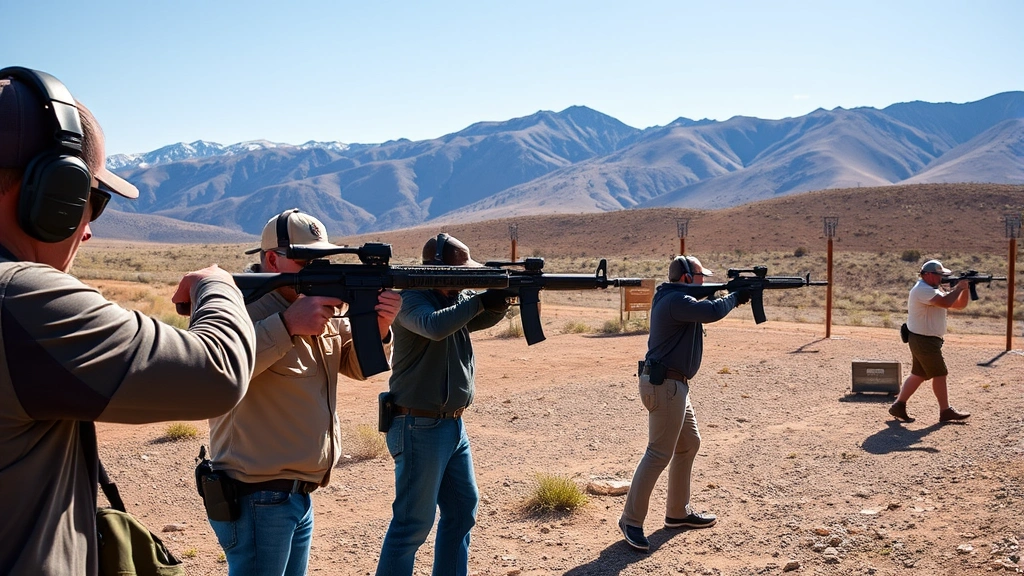
Colorado Gun Laws 2025 Update: Legal Insights
Colorado’s firearms regulations continue to evolve, reflecting ongoing legislative efforts to balance Second Amendment rights with public safety considerations. Understanding the current legal landscape is essential for gun owners, dealers, and those seeking to legally possess firearms in the state. This comprehensive guide examines the 2025 updates to Colorado gun laws, covering permit requirements, restrictions, penalties, and recent legislative changes that affect residents and visitors alike.
The state has implemented several significant modifications to its firearms statutes over recent years, with 2025 bringing additional clarifications and adjustments. Whether you’re a longtime Colorado resident or new to the state, knowing these regulations helps ensure compliance and protects your legal rights. This article provides detailed information about licensing, prohibited weapons, background checks, and other critical aspects of Colorado’s gun law framework.
Colorado Concealed Carry Permit Requirements
Colorado operates as a shall-issue state for concealed carry permits, meaning county sheriffs must issue permits to qualified applicants meeting statutory requirements. As of 2025, the process remains largely consistent, though procedural updates continue to streamline applications. To obtain a concealed carry permit, applicants must be at least 18 years old, though some restrictions apply to certain age groups.
The application process involves submitting documentation to your county sheriff’s office. Required materials typically include proof of identity, proof of residency, and completion of a firearm safety course from an approved instructor. Colorado recognizes training from certified instructors throughout the state, and many gun ranges offer these courses. The sheriff has up to 90 days to issue or deny a permit, though most counties process applications more quickly.
Applicants must demonstrate they are legally allowed to possess firearms under both state and federal law. This means having no felony convictions, no domestic violence convictions, no restraining orders, and no history of mental health commitments that would disqualify ownership. Understanding reflection about law and its application to individual rights helps contextualize how Colorado balances constitutional protections with regulatory requirements.
The permit fee varies by county but typically ranges from $100 to $300. Permits are valid for five years and must be renewed before expiration. During renewal, applicants may not need to repeat the training requirement, though this depends on specific county procedures. Reciprocity considerations are important for those who travel or relocate, as permit recognition varies across states.
Background Checks and Universal Requirements
Colorado implemented universal background check requirements in 2013, and these remain in effect for 2025. All firearm transfers, including private sales, must go through a licensed firearms dealer who conducts a background check. This requirement applies to handguns, rifles, shotguns, and other firearms, with limited exceptions for certain family transfers.
The background check process involves the dealer submitting information to the Colorado Bureau of Investigation (CBI) and the Federal Bureau of Investigation (FBI). Both agencies conduct checks against their respective databases to identify disqualifying factors. The process typically takes three business days, though it can be completed faster in many cases. If the check is delayed beyond three days, dealers may release the firearm under federal law, though state law encourages stricter adherence to the three-day period.
Prohibited persons under Colorado law include those with felony convictions, certain misdemeanor convictions (particularly domestic violence-related), active protection orders against them, and individuals with certain mental health determinations. Federal prohibitions also apply, including those involving immigration status and certain drug convictions. Understanding the differences between civil law and common law helps clarify how Colorado’s statutory framework interacts with federal regulations.
The universal background check requirement has generated significant litigation regarding its constitutionality and scope. However, Colorado courts have generally upheld the requirement as a reasonable regulation consistent with Second Amendment protections. Recent court decisions continue to refine the boundaries of what constitutes a prohibited transfer requiring background checks.

Prohibited Weapons and Magazine Restrictions
Colorado maintains specific restrictions on certain types of weapons and ammunition magazines. The state prohibits the sale, possession, and transfer of large-capacity ammunition magazines capable of holding more than 15 rounds. This restriction, implemented in 2013, applies to all firearms and remains a significant aspect of Colorado’s regulatory scheme.
Individuals who possessed large-capacity magazines before the prohibition may retain them for personal use, but selling or transferring them is illegal. Dealers cannot sell these magazines, and importing them into the state violates state law. The restriction applies regardless of whether the magazines are attached to firearms or stored separately.
Beyond magazine restrictions, Colorado generally permits ownership of rifles, shotguns, and handguns that are legal under federal law. However, the state does not allow ownership of fully automatic weapons manufactured after 1986 without special federal licensing. Pre-1986 automatic weapons require federal registration and appropriate permits.
Certain localities within Colorado maintain additional restrictions beyond state law. Some municipalities prohibit specific types of firearms or have their own magazine restrictions. Residents should verify local ordinances in their jurisdiction, as city and county regulations may be more restrictive than state law. This creates a complex regulatory landscape where compliance requires understanding both state and local requirements.
The legal framework surrounding prohibited weapons continues to evolve through court decisions and legislative action. Challenges to the magazine restriction have reached Colorado courts, and understanding how the appeal process works can be important for those contesting regulations.
Permit Reciprocity and Out-of-State Considerations
Colorado recognizes concealed carry permits from other states under certain conditions, making it important for visitors and residents with out-of-state permits to understand reciprocity rules. As of 2025, Colorado honors permits from states that have comparable permit requirements, though reciprocity can be limited or conditional depending on the issuing state.
Visitors to Colorado with valid out-of-state concealed carry permits may legally carry concealed firearms in Colorado, provided their home state has reciprocity recognition. However, some states have limited reciprocity agreements with Colorado, meaning permits are recognized only under specific circumstances. It’s essential to verify your particular state’s reciprocity status before traveling to Colorado with a concealed firearm.
Colorado residents who travel frequently may consider obtaining permits from multiple states to ensure broad reciprocity coverage. Some states offer non-resident permits specifically for this purpose. The reciprocity landscape is complex and changes periodically, so checking current reciprocity agreements before travel is prudent.
For those relocating to Colorado from other states, understanding how your current permit applies and what steps are necessary to obtain a Colorado permit is crucial. While your out-of-state permit may provide temporary carry rights, obtaining a Colorado permit ensures compliance with state law and eliminates potential legal complications. The Colorado sheriff’s office can provide guidance on the application process and timeline.
Penalties and Legal Consequences
Violations of Colorado gun laws carry significant legal consequences, ranging from misdemeanor charges to felony convictions depending on the offense severity. Understanding potential penalties helps ensure compliance and informs legal decision-making regarding firearm ownership and use.
Illegal possession of firearms by prohibited persons is typically charged as a felony, particularly for those with felony convictions or domestic violence histories. Conviction can result in prison sentences ranging from two to six years, depending on prior criminal history and specific circumstances. Additionally, felony convictions permanently eliminate an individual’s ability to legally possess firearms in Colorado.
Transferring firearms to prohibited persons or failing to conduct required background checks constitutes illegal transfer or straw purchase activity. These offenses are serious felonies that can result in substantial prison time and fines. Federal charges may also apply, particularly when firearms cross state lines or when federal firearms laws are implicated.
Violating magazine restrictions, such as selling or transferring large-capacity magazines, is typically charged as a misdemeanor with potential jail time and fines. While less severe than felony charges, misdemeanor convictions create permanent criminal records and may affect employment, housing, and professional licensing opportunities.
Carrying a concealed firearm without a valid permit is a misdemeanor offense in Colorado. Penalties include jail time and fines, with severity depending on prior criminal history. Additionally, conviction eliminates future eligibility for concealed carry permits for a specified period.
Understanding these consequences underscores the importance of compliance with all applicable regulations. When questions arise about legal requirements, consulting with an experienced attorney at law can provide guidance specific to your situation and jurisdiction.
Recent Legislative Changes for 2025
The 2025 legislative session brought several updates to Colorado’s firearms regulations, reflecting ongoing policy debates between public safety advocates and Second Amendment proponents. These changes affect permitting procedures, dealer requirements, and enforcement mechanisms.
One significant update involves enhanced background check procedures for certain high-risk individuals. The legislation requires additional investigation into individuals with mental health histories or protective orders, providing sheriffs with more comprehensive information when making permit decisions. This change aims to improve public safety while maintaining the shall-issue framework that guarantees permits to qualified applicants.
The 2025 session also addressed dealer licensing and inventory requirements. New regulations require licensed firearms dealers to maintain more detailed records and implement additional security measures for firearm storage. These requirements aim to reduce theft and unauthorized access to firearms while ensuring dealers operate responsibly.
Ammunition dealer regulations received attention as well, with the legislature clarifying background check requirements for ammunition purchases. While Colorado had previously implemented ammunition background checks, the 2025 updates streamline the process and clarify dealer obligations, reducing confusion about compliance requirements.
Additionally, the legislature addressed permit renewal procedures to make the process more efficient. New provisions allow for online renewal in some counties and extend renewal periods under certain circumstances. These procedural improvements aim to reduce administrative burden while maintaining public safety oversight.
These legislative changes reflect the evolving nature of Colorado’s gun law framework. Staying informed about recent updates helps ensure continued compliance and understanding of your rights and responsibilities as a firearms owner.

Local Ordinances and Municipal Variations
Colorado’s regulatory framework extends beyond state law to include significant local variations. Cities and counties maintain authority to impose additional firearms restrictions beyond state requirements, creating a complex patchwork of regulations that vary by jurisdiction. Denver, Boulder, and Fort Collins have particularly restrictive ordinances that residents and visitors must understand.
Denver’s firearm regulations are among the most restrictive in Colorado. The city requires registration of all firearms, prohibits certain types of weapons, and maintains strict concealed carry regulations. Additionally, Denver prohibits the possession of large-capacity magazines with greater restrictions than state law allows in some cases. Compliance with Denver regulations requires understanding both city ordinances and state law.
Boulder has implemented similar restrictions, including firearm registration requirements and prohibitions on certain weapon types. The city also maintains specific rules regarding storage and transport of firearms. Understanding Boulder’s local ordinances is essential for residents, as violations can result in local misdemeanor charges in addition to any state-level violations.
Fort Collins and other Front Range communities have also adopted local ordinances addressing firearms. These vary in scope and severity, from registration requirements to specific prohibitions. Checking with your local municipal government provides clarity on applicable local rules.
The interaction between state and local law creates important compliance considerations. In some cases, local ordinances may be more restrictive than state law, requiring stricter compliance. In other cases, local restrictions may conflict with state law, creating legal uncertainty. When conflicts arise, state law typically preempts local ordinances, though this principle continues to be litigated in Colorado courts.
For those relocating or traveling within Colorado, understanding the specific ordinances in your destination is crucial. What’s legal in one municipality may be illegal in another, and ignorance of local regulations is not a legal defense. Taking time to research local rules before transporting firearms or making purchases protects you from inadvertent violations.
FAQ
Do I need a permit to own a firearm in Colorado?
Colorado does not require a permit to purchase or own firearms in your home. However, you must pass a background check when purchasing through a licensed dealer, and you need a concealed carry permit to carry a loaded firearm in public places.
Can I carry a firearm without a permit in Colorado?
Open carry of firearms is legal in Colorado for individuals legally allowed to possess guns, and no permit is required for open carry. However, concealed carry requires a permit from your county sheriff. Some municipalities have restrictions on open carry, so checking local ordinances is important.
How long does it take to get a Colorado concealed carry permit?
County sheriffs have up to 90 days to process concealed carry applications, though most counties complete processing within 4-6 weeks. Expedited processing may be available in some counties for an additional fee.
What disqualifies someone from obtaining a concealed carry permit in Colorado?
Felony convictions, domestic violence convictions, active restraining orders, certain mental health commitments, and federal firearms prohibitions disqualify individuals from obtaining concealed carry permits in Colorado.
Are large-capacity magazines legal in Colorado?
No, Colorado prohibits the sale and transfer of magazines holding more than 15 rounds. Individuals who possessed them before the 2013 prohibition may retain them for personal use but cannot sell or transfer them.
Does Colorado recognize out-of-state concealed carry permits?
Colorado recognizes concealed carry permits from certain other states under reciprocity agreements. You should verify your specific state’s reciprocity status with Colorado before carrying a concealed firearm in the state.
What are the penalties for violating Colorado gun laws?
Penalties range from misdemeanor charges with jail time and fines to felony convictions resulting in prison sentences of multiple years, depending on the specific violation and prior criminal history.
Can I transport firearms across Colorado state lines?
Yes, you can transport firearms across state lines, but you must comply with the laws of each state you travel through. Federal law provides some protections for lawful transport, but you should research the laws of your destination state before traveling.


