
Conway’s Law Explained: Legal Insights and Organizational Implications
Conway’s Law, originally formulated by computer scientist Melvin Conway in 1967, states that “any organization that designs a system will produce a design whose structure is a copy of the organization’s communication structure.” While this principle emerged from software engineering, its implications extend far into the legal profession, affecting how law firms operate, how legal departments organize themselves, and ultimately how they serve clients. Understanding this concept can help legal professionals optimize their organizational structures and improve outcomes.
In the legal context, Conway’s Law reveals why certain law firms excel at specific practice areas while struggling in others, why interdepartmental communication breakdowns occur, and how organizational silos can directly impact the quality of legal work. As legal services become increasingly complex and specialized, recognizing these patterns becomes essential for managing modern law firms and corporate legal departments effectively.

Understanding Conway’s Law: Core Principles
Melvin Conway’s original observation emerged from his work on compiler design in the 1960s. He noticed that the structure of software systems directly reflected the communication patterns and organizational hierarchy of the teams building them. This wasn’t merely coincidental—it was inevitable. When teams cannot communicate effectively across certain boundaries, those boundaries naturally appear in the final product.
The principle operates on several fundamental levels. First, organizations naturally develop communication hierarchies and information flows. Second, individuals working within those structures create solutions that mirror these existing patterns. Third, the resulting systems become increasingly difficult to modify without reorganizing the underlying team structure. This creates a self-reinforcing cycle where organizational structure and system design become deeply intertwined.
For legal professionals, this means that how a law firm organizes its departments, defines partner roles, and structures communication channels will directly influence the types of legal services it can effectively deliver, how cases are handled, and ultimately client satisfaction. A firm organized in rigid silos will produce fragmented legal strategies, while a firm with fluid communication structures will develop more integrated approaches.
Conway’s Law in Legal Practice
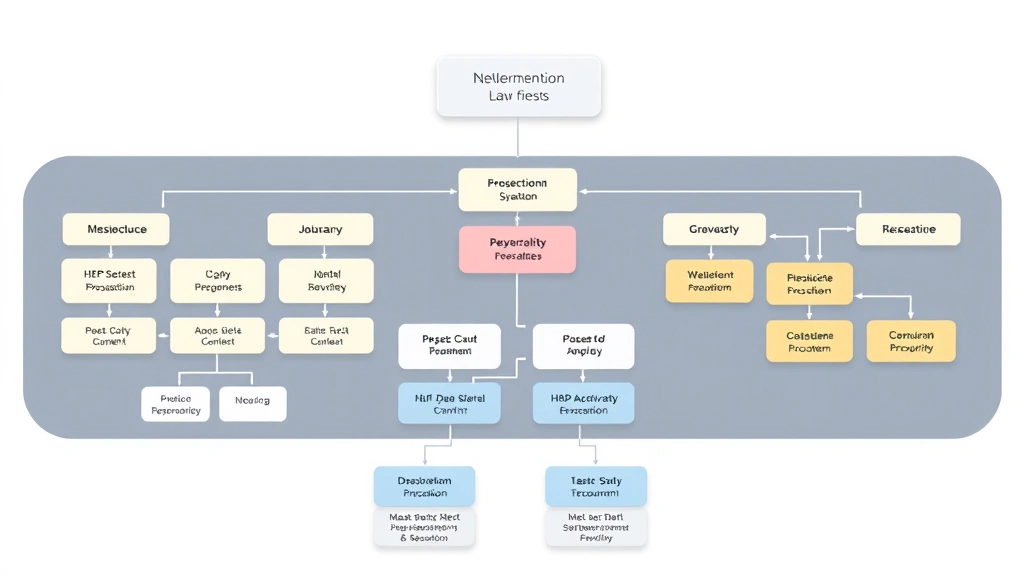
Legal organizations face unique challenges when applying Conway’s Law principles. Most law firms organize themselves by practice area—litigation, corporate, real estate, intellectual property, and so forth. While this specialization allows attorneys to develop deep expertise, it can also create communication barriers. When a client needs services spanning multiple practice areas, the organizational structure may actually impede the firm’s ability to deliver integrated solutions.
Consider a corporate client facing a complex employment dispute that involves intellectual property considerations. If the employment law team and intellectual property team operate independently with minimal communication channels, the client receives fragmented advice. The firm’s organizational structure—designed to maximize expertise in individual areas—produces a design reflecting those same silos. The legal strategy mirrors the organizational chart rather than optimizing for client needs.
This phenomenon also appears in how alternative dispute resolution departments interact with litigation teams. In firms where mediation and arbitration specialists operate separately from trial lawyers, clients often receive recommendations based on departmental expertise rather than case merit. The communication structure of the organization directly influences whether clients learn about all available options or only those within their assigned department.
Corporate legal departments face similar challenges. When in-house counsel organize around functional areas—contracts, compliance, litigation—without establishing strong communication protocols, information silos develop. A compliance issue that actually involves contractual interpretation may not reach the appropriate expertise because the organizational structure doesn’t facilitate that conversation.
Organizational Structure and Legal Outcomes
The direct correlation between organizational structure and legal outcomes manifests in several measurable ways. Research in organizational behavior, supported by legal industry analyses, demonstrates that firms with better cross-functional communication tend to achieve superior client outcomes. These firms resolve disputes more efficiently, develop more comprehensive legal strategies, and maintain higher client retention rates.
When examining mediation versus arbitration decisions, organizational structure plays a significant role. Firms organized to facilitate communication between dispute resolution specialists and trial attorneys tend to recommend the most appropriate process for each case. Conversely, firms where these groups operate independently often see attorneys defaulting to their specialty regardless of whether it serves the client’s interests.
The quality of legal work also reflects organizational structure. When partners work in isolation, developing individual client relationships and strategies independently, the firm cannot leverage institutional knowledge effectively. A case involving recurring legal issues might be handled differently across multiple practice groups because the organizational structure doesn’t facilitate knowledge sharing. Clients perceive inconsistency even though individual attorneys perform competently within their silos.
Large legal matters often require coordinated efforts across multiple specialists. The firm’s ability to coordinate effectively depends directly on its communication structure. Firms that have deliberately designed communication channels, cross-functional teams, and knowledge-sharing mechanisms tend to deliver superior results on complex matters. Their organizational structure supports integrated legal strategy, and that integration appears in the final product delivered to clients.
Communication Patterns in Law Firms
Understanding communication patterns provides crucial insight into how Conway’s Law operates within legal organizations. Traditional law firm hierarchies often resemble pyramids: partners at the top, associates below, paralegals and support staff at the base. This vertical communication structure tends to produce vertically organized legal work—each attorney working independently with their assigned clients and matters.
Modern legal organizations increasingly recognize that this traditional structure limits their effectiveness. Progressive firms are implementing flatter hierarchies, cross-functional teams, and deliberate communication protocols that cut across traditional departmental lines. These structural changes directly influence how legal work gets done. Cases benefit from multiple perspectives. Complex matters receive input from various specialties. Client service improves because the organizational structure now facilitates the integrated approach that clients actually need.
The emergence of legal project management as a discipline reflects this recognition. When firms implement project management structures for complex matters, they’re essentially creating new communication channels that override traditional departmental boundaries. The resulting legal work reflects this new structure—more coordinated, more comprehensive, and more strategically cohesive.
Technology also shapes communication patterns. Firms that implement collaborative platforms, shared document systems, and integrated case management tools create new communication pathways. These technological structures influence how attorneys interact, what information flows between departments, and ultimately how legal strategy develops. The systems themselves become manifestations of organizational communication patterns, which then shape legal outcomes.
Practical Applications for Legal Teams
Legal professionals can leverage Conway’s Law principles to improve organizational effectiveness. The first step involves honest assessment of current communication structures. Map how information actually flows through your organization. Where do silos exist? Which departments rarely interact? Where does critical information get lost between groups? This assessment reveals the true organizational structure, which may differ significantly from the formal organizational chart.
Once you understand existing communication patterns, consider whether they support your desired legal outcomes. If you want to provide integrated legal services across multiple specialties, your communication structure must facilitate that integration. This might involve creating cross-functional teams for major clients, implementing regular inter-departmental meetings, establishing shared metrics that reward collaboration, or redesigning physical office spaces to promote interaction across practice areas.
When preparing for complex litigation, consider how your organizational structure will support the case strategy. Will trial attorneys, deposition specialists, and research teams communicate effectively? Have you established clear communication protocols? Will discovery work flow smoothly across departments? These questions reveal whether your organizational structure will support or hinder your litigation strategy.
Corporate legal departments should examine whether their organizational structure facilitates the kind of legal support their business needs. A company requiring rapid decision-making on contract issues needs organizational structures that allow quick communication between contracts specialists and the business units they serve. A company facing complex regulatory challenges needs structures that promote communication between compliance specialists and other legal areas.
Consider also the terminology and language used across your organization. When different departments use different terminology for similar concepts, communication breaks down. Establishing shared vocabulary and definitions supports clearer communication and better integrated legal work.
Addressing Organizational Challenges
Conway’s Law also explains why certain organizational changes prove difficult. When you try to change how legal work gets done without changing the underlying organizational structure, resistance naturally emerges. The existing structure has become embedded in how people work, what information they access, and how they interact with colleagues. Changing outcomes without changing structure creates cognitive dissonance.
This principle applies particularly to legal malpractice prevention. If malpractice patterns emerge from communication failures between departments, simply training attorneys on better practices won’t resolve the underlying issue. You must address the organizational structure that created the communication failure in the first place. Perhaps quality control systems need to span multiple departments. Perhaps communication protocols need redesigning. Perhaps certain cases require mandatory cross-departmental review. These structural changes address the root cause rather than treating symptoms.
Mergers and acquisitions in the legal industry frequently encounter challenges rooted in Conway’s Law. When two firms with different organizational structures merge, the resulting organization reflects both structures in ways that often prove inefficient. Successful mergers recognize this principle and deliberately redesign organizational structures to support the desired integrated firm. Simply combining organizational charts without addressing communication patterns perpetuates the problems both firms previously faced.
Technology implementation also benefits from understanding Conway’s Law. When firms implement new case management systems, document automation, or AI-powered research tools, the success of these implementations depends on whether the organizational structure supports their use. If the technology requires cross-departmental communication but the organization maintains rigid silos, the technology will be underutilized. Successful technology adoption requires aligning organizational structure with technological capabilities.
Managing change initiatives requires recognizing that you cannot sustainably change legal work outputs without changing the organizational structures that produce them. This doesn’t necessarily mean dramatic reorganization. Often, relatively modest structural changes—creating new communication channels, establishing cross-functional teams for certain matters, implementing new meeting structures, or redesigning workspace—can significantly improve outcomes by aligning organizational structure with desired results.
Forward-thinking legal organizations increasingly use Conway’s Law proactively. Rather than waiting for problems to emerge from structural misalignment, they deliberately design organizational structures to support their strategic objectives. If the firm wants to excel at integrated legal services, it designs structures that facilitate integration. If it wants to be highly specialized, it designs structures that support deep expertise. The key is intentionality—consciously aligning organizational structure with strategic goals rather than allowing structure to emerge haphazardly.
FAQ
What exactly is Conway’s Law and why does it matter in legal practice?
Conway’s Law states that organizations design systems reflecting their communication structures. In legal practice, this means law firm organizational structures directly influence how legal work gets done, case strategy development, and ultimately client outcomes. Understanding this principle helps legal leaders optimize how their organizations operate.
How do organizational silos affect legal work quality?
Organizational silos prevent information flow between departments, limiting attorneys’ access to relevant expertise. This produces fragmented legal strategies, inconsistent advice to clients, and missed opportunities for integrated solutions. Cases benefit from multiple perspectives, but silos prevent those perspectives from combining effectively.
Can law firms change their organizational structure to improve outcomes?
Yes, but successfully changing outcomes requires changing underlying organizational structures, not just training or policies. This might involve creating cross-functional teams, implementing new communication protocols, redesigning office spaces, or establishing different meeting structures. The key is aligning organizational design with desired results.
How does Conway’s Law apply to corporate legal departments?
Corporate legal departments face similar challenges. When departments organize rigidly by function without strong communication channels, information silos develop. This can delay decision-making and prevent the integrated legal support that business units need. Effective corporate legal organizations deliberately design structures promoting communication across functional areas.
What’s the relationship between organizational structure and technology implementation?
Technology success depends on organizational alignment. If new systems require cross-departmental communication but organizational structure maintains silos, the technology will be underutilized. Successful implementation requires aligning organizational structures with technological capabilities and requirements.
How can legal leaders identify problematic organizational structures?
Map actual information flows through your organization, not just the formal organizational chart. Where does communication break down? Which departments rarely interact? Where does critical information get lost? This reveals structural problems preventing effective legal work and client service.


