
Understanding Fick’s Law: Legal Insights and Applications in Professional Practice
Fick’s Law, a fundamental principle in physics and chemistry, describes how substances diffuse through media over time. While primarily a scientific concept, understanding Fick’s Law has become increasingly relevant in legal practice, particularly in cases involving environmental contamination, product liability, pharmaceutical development, and expert witness testimony. Legal professionals who comprehend this scientific principle gain a significant advantage when litigating cases where diffusion, contamination spread, or chemical transport mechanisms form the basis of claims or defenses.
The intersection of scientific principles and legal argumentation requires attorneys to bridge complex technical concepts with compelling legal narratives. When your case involves environmental damage, chemical exposure, or substance migration, Fick’s Law often becomes central to establishing causation, quantifying damages, and challenging opposing expert testimony. This comprehensive guide explores how Fick’s Law functions within legal contexts, its applications in litigation, and how legal professionals can effectively incorporate this scientific knowledge into their practice.

What Is Fick’s Law and Its Fundamental Principles
Fick’s Law, named after German physiologist Adolf Fick, mathematically describes the diffusion process—how particles move from areas of high concentration to areas of low concentration. The law exists in two forms: Fick’s First Law addresses steady-state diffusion, while Fick’s Second Law describes non-steady-state diffusion over time. For legal professionals, understanding these distinctions proves crucial when evaluating how contaminants spread through soil, groundwater, or other media in environmental cases.
The fundamental equation of Fick’s First Law states that the diffusion flux is proportional to the concentration gradient. In practical terms, this means the rate at which a substance spreads depends on how steep the concentration difference is between two areas. When you write a legal brief involving environmental contamination, explaining this principle clearly to judges and juries becomes essential for establishing how quickly and extensively a pollutant dispersed from its source.
Fick’s Second Law becomes particularly important in litigation because it accounts for time. This temporal dimension allows experts to calculate how far a contaminant would have traveled given specific environmental conditions, soil composition, and elapsed time. Understanding these mathematical relationships enables attorneys to challenge expert testimony that may overstate or understate the extent of contamination spread, directly affecting liability determinations and damage calculations.
Key variables in Fick’s Law include the diffusion coefficient (how easily a substance moves through a medium), the concentration gradient (the difference in concentration between two points), and time. Environmental factors like temperature, pressure, and medium composition significantly influence these variables. When preparing your case strategy, recognizing how these factors interact becomes critical for understanding whether expert calculations represent accurate portrayals of actual contamination events.
Applications in Environmental Law Cases
Environmental law represents the most common arena where Fick’s Law directly impacts litigation outcomes. Contaminated groundwater cases frequently depend on expert analysis using Fick’s Law principles to establish how long a contaminant plume has been spreading and how far it will extend. When a manufacturing facility allegedly leaked chemicals, determining the contamination’s source, rate of spread, and future trajectory often hinges on diffusion calculations grounded in Fick’s Law.
In superfund litigation and brownfield remediation cases, responsible parties often contest liability based on diffusion patterns. A defendant might argue that naturally occurring diffusion has dispersed their contaminant to such an extent that other parties contributed significantly to current contamination levels. Conversely, plaintiffs use Fick’s Law to demonstrate that concentration gradients prove a defendant’s facility was the primary source. These technical arguments directly influence settlement values and liability apportionment.
Soil vapor intrusion cases provide another critical application area. When volatile organic compounds (VOCs) diffuse through soil and enter buildings, Fick’s Law helps quantify exposure risks. Attorneys representing property owners must understand how diffusion coefficients for specific chemicals, soil permeability, and depth of contamination combine to calculate indoor air concentrations. Expert testimony grounded in proper application of Fick’s Law can establish whether exposure levels reached levels of concern, directly affecting personal injury claims and property damage assessments.
Groundwater contamination plumes often follow patterns predictable through Fick’s Law calculations. When a client claims that contamination from a neighboring property has reduced their property values or caused health issues, expert hydrologists and geochemists rely on diffusion modeling to establish the contamination’s origin and extent. Understanding these technical analyses allows you to prepare for a deposition with opposing experts more effectively, identifying methodological weaknesses or unreasonable assumptions in their calculations.
The temporal aspect of Fick’s Law proves particularly significant in environmental cases involving historical contamination. A plaintiff might argue that contamination discovered today originated from a defendant’s operations decades ago. Using Fick’s Second Law, experts calculate backward in time, estimating initial concentration levels and release timeframes. Challenging these retroactive calculations requires understanding the mathematical principles underlying diffusion modeling and recognizing where assumptions about historical conditions become speculative.
Fick’s Law in Product Liability Litigation
Product liability cases involving chemical exposure or substance migration frequently rely on Fick’s Law principles. When medications diffuse through biological tissues, or when chemicals leach from packaging materials into food or beverages, the rate and extent of this diffusion becomes central to establishing injury causation. Attorneys representing injured plaintiffs must demonstrate that a product’s design or manufacturing defect allowed harmful substances to migrate to levels that caused documented harm.
Pharmaceutical cases represent a significant application area. When drug formulations involve controlled-release mechanisms, Fick’s Law governs how the active ingredient diffuses from the delivery system into the bloodstream. If a drug delivers excessive doses due to diffusion-related defects, resulting in overdose injuries, Fick’s Law calculations help quantify the amount of drug exposure over time. Expert testimony explaining these diffusion patterns helps juries understand the causation mechanism connecting the product defect to the plaintiff’s injuries.
Packaging and material migration cases also heavily involve Fick’s Law. Chemicals in plastic containers can diffuse into food or beverages, particularly when exposed to heat or extended storage. Manufacturers have legal obligations to ensure their packaging materials don’t leach harmful substances into products at levels exceeding regulatory limits. When a plaintiff claims illness from contaminated food or beverages, establishing the diffusion pathway from packaging into the product becomes essential. Fick’s Law calculations, combined with testing data, demonstrate whether a manufacturer’s packaging choice created an unreasonable hazard.
Textile and apparel cases sometimes involve Fick’s Law when analyzing how dyes or chemical treatments diffuse through fabrics into contact with skin. If a consumer develops allergic reactions or chemical burns from wearing clothing treated with certain substances, proving that the chemical diffused from the fabric to the skin in concentrations sufficient to cause injury requires understanding diffusion principles. This scientific foundation strengthens causation arguments in product liability claims.
When you consult with specialized attorneys, those with scientific backgrounds often prove invaluable in product liability cases. Their ability to explain Fick’s Law to juries—breaking down complex mathematics into understandable narratives about how chemicals migrate and accumulate—significantly impacts case outcomes. Jurors need to grasp that the defendant knew or should have known that their product design would allow harmful diffusion to occur.
Expert Witness Testimony and Scientific Evidence
Expert witness testimony represents the primary mechanism through which Fick’s Law enters legal proceedings. Qualified experts—typically holding advanced degrees in chemistry, physics, geology, or related fields—present calculations and interpretations based on Fick’s Law to establish facts central to the case. The reliability and credibility of this testimony directly affects whether judges and juries accept the scientific foundation of your legal arguments.
Daubert challenges have become increasingly common in cases where Fick’s Law calculations form the basis of expert testimony. Under Daubert standards, courts evaluate whether expert methodology is scientifically reliable and relevant to the case at hand. Experts must demonstrate that their application of Fick’s Law followed established scientific principles, used appropriate diffusion coefficients for specific substances and media, and made reasonable assumptions about environmental conditions. Poorly conducted diffusion modeling can be excluded from evidence entirely, eliminating crucial support for your claims.
When preparing expert witnesses, thoroughly review their diffusion calculations and assumptions. Did they use accurate diffusion coefficients from peer-reviewed literature? Did they account for temperature variations, pH changes, or other factors affecting diffusion rates? Did they properly apply Fick’s First or Second Law to the specific fact pattern? These technical details matter enormously when opposing counsel cross-examines your expert. Weak methodological choices become apparent to judges and juries when another expert testifies about the same phenomenon using different, more defensible approaches.
Opposing experts will likely challenge your expert’s diffusion-based calculations. They might argue that your expert overestimated diffusion coefficients, failed to account for sorption effects that slow diffusion, or made unreasonable assumptions about initial concentration levels. Preparing your expert to defend their methodology against these challenges requires understanding the scientific literature supporting their approach. Your expert should be able to cite peer-reviewed studies, explain why their assumptions align with established scientific practice, and articulate why alternative approaches would be less accurate.
The quality of expert reports becomes critical in cases involving Fick’s Law. Reports should clearly explain the diffusion principle being applied, show mathematical calculations step-by-step, identify all assumptions made, and cite scientific literature supporting the methodology. When judges review reports pre-trial, they assess whether the expert has adequately explained the scientific basis for their conclusions. A report that merely states conclusions without showing the diffusion calculations underlying them invites Daubert challenges and jury skepticism.
Challenging Diffusion-Based Arguments in Court
Effective cross-examination of experts relying on Fick’s Law requires understanding the principle’s limitations and the factors that can significantly affect diffusion rates. Temperature changes, for instance, can dramatically alter diffusion coefficients. If an expert assumed constant temperature conditions when actual conditions varied seasonally or diurnally, their calculations may significantly overestimate or underestimate contaminant spread. This becomes a powerful cross-examination point: the expert’s model doesn’t reflect reality because it failed to account for known temperature variations.
Sorption—the tendency of contaminants to adhere to soil particles or other media—substantially reduces effective diffusion rates. Many simplified diffusion models fail to adequately account for sorption effects, leading to overestimated contamination spread. By questioning whether an expert properly incorporated sorption coefficients into their analysis, you can challenge whether their diffusion calculations represent realistic contamination scenarios. If they didn’t account for sorption, their conclusions about how far a contaminant spread become questionable.
The choice of diffusion coefficient itself presents fertile ground for challenging expert testimony. Diffusion coefficients vary based on the specific substance, the medium through which it’s diffusing, and environmental conditions. If an expert used a diffusion coefficient from literature describing conditions substantially different from those at your site, their calculations become unreliable. Effective cross-examination involves presenting alternative diffusion coefficients from peer-reviewed sources and asking why the expert’s choice better represents actual site conditions.
When filing a small claims case or preparing any litigation involving scientific principles, consider whether the opposing party’s expert made unreasonable assumptions about initial conditions. Diffusion models are highly sensitive to assumptions about starting concentrations. If an expert assumed a contaminant plume’s origin was at a particular location and concentration level without adequate supporting evidence, you can challenge whether their backward-calculation of historical contamination becomes too speculative.
Heterogeneous media—soil or rock with varying composition—complicate diffusion calculations significantly. If an expert treated a contaminated site as having uniform soil properties when actual subsurface conditions vary substantially, their diffusion-based conclusions may not accurately reflect actual contamination patterns. Geological evidence showing soil heterogeneity directly challenges simplified diffusion models that assume uniform diffusion coefficients throughout the subsurface.
Boundary conditions and preferential flow pathways also affect whether simplified Fick’s Law calculations adequately describe real contamination scenarios. Groundwater doesn’t diffuse uniformly through soil; it follows pathways of least resistance. If an expert’s model assumed uniform diffusion when geological evidence suggests preferential flow through sand lenses or fractures, you can argue their diffusion calculations oversimplify actual contaminant transport mechanisms.
Practical Implementation for Legal Teams
Building your legal team’s capacity to understand and effectively deploy Fick’s Law arguments requires intentional investment in scientific literacy. Consider hiring consultants with advanced degrees in chemistry or physics who can review expert reports, identify methodological weaknesses, and help formulate effective cross-examination strategies. These technical specialists don’t need to be attorneys; their role is translating complex science into actionable legal strategy.
When retaining your own experts, prioritize those with extensive publication records in peer-reviewed scientific literature. Experts who have published research on diffusion, contamination transport, or related phenomena bring credibility that judges and juries recognize. Their publications provide foundation for defending their methodology against Daubert challenges. Additionally, experts familiar with testifying in litigation understand how to explain complex diffusion concepts in accessible language without sacrificing scientific accuracy.
Develop a database of peer-reviewed literature on Fick’s Law applications relevant to your practice areas. When you encounter expert testimony based on diffusion calculations, quickly access published studies supporting or challenging the expert’s methodology. This allows you to prepare cross-examination questions that reference specific scientific literature, demonstrating to judges and juries that your challenge to the expert’s approach is grounded in legitimate scientific debate rather than attacking the expert personally.
Document discovery in environmental and product liability cases should specifically target any diffusion modeling or contamination transport calculations opposing parties possess. If the opposing party conducted internal diffusion calculations or contamination spread analyses, these documents become invaluable for understanding their expert’s likely testimony and identifying assumptions you can challenge. Request the models, spreadsheets, and underlying data used to generate diffusion-based conclusions.
Consider engaging experts early in case development, before formal legal proceedings require expert disclosures. Early expert consultation helps you understand whether Fick’s Law principles support or undermine your case theory. If diffusion calculations suggest that contamination spread more extensively than opposing parties claim, this strengthens your case. Conversely, if diffusion modeling suggests more limited spread than your client alleges, you can adjust your theory of liability before investing substantial resources in ultimately unwinnable claims.
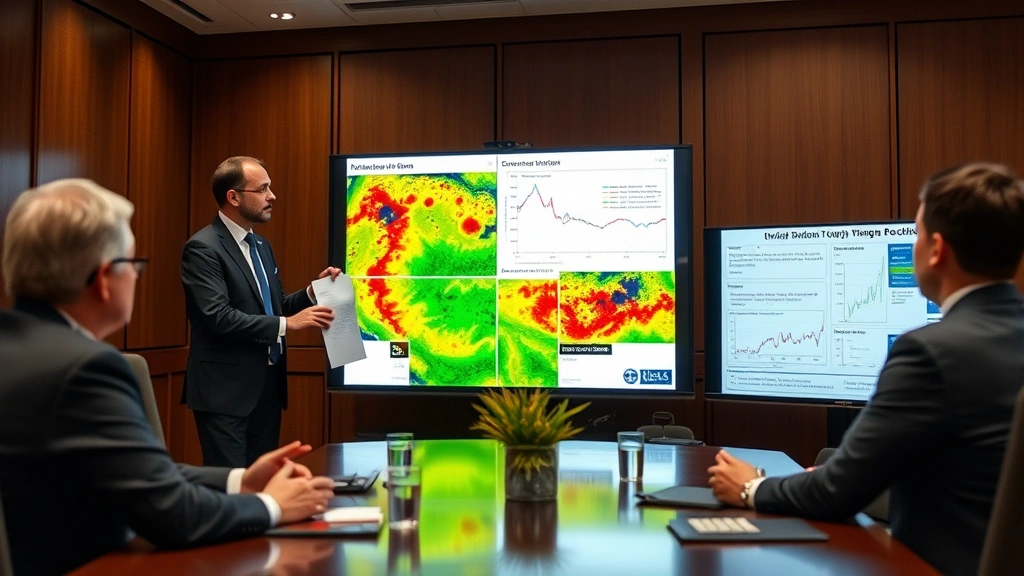
When preparing for trial, create visual aids explaining Fick’s Law and diffusion principles. Judges and jurors respond better to animations, diagrams, and simplified graphics than to mathematical equations. Work with your experts to develop demonstratives that show how diffusion operates—perhaps using animation to illustrate how contaminant concentration decreases with distance from a source over time. These visual tools make abstract scientific concepts concrete and memorable.
Deposition preparation becomes particularly important when Fick’s Law features prominently in your case. Your expert should be able to explain diffusion principles clearly during deposition, demonstrate knowledge of relevant scientific literature, and confidently defend their methodology. Opposing counsel will probe for weaknesses in assumptions and methodology; thorough deposition preparation ensures your expert doesn’t concede points that later undermine trial testimony.
Settlement negotiations often turn on technical issues where Fick’s Law calculations become dispositive. If your expert’s diffusion modeling demonstrates that a defendant’s contamination spread substantially further than the defendant’s expert claims, this difference directly affects liability allocation and damage calculations. Presenting your expert’s diffusion analysis during settlement discussions sometimes convinces opposing parties that their position is weaker than they believed, facilitating favorable settlement terms.
FAQ
What is the difference between Fick’s First Law and Fick’s Second Law in legal applications?
Fick’s First Law describes steady-state diffusion where concentration gradients remain constant over time. Fick’s Second Law accounts for changing concentration gradients over time, allowing experts to model how contamination spreads progressively. In litigation, Fick’s Second Law typically applies to environmental cases where we need to calculate contamination extent at specific points in time, while Fick’s First Law applies to situations where diffusion has reached equilibrium.
How can I effectively challenge expert testimony based on Fick’s Law calculations?
Challenge the expert’s choice of diffusion coefficients by presenting peer-reviewed literature suggesting different values. Question whether they adequately accounted for sorption, temperature variations, or soil heterogeneity. Ask whether their model reflects actual site conditions or oversimplifies reality. Request they explain their assumptions about initial concentration levels and boundary conditions. Finally, consider retaining your own expert to testify about methodological limitations in the opposing expert’s approach.
What scientific qualifications should experts possess who testify about Fick’s Law?
Experts should hold advanced degrees (Master’s or PhD) in chemistry, physics, geology, hydrogeology, or closely related fields. Ideally, they have published research on diffusion, contamination transport, or related topics in peer-reviewed journals. Professional certifications (such as Professional Geologist or Professional Hydrogeologist) enhance credibility. Most importantly, they should have substantial experience applying diffusion principles to real-world environmental or product liability scenarios.
Can Fick’s Law calculations be used retroactively to determine historical contamination?
Yes, Fick’s Second Law allows experts to model backward in time, calculating what initial concentration levels and release timeframes would produce observed current contamination. However, this retroactive modeling involves substantial assumptions about historical conditions. Courts increasingly scrutinize backward-calculation expert testimony, and opposing parties can challenge whether assumptions about decades-old environmental conditions represent reasonable scientific practice or become too speculative.
How does sorption affect Fick’s Law calculations in environmental cases?
Sorption—contaminant molecules adhering to soil particles—substantially reduces the effective diffusion rate. If an expert fails to account for sorption coefficients, they typically overestimate how far contamination spreads. This becomes a critical cross-examination point: whether the expert’s diffusion model adequately represents actual contaminant transport when a significant portion of the contaminant doesn’t diffuse freely but instead adheres to soil.
What role does the diffusion coefficient play in determining case outcomes?
The diffusion coefficient is central to Fick’s Law calculations; it determines how rapidly a substance spreads through a medium. Different substances have dramatically different diffusion coefficients, as do the same substances in different media. The choice of diffusion coefficient directly affects calculated contamination spread, which influences liability and damages. Challenging an expert’s diffusion coefficient selection can significantly undermine their conclusions about contamination extent.
How should I prepare my expert for cross-examination regarding diffusion modeling?
Ensure your expert thoroughly understands their model’s assumptions and can defend each one. Have them practice explaining complex calculations in simple language. Prepare them to cite peer-reviewed literature supporting their methodology. Anticipate challenges regarding diffusion coefficients, sorption, temperature effects, and site heterogeneity. Conduct mock cross-examinations where opposing counsel aggressively challenges their approach. Your expert should emerge from deposition and trial testimony confident and credible.


