
Understanding Gun Laws in Australia: Legal Insight
Australia maintains some of the world’s strictest firearm regulations, shaped by decades of legislative evolution and public policy decisions. The nation’s approach to gun control represents a comprehensive legal framework that significantly restricts civilian access to firearms while establishing clear penalties for violations. Understanding these laws is essential for legal professionals, policy analysts, and Australian residents seeking to comprehend the country’s regulatory landscape.
The Australian gun law system operates under both federal and state legislation, creating a multi-layered regulatory structure. Unlike jurisdictions that recognize broad individual firearm rights, Australia prioritizes public safety through restrictive licensing, registration, and possession requirements. This article provides an in-depth examination of Australia’s gun laws, their historical context, current requirements, and legal implications for those seeking firearm ownership or dealing with related legal matters.
Historical Development of Australian Gun Laws
Australia’s approach to firearm regulation underwent dramatic transformation following the Port Arthur massacre in 1996. This tragic event, which resulted in 35 deaths, catalyzed unprecedented legislative action across all Australian states and territories. Within months, the federal government implemented the National Firearms Agreement (NFA), establishing uniform minimum standards for firearm regulation throughout the country.
Prior to 1996, Australian gun laws were considerably more permissive, varying significantly between states. The NFA represented a watershed moment, establishing that firearm ownership would be treated as a privilege rather than a right. This philosophical shift aligned Australia with other Commonwealth nations and reflected growing public concern about gun violence and public safety.
The implementation of the NFA involved a mandatory firearm buyback program that removed approximately 650,000 firearms from civilian circulation. This voluntary surrender scheme, coupled with strict new licensing requirements, fundamentally restructured Australia’s civilian firearm landscape. The legal framework that emerged from this period continues to define Australian gun policy today, making it one of the most restrictive regulatory systems globally.
Understanding this historical context is crucial for comprehending modern Australian gun laws. The legislative response demonstrated how democratic societies can implement comprehensive firearm restrictions through coordinated federal-state action. Legal scholars often reference Australia’s experience when discussing different legal systems and their capacity for regulatory change.
Federal Legislative Framework
The primary federal legislation governing firearms in Australia is the Firearms Act 1996 and subsequent amendments. This legislation established the National Firearms Agreement as binding minimum standards that all states and territories must implement. The federal framework operates through the National Firearms Register, a centralized database tracking licensed firearms and their owners across the country.
Federal legislation categorizes firearms into distinct classes based on their characteristics and intended purposes. Category A firearms include standard rifles and shotguns suitable for primary production and sport shooting. Category B firearms encompass pump-action and semi-automatic long guns with magazine capacity limitations. Category C and D firearms are restricted to primary producers and professional pest controllers, while Category H firearms are reserved for law enforcement and military use.
The federal framework also establishes mandatory training and competency requirements for firearm licensees. All prospective gun owners must demonstrate genuine need, typically defined as primary production, professional pest control, or approved target shooting club membership. Personal protection is explicitly excluded as a valid reason for firearm ownership in Australia, distinguishing the system from jurisdictions where self-defense justifies licensing.
Federal law requires all firearm transactions to proceed through licensed dealers who maintain detailed records. Private sales are heavily restricted and generally prohibited for most firearm categories. This regulatory approach ensures comprehensive traceability throughout the firearm supply chain, supporting law enforcement investigations and public safety monitoring.
The interaction between federal and state legislation creates a complex legal landscape. While federal law establishes minimum standards, individual states retain authority to impose more restrictive regulations. This federal-state relationship reflects principles of cooperative federalism in the Australian legal system.
State and Territory Variations
While the National Firearms Agreement establishes uniform minimum standards, each Australian state and territory implements its own supplementary legislation. New South Wales, Victoria, Queensland, Western Australia, South Australia, Tasmania, Northern Territory, and Australian Capital Territory each maintain distinct firearms legislation with varying requirements and penalties.
New South Wales operates under the Firearms Act 1996 (NSW), which incorporates federal standards while establishing additional state-specific requirements. Victoria’s Firearms Act 1996 similarly maintains state oversight while adhering to federal minimums. Queensland’s regulatory approach includes additional provisions for primary producers and rural communities, reflecting the state’s agricultural heritage.
Western Australia, South Australia, and Tasmania each maintain comprehensive firearms legislation addressing their specific geographic and demographic contexts. The Northern Territory and Australian Capital Territory, as smaller jurisdictions, implement federal standards with minimal additional state variations. This decentralized approach allows each jurisdiction to tailor regulations to local circumstances while maintaining nationwide consistency.
Interstate variations create important legal distinctions for firearm owners. A license granted in one state may not automatically transfer to another state. Individuals relocating interstate must apply for new licenses and re-register firearms according to the destination state’s requirements. These procedural differences can significantly impact firearm ownership and possession across state boundaries.
Penalties for firearms violations vary between jurisdictions, though all states impose substantial criminal sanctions. Some states impose mandatory minimum sentences for serious firearm offenses, while others grant judges greater discretion. Understanding state-specific legislation is essential for legal professionals advising clients on firearms matters.
Licensing and Registration Requirements
Australian firearm licensing operates on a strict permitting system requiring demonstrated genuine need. Prospective licensees must apply through their state firearms registry, providing detailed personal and background information. Licensing authorities conduct extensive background checks examining criminal history, mental health records, and character references.
Genuine need requirements vary slightly between states but generally include:
- Primary production – Agricultural or rural property management requiring pest control or livestock management
- Professional pest control – Licensed professionals managing pest populations for commercial purposes
- Target shooting – Membership in approved shooting clubs with demonstrated commitment to the sport
- Occupational requirements – Limited to certain professional categories with explicit regulatory authorization
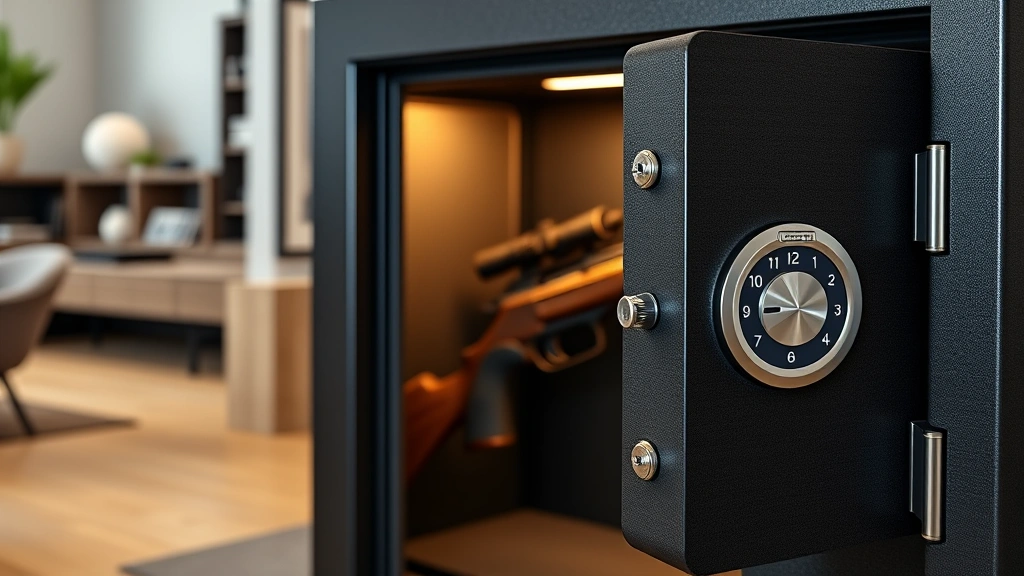
The licensing process requires applicants to complete mandatory firearms safety training and pass competency assessments. Applicants must nominate a secure storage location where firearms will be kept when not in use. This storage requirement mandates locked safes meeting Australian Standards specifications, preventing unauthorized access and theft.
Licensed firearm owners must register each firearm individually, providing detailed specifications including serial numbers, caliber, and category classification. Registration renewal occurs periodically, typically every five years, requiring licensees to demonstrate continued compliance with storage and safety requirements. Failure to renew registration results in automatic license cancellation and potential criminal penalties.
Background checks examine numerous factors including criminal convictions, domestic violence history, restraining orders, and mental health assessments. Licensing authorities may deny applications based on character concerns, even absent formal criminal convictions. This discretionary authority reflects Australia’s prioritization of public safety over individual firearm access.
Licensees must notify firearms registries of address changes, relationship status modifications affecting living arrangements, and any incidents involving firearm misuse or loss. These reporting requirements ensure registries maintain current information supporting law enforcement investigations and public safety monitoring.
Prohibited Firearms and Categories
Australia’s firearms classification system creates strict categorical restrictions determining which weapons civilians may legally possess. Category A and B firearms represent the only categories generally available to licensed civilians, with significant limitations on design features and functionality.
Category A firearms include standard rifles and shotguns with magazine capacity limitations. Semi-automatic rifles and shotguns are prohibited in Category A, restricting civilian access to manual-action weapons. Pump-action shotguns are similarly excluded, limiting shotgun ownership to lever-action and break-action designs.
Category B firearms encompass pump-action and semi-automatic long guns with restricted magazine capacities. Civilian access to Category B weapons is extremely limited, generally reserved for professional pest controllers and primary producers with demonstrated need. Even licensed Category B owners face stringent storage and security requirements exceeding those for Category A firearms.
Completely prohibited firearms include:
- Semi-automatic and pump-action rifles
- Semi-automatic and pump-action shotguns (with limited exceptions)
- Lever-action shotguns
- All handguns except those specifically approved for target shooting
- Any firearm capable of firing multiple rounds with a single trigger action
- Firearms with certain features facilitating rapid fire capability
Handguns face particular restrictions under Australian law. Only target shooting club members with extensive experience and demonstrated commitment may legally own handguns. Even approved handgun owners must store weapons at licensed shooting clubs rather than residences, effectively preventing personal possession for self-defense purposes.
The prohibited firearms list extends beyond weapon categories to specific design features. Firearms with certain ergonomic elements, modular components, or aesthetic features associated with military designs may be classified as prohibited regardless of their functional characteristics. This approach prevents circumvention through cosmetic modifications or component substitution.
Legal Penalties and Enforcement
Australia imposes severe criminal penalties for firearms violations, reflecting the serious legal consequences of non-compliance. Penalties vary based on offense severity, ranging from substantial fines to lengthy imprisonment. Understanding potential legal consequences is essential for anyone handling firearms in Australia.
Unlicensed firearm possession constitutes a serious criminal offense with typical maximum penalties of 10-14 years imprisonment depending on the specific state jurisdiction. Possessing prohibited firearms carries similarly severe penalties, often exceeding those for unlicensed possession. These substantial sentences reflect Australia’s commitment to enforcing strict firearm regulations.
Unlawful firearm discharge, particularly in populated areas, results in criminal charges carrying potential imprisonment and substantial fines. Negligent storage of firearms, allowing unauthorized access or theft, constitutes a criminal offense subject to penalties ranging from fines to imprisonment. These strict storage liability provisions incentivize responsible firearm security practices.
Trafficking in firearms or illegally importing weapons attracts the most severe penalties, often exceeding 15 years imprisonment. These trafficking offenses recognize the serious public safety implications of illegal firearms circulation. Federal authorities prosecute trafficking cases, reflecting the interstate nature of organized firearm smuggling operations.
The distinction between different offense categories carries important legal implications in Australian criminal law. Firearm offenses are typically classified as indictable offenses, requiring prosecution through higher courts with more extensive evidentiary procedures and sentencing authorities.
Law enforcement agencies maintain substantial investigative resources focused on firearms offenses. Police may conduct searches of suspected locations where illegal firearms are stored, with warrant requirements varying based on offense circumstances. Firearms registries support investigations by providing ownership and registration information enabling rapid suspect identification.
Recent Legal Developments
Australian firearms law continues evolving through legislative amendments and policy developments addressing emerging concerns. Recent years have witnessed increased regulatory focus on online firearm transactions, synthetic firearms components, and evolving weapon technologies.
The development of 3D printing technology has prompted legislative responses addressing firearms manufactured through additive manufacturing processes. Several states have implemented regulations explicitly prohibiting 3D-printed firearms and clarifying legal status of partially manufactured components. These legislative updates reflect ongoing efforts to address technological changes potentially circumventing traditional firearm regulations.
Recent amendments have also enhanced reporting requirements for licensed dealers and shooting clubs. These requirements ensure authorities maintain comprehensive information about firearm transactions and club membership, supporting law enforcement investigations and regulatory compliance monitoring.
State-level legislative initiatives have periodically proposed additional restrictions on firearm categories and licensing requirements. These proposals often emerge following high-profile incidents or public safety concerns. While some proposals advance to legislation, others fail to achieve parliamentary support, reflecting ongoing policy debates about appropriate regulatory levels.
International legal developments have influenced Australian firearms policy discussions. Comparative analysis of regulations in other Commonwealth nations, European jurisdictions, and Asia-Pacific countries informs policy debates. Legal scholars frequently reference Australia’s regulatory approach when discussing international firearms policy harmonization and comparative law perspectives.
The interaction between firearms law and criminal law disposition procedures has attracted increased attention from legal professionals. Prosecutors and judges must navigate complex sentencing considerations when adjudicating firearms offenses, balancing public protection with individual circumstances.

FAQ
Can Australian citizens legally own firearms?
Yes, Australian citizens may legally own firearms, but only through strict licensing processes. Prospective owners must demonstrate genuine need, typically defined as primary production, professional pest control, or target shooting club membership. Personal protection is not recognized as valid justification for firearm ownership. Applicants undergo extensive background checks and must complete mandatory safety training before receiving licenses.
What firearms are prohibited in Australia?
Australia prohibits semi-automatic rifles and shotguns, pump-action shotguns (with limited exceptions), all handguns except those approved for target shooting, and any firearm capable of firing multiple rounds with a single trigger action. Specific design features may result in prohibition regardless of functional characteristics. Only licensed professionals and club members may legally possess restricted category firearms.
How do I apply for a firearm license in Australia?
Firearm licensing applications must be submitted to your state firearms registry. Applications require demonstrating genuine need, completing mandatory safety training, and providing personal and background information. Licensing authorities conduct extensive background checks examining criminal history, mental health records, and character references. The process typically requires several weeks to months for completion.
What are the penalties for illegal firearm possession?
Unlicensed firearm possession carries maximum penalties of 10-14 years imprisonment depending on state jurisdiction. Possessing prohibited firearms attracts similar severe penalties. Penalties increase substantially for trafficking, unlawful discharge, and related offenses. These significant criminal sanctions reflect Australia’s commitment to enforcing strict firearm regulations.
Can I transport firearms across state boundaries?
Firearm transportation across state boundaries is heavily restricted and typically requires written permission from relevant firearms registries. Licenses granted in one state do not automatically transfer to other states. Individuals relocating interstate must apply for new licenses and re-register firearms according to destination state requirements. Transporting firearms without proper authorization constitutes a serious criminal offense.
What storage requirements apply to licensed firearm owners?
Licensed firearm owners must store weapons in secure locked safes meeting Australian Standards specifications. Storage locations must prevent unauthorized access and theft. Different categories of firearms may face varying storage requirements, with Category B and H weapons subject to more stringent security standards. Failure to maintain proper storage may result in license cancellation and criminal charges.


