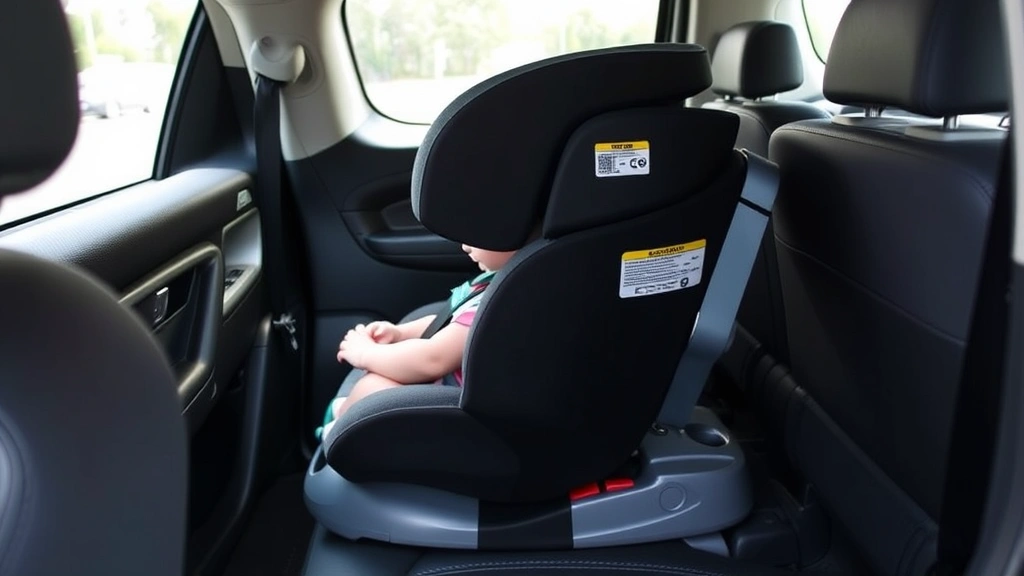
NC Infant Car Seat Laws: Legal Overview
North Carolina has established comprehensive child passenger safety laws designed to protect infants and young children while traveling in motor vehicles. These regulations specify the types of car seats required, age and weight requirements, and proper installation standards. Understanding NC infant car seat laws is essential for parents, guardians, and caregivers to ensure compliance and, more importantly, to safeguard the youngest passengers on the road.
The state’s child restraint laws have evolved significantly over the years, reflecting advances in child safety research and vehicle technology. North Carolina enforces these requirements through traffic citations and fines, making it crucial for vehicle operators and passengers to understand their obligations. This comprehensive legal overview examines the specific requirements, exemptions, penalties, and best practices for infant car seat compliance in North Carolina.
North Carolina Child Restraint Requirements
North Carolina General Statute § 20-137.1 establishes the mandatory child restraint law for the state. This statute requires that all children under 16 years of age be properly restrained while riding in a motor vehicle. The law specifically mandates that children must use appropriate child restraint systems based on their age and physical development, rather than relying solely on standard seat belts designed for adult bodies.
The requirement applies to all vehicles, including cars, trucks, and vans, regardless of whether the vehicle was manufactured with built-in child safety features. Both drivers and passengers can face citations for violations, and parents or legal guardians bear primary responsibility for ensuring compliance. The law recognizes that infant bodies are fundamentally different from adult bodies, requiring specialized restraint systems that distribute crash forces appropriately.
Under North Carolina law, infants must be restrained in a rear-facing infant car seat until they reach the manufacturer’s maximum height or weight limit for that particular seat. This requirement aligns with recommendations from the National Highway Traffic Safety Administration (NHTSA) and the American Academy of Pediatrics (AAP), which emphasize that rear-facing seats provide superior protection for infants’ developing spines and necks during frontal collisions.
The statute defines an approved child restraint system as any device manufactured and labeled in compliance with Federal Motor Vehicle Safety Standard No. 213 or any subsequent federal standards. This means that car seats must meet rigorous federal safety testing and manufacturing standards. Parents should verify that their chosen infant car seat displays certification labels indicating compliance with these federal requirements.
Infant Car Seat Age and Weight Standards
North Carolina law requires infants to remain in rear-facing car seats from birth until they reach the maximum age, height, or weight limit specified by the car seat manufacturer. Most infant car seats accommodate children from birth to approximately 2 years of age or until they reach 30-35 pounds, depending on the specific model. Parents must consult their car seat’s instruction manual to determine the exact transition point for their particular seat.
The American Academy of Pediatrics recommends keeping children rear-facing for as long as possible, ideally until age 2 or beyond, because rear-facing seats provide superior protection during frontal crashes, which are the most common and severe type of collision. North Carolina’s legal framework supports this recommendation by requiring rear-facing restraints for all infants, without exception based on preference or convenience.
Once an infant exceeds the manufacturer’s limits for their rear-facing seat, they may transition to a forward-facing car seat with a harness system. Forward-facing seats typically accommodate children from approximately 2 to 7 years of age, though weight limits vary significantly among manufacturers. Parents should never transition children to forward-facing seats prematurely, as this significantly increases injury risk in crashes.
The specific weight thresholds are manufacturer-dependent, which is why consulting the car seat’s instruction manual and label is critical. Some infant seats accommodate children up to 35 pounds in the rear-facing position, while others may have lower limits. North Carolina law requires adherence to manufacturer specifications, not arbitrary age cutoffs, ensuring that each child remains in the appropriate restraint system for their physical size and development.
It is important to note that North Carolina’s statute focuses on the type of restraint system rather than establishing rigid age cutoffs. This approach allows for flexibility based on individual child development while maintaining safety standards. Parents should understand that exceeding a car seat’s weight or height limits, even by a few pounds, constitutes non-compliance with state law and compromises the seat’s protective capabilities.
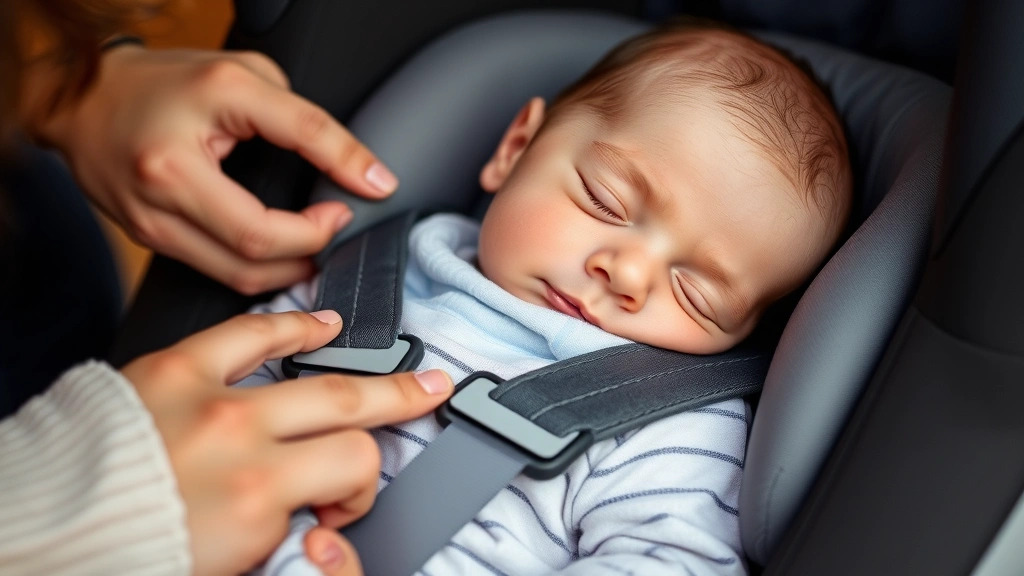
Proper Installation and Safety Guidelines
Proper installation of infant car seats is absolutely critical to their effectiveness. A car seat that is not correctly installed may fail to provide adequate protection during a crash, defeating its entire purpose. North Carolina recognizes that correct installation is a legal requirement, not merely a safety recommendation, making installation proficiency an important aspect of legal compliance.
The base of an infant car seat must be secured to the vehicle using either the vehicle’s seat belt system or the Lower Anchors and Tethers for Children (LATCH) system, if available. Both methods are legally acceptable in North Carolina, provided they are executed correctly. The LATCH system, which consists of two lower anchors and an upper tether, was designed to simplify proper installation and has become increasingly common in vehicles manufactured after 2002.
When using the seat belt method, the car seat must be installed at the correct recline angle, typically between 30 and 45 degrees, to protect an infant’s airway and prevent neck flexion. The installation must be tight enough that the seat does not move more than one inch side-to-side or front-to-back when grasped at the seat base. Many parents underestimate how firmly car seats must be secured, resulting in installations that appear correct but are functionally inadequate.
North Carolina law emphasizes that the infant must be properly harnessed into the car seat using the seat’s integrated harness system, not the vehicle’s seat belt. The harness straps must be at or below the infant’s shoulder level for rear-facing seats, and the harness must be snug enough that you cannot pinch excess webbing at the shoulder. Loose harnesses significantly reduce protection during crashes.
The positioning of the car seat within the vehicle is also governed by safety principles recognized in North Carolina law. Rear-facing infant car seats should be installed in the rear seat of the vehicle, away from active airbags. Front-seat installation is prohibited for rear-facing seats because airbag deployment can cause severe injury or death to an infant in a rear-facing position. Even in vehicles with passenger-side airbag deactivation features, rear-seat installation is strongly recommended for maximum protection.
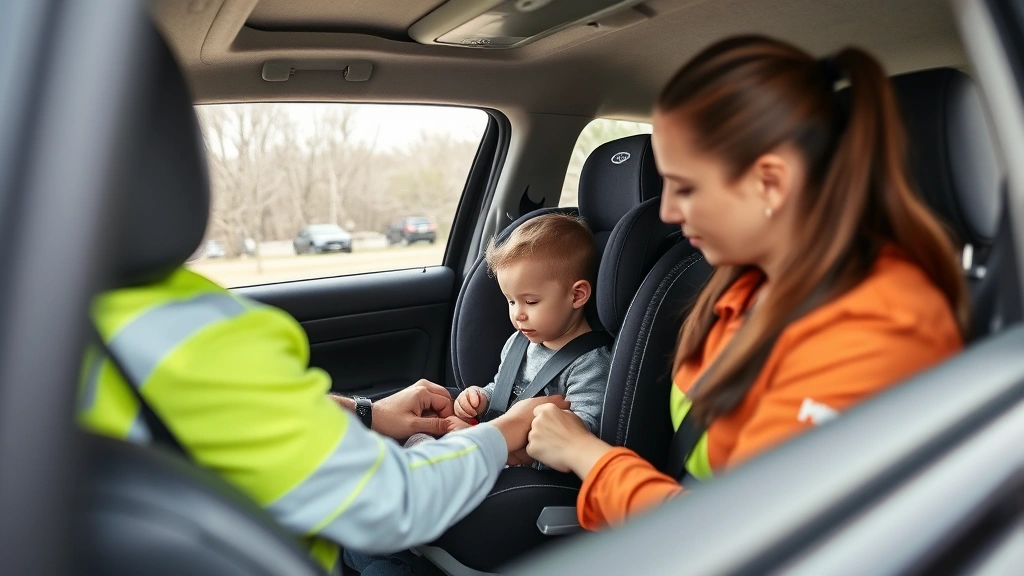
North Carolina recognizes the importance of proper installation by endorsing free car seat inspection services offered through various organizations and law enforcement agencies throughout the state. These certified child passenger safety technicians can verify that an infant car seat is installed correctly and provide guidance on proper use. Seeking professional installation assistance is a practical way to ensure legal compliance and optimal safety.
Legal Penalties and Enforcement
North Carolina enforces child restraint laws through a combination of civil infractions and criminal penalties. A violation of the child restraint statute is classified as a primary offense, meaning law enforcement can stop a vehicle solely for observing a child without proper restraint. This contrasts with some states where child restraint violations are secondary offenses that can only be cited in conjunction with other traffic violations.
The standard penalty for a first offense is a fine of $25 to $100, depending on the specific circumstances and the jurisdiction’s local enforcement policies. However, penalties increase significantly for repeat violations. A second violation within three years can result in fines of $50 to $200, while a third or subsequent violation can result in fines of $100 to $500. Additionally, repeat offenders may face increased insurance premiums and other collateral consequences.
Beyond monetary penalties, parents or guardians cited for child restraint violations may be required to complete a child passenger safety education program. Some jurisdictions in North Carolina offer the option to dismiss charges upon completion of such a program, which educates caregivers about proper car seat selection, installation, and use. This approach focuses on compliance rather than purely punitive measures.
Law enforcement in North Carolina takes child passenger safety seriously, recognizing that proper restraint systems save lives. Police officers are trained to recognize improper restraint configurations and have authority to stop vehicles displaying these violations. Parents should understand that citations are not issued arbitrarily but reflect a genuine commitment to protecting vulnerable passengers.
In addition to traffic citations, child restraint violations can have implications in custody or guardianship proceedings. A pattern of non-compliance with child safety laws may be considered evidence of parental neglect or failure to provide adequate supervision, potentially affecting custody determinations or family law proceedings. This underscores the importance of consistent compliance with North Carolina’s child restraint requirements.
Exemptions and Special Circumstances
North Carolina law provides limited exemptions to the child restraint requirement, but these are narrowly construed and rarely apply to infant car seat obligations. One exemption allows children to remain unrestrained if the vehicle does not have seat belts and was manufactured before seat belt requirements became mandatory. However, this exemption is increasingly obsolete as older vehicles are removed from service.
Another exemption applies to medical reasons documented by a licensed physician. If a physician determines that a child’s specific medical condition makes a standard car seat dangerous or inappropriate, the physician may issue a written statement exempting that child from the standard requirement. However, this exemption does not eliminate the requirement for some form of child restraint; it merely allows for alternative restraint systems appropriate to the child’s medical needs. Parents must carry documentation of the medical exemption and be prepared to present it to law enforcement if questioned.
The transportation of infants by emergency medical personnel during medical emergencies may be subject to different rules, but this does not apply to routine transportation or non-emergency situations. Even in emergency contexts, appropriate child restraint is encouraged when feasible, though immediate medical treatment takes precedence.
North Carolina does not provide exemptions based on the length of the trip, the speed of travel, or the comfort level of the infant. Even very short trips or residential street driving requires proper restraint. Similarly, no exemption exists for children who refuse to cooperate or become upset in their car seat. Parents must ensure compliance regardless of behavioral resistance, as the safety benefits of proper restraint far outweigh temporary discomfort or inconvenience.
It is important to understand that legal terminology regarding exemptions is precise. A medical exemption does not mean a child can ride unrestrained; it means the standard restraint system may be modified under physician guidance. Parents should never interpret exemptions as permission to forego child restraint entirely.
Resources and Compliance Assistance
North Carolina offers numerous resources to help parents and caregivers understand and comply with infant car seat laws. The North Carolina Division of Motor Vehicles provides official guidance on current child restraint requirements and frequently updates this information as laws change. Parents can access this information through the DMV website or by contacting their local DMV office directly.
The North Carolina Department of Transportation, in partnership with the Governor’s Highway Safety Program, coordinates child passenger safety initiatives throughout the state. These programs include free or low-cost car seat inspection services, educational seminars, and distribution of car seats to low-income families who cannot afford them. These resources are designed to remove barriers to compliance and ensure that all North Carolina children have access to proper restraint systems.
Many local police departments and fire departments in North Carolina have certified child passenger safety technicians on staff. These professionals can inspect car seats, verify proper installation, and provide personalized guidance. Scheduling a car seat inspection before an infant’s first trip home from the hospital is an excellent way to ensure compliance from the beginning and build confidence in your installation technique.
National resources such as the National Highway Traffic Safety Administration (NHTSA) maintain a database of car seat recall information and provide detailed installation instructions for various car seat models. Parents can search this database to determine whether their infant car seat has been subject to any recalls and obtain replacement seats if necessary. Recalled seats should never be used, regardless of whether they appear to function properly.
The American Academy of Pediatrics provides evidence-based guidance on child passenger safety that aligns with North Carolina’s legal requirements. Pediatricians can answer questions about appropriate restraint systems for infants and can provide medical documentation if a child has special circumstances requiring modified restraint. Regular communication with your child’s healthcare provider ensures that restraint choices align with both legal requirements and medical recommendations.
Several organizations offer car seat education programs specifically designed for North Carolina residents. These programs often focus on practical skills like proper installation, understanding manufacturer specifications, and recognizing when a child has outgrown a particular seat. Completing such a program not only ensures legal compliance but also provides peace of mind that your infant is receiving optimal protection.
For parents seeking additional legal information and updates about North Carolina traffic and safety laws, staying informed through official state resources is essential. Laws can change, and manufacturers continually improve car seat designs. Maintaining awareness of these changes ensures that your compliance practices remain current and effective.
If you have specific questions about how NC infant car seat laws might apply to your family’s circumstances, consulting with a family law attorney or a certified child passenger safety technician can provide personalized guidance. These professionals can address unique situations and ensure that you understand your legal obligations fully.
FAQ
What is the minimum age for transitioning from an infant car seat to a forward-facing car seat in North Carolina?
North Carolina law does not specify a minimum age for transitioning to a forward-facing car seat. Instead, the law requires adherence to the manufacturer’s specifications for the particular car seat being used. However, the American Academy of Pediatrics recommends keeping children rear-facing until age 2 or until they exceed the manufacturer’s weight or height limits, whichever comes later. Parents should consult their car seat’s instruction manual and label for the specific transition point rather than relying on age alone.
Can I install an infant car seat in the front seat of my vehicle in North Carolina?
While North Carolina law does not explicitly prohibit front-seat installation of infant car seats, it is strongly discouraged and dangerous. Rear-facing infant car seats should never be installed in front seats with active airbags, as airbag deployment can cause severe injury or death. Even in vehicles with passenger-side airbag deactivation, rear-seat installation is recommended for maximum protection. The rear center seat is generally the safest position for infant car seats.
What should I do if my infant car seat has been recalled?
If your infant car seat has been subject to a recall, you should stop using it immediately and contact the manufacturer for a replacement or repair. You can check the NHTSA website to determine whether your specific car seat model has been recalled. Using a recalled car seat may not provide adequate protection in a crash and violates the spirit of North Carolina’s child restraint laws, even if enforcement focuses on proper restraint rather than recalls specifically.
Are there any situations where my infant does not need to be in a car seat while riding in a vehicle in North Carolina?
North Carolina law requires all infants and children under 16 to be properly restrained in an appropriate car seat or restraint system. The only exceptions are medical exemptions documented by a licensed physician, and even these exemptions require some form of alternative restraint. There are no exemptions based on trip length, vehicle speed, or the infant’s comfort level.
What is the penalty for not using an infant car seat in North Carolina?
The penalty for failing to properly restrain an infant in a car seat in North Carolina is a fine of $25 to $100 for a first offense. Subsequent violations within three years can result in fines of $50 to $200 for a second violation and $100 to $500 for a third or subsequent violation. Additionally, violations may result in required completion of a child passenger safety education program and potential increases in insurance premiums.
How do I know if my infant car seat is properly installed?
To verify proper installation, check that the car seat is secured tightly to the vehicle using either the seat belt or LATCH system, that it does not move more than one inch side-to-side or front-to-back, that the harness is snug and positioned correctly, and that the recline angle is appropriate for your infant’s age. Free car seat inspection services are available throughout North Carolina through certified child passenger safety technicians. These professionals can verify your installation and provide personalized guidance.


