
What Is Scientific Law? Legal Insight
Scientific law represents one of the most fundamental concepts in both science and law, yet many people conflate it with legal statutes or regulations. Understanding the distinction between scientific law and legal law is crucial for anyone seeking to comprehend how evidence functions within the judicial system, how expert testimony shapes court decisions, and how scientific principles influence legal outcomes. This comprehensive guide explores the multifaceted relationship between scientific laws and legal frameworks, examining how courts interpret scientific evidence, the role of expert witnesses, and the critical importance of scientific methodology in establishing facts within litigation.
The intersection of science and law has become increasingly significant in modern jurisprudence. From environmental law to medical malpractice cases, from patent litigation to criminal investigations, scientific laws and principles serve as the evidentiary foundation upon which legal decisions rest. Understanding these concepts helps stakeholders navigate complex cases, appreciate the limitations of scientific evidence, and recognize how proper scientific reasoning can strengthen or weaken legal arguments. Whether you’re involved in litigation, studying law, or simply curious about how these disciplines interact, this exploration provides essential insights into this critical relationship.
Definition and Characteristics of Scientific Law
A scientific law is a statement based on repeated experimental observations that describes natural phenomena with remarkable consistency and predictability. Unlike theories, which explain why phenomena occur, scientific laws describe what happens under specific conditions. Scientific laws are derived from empirical evidence, mathematical relationships, and rigorous testing across numerous trials and conditions. They represent humanity’s most reliable understanding of how the natural world operates.
Scientific laws possess several defining characteristics. First, they are universal in scope, applying consistently across different times, places, and contexts. Second, they are testable and falsifiable, meaning they can be verified through experimentation and potentially disproven if contradictory evidence emerges. Third, they are expressed with mathematical precision, allowing for quantitative predictions. Fourth, they have been validated through countless observations and experiments conducted by multiple independent researchers. Examples include Newton’s Laws of Motion, the Law of Conservation of Energy, and the Laws of Thermodynamics. These scientific laws form the bedrock of physics, chemistry, biology, and other natural sciences.
The development of a scientific law requires extensive research, peer review, and validation by the scientific community. Scientists must conduct experiments under controlled conditions, document results meticulously, and allow other researchers to replicate their findings. This rigorous process ensures that scientific laws reflect genuine natural phenomena rather than coincidence or experimental error. The strength of scientific law lies in its predictive power—scientists can use these laws to forecast outcomes and make calculations with high confidence.
Scientific Law vs. Legal Law: Key Differences
The distinction between scientific law and legal law represents a fundamental misunderstanding that frequently creates confusion in courtrooms and public discourse. A legal law is a rule established by governmental authority, enforced through the legal system, and backed by the power of the state to impose penalties for violations. Legal laws are created through legislative processes, executive orders, or judicial precedent, and they can be changed, repealed, or amended by authorized authorities. Legal laws are normative—they prescribe what people should do, not what will necessarily happen.
Scientific laws, by contrast, are descriptive rather than prescriptive. They describe how nature actually behaves, not how it should behave. You cannot violate a scientific law—if you jump off a building, the Law of Gravity will operate regardless of whether you agree with it or have legislated against it. Scientific laws are discovered through observation and experimentation, not created by human authority. While legal laws may change from jurisdiction to jurisdiction, scientific laws remain constant across the universe.
The temporal nature of these concepts also differs significantly. Legal laws can be retroactively applied or changed, creating different standards for conduct at different times. Scientific laws, once established through rigorous evidence, remain consistent unless new evidence fundamentally challenges our understanding. Additionally, legal laws require enforcement mechanisms and judicial interpretation, whereas scientific laws operate independently of human belief or enforcement. Understanding these distinctions is essential when evaluating how scientific evidence functions within legal proceedings.
When legal professionals present scientific evidence in court, they must translate scientific laws and principles into language that demonstrates relevance to legal standards. This translation process requires careful attention to ensure that scientific concepts are accurately represented and not misapplied to legal questions. An expert witness must explain not only what a scientific law states but also how it applies to the specific facts of the case at hand.
How Scientific Laws Function in Legal Proceedings
Scientific laws serve multiple critical functions within the legal system. First, they establish a foundation for understanding physical reality in cases where factual disputes exist. In personal injury litigation, for example, the Laws of Physics help establish how accidents occurred, the force of impact, and whether injuries are consistent with the described mechanism of injury. In environmental law cases, scientific laws regarding chemistry, toxicology, and ecology determine whether pollutants caused harm and at what concentrations.
Second, scientific laws help courts distinguish between possible and impossible events. If a defendant claims they were in one location while evidence suggests they were elsewhere, principles of physics and biology can help establish whether the claimed timeline is physically possible. Forensic evidence relies heavily on scientific laws—DNA analysis depends on laws of chemistry and genetics, fingerprint analysis depends on biological principles, and ballistics analysis depends on physics.
Third, scientific laws provide objective standards for evaluating competing expert opinions. When two experts disagree about causation or mechanism, courts can reference established scientific laws to determine which expert’s testimony aligns better with known natural phenomena. This objective standard helps courts make decisions based on empirical evidence rather than mere speculation or subjective opinion.
The application of scientific law in legal contexts requires translation and interpretation. A judge or jury must understand not just what a scientific law states, but how it applies to the specific facts of the case. This is where choosing qualified legal representation becomes essential—attorneys must work with expert witnesses who can clearly communicate scientific concepts to non-scientific audiences.
Expert Testimony and Scientific Evidence
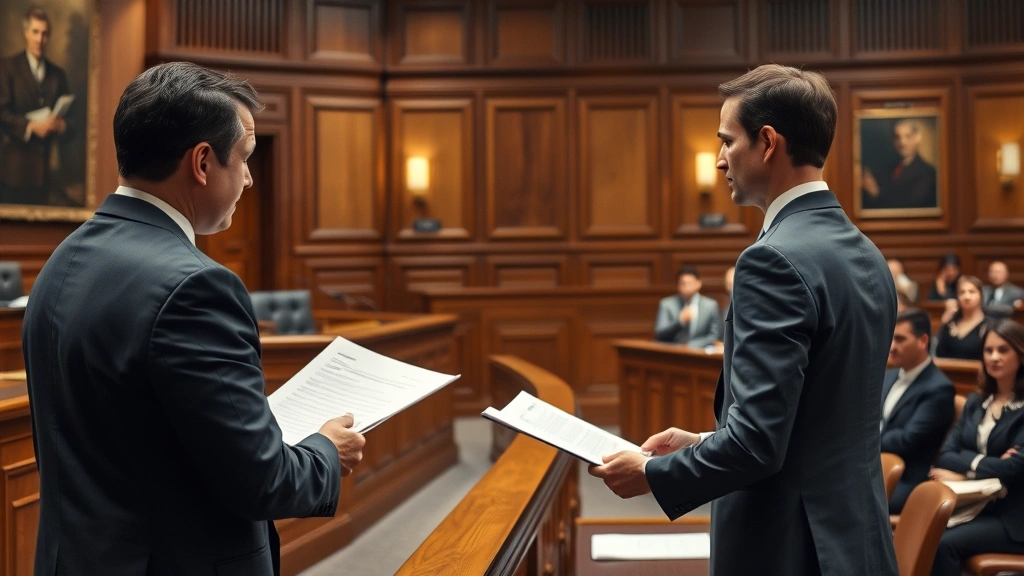
Expert witnesses serve as the primary mechanism through which scientific laws and principles enter the legal record. An expert witness possesses specialized knowledge, skills, education, or experience that enables them to offer opinions on matters beyond the knowledge of ordinary people. When properly qualified, expert witnesses can testify about scientific laws, explain how those laws apply to case facts, and offer opinions based on scientific principles.
The credibility and reliability of expert testimony directly impacts how effectively scientific evidence influences judicial decision-making. Courts must evaluate whether the expert possesses adequate qualifications, whether their methodology is sound, and whether their conclusions follow logically from established scientific principles. A poorly qualified expert or one employing questionable methodology can mislead the court, while a well-qualified expert presenting clear, scientifically-grounded testimony can substantially strengthen a party’s case.
Expert witnesses in various fields—forensic science, medicine, engineering, chemistry, toxicology, and many others—rely on scientific laws to support their opinions. A medical expert in a product liability case must explain how the Laws of Physiology and Pharmacology support their conclusion that a drug caused injury. An engineer in a construction defect case must apply the Laws of Physics and Materials Science to explain how structural failure occurred. The effectiveness of this testimony depends on clear communication of how abstract scientific laws apply to concrete facts.
Attorneys must understand the scientific principles underlying expert testimony to effectively present evidence and cross-examine opposing experts. This is particularly important in cases involving complex scientific concepts. Understanding the relationship between scientific law and legal evidence also helps attorneys recognize when expert testimony may be unreliable or when scientific conclusions have been overstated. Many attorneys pursue continuing legal education in scientific fields to better serve clients in technically complex cases.
The Daubert Standard and Scientific Admissibility
The landmark Supreme Court decision in Daubert v. Merrell Dow Pharmaceuticals, Inc. established a framework for determining whether expert testimony based on scientific knowledge is admissible in federal courts. The Daubert standard requires courts to act as gatekeepers, evaluating the reliability and relevance of expert testimony before allowing it to reach the jury. This standard applies the principles of scientific methodology to the admissibility question itself.
Under the Daubert framework, courts consider several factors when evaluating scientific evidence. First, can the theory or technique be tested? Scientific laws must be testable and falsifiable—if a method cannot be subjected to rigorous testing, it may not qualify as reliable scientific evidence. Second, has the theory been subjected to peer review and publication? The scientific community’s vetting process provides important quality control. Third, what is the known or potential error rate of the method? Scientific precision matters—methods with high error rates provide less reliable evidence than those with low error rates.
Fourth, does the relevant scientific community accept the method? If mainstream scientists reject a particular approach, courts should be skeptical of testimony based on that approach. Fifth, does the testimony rest on reliable principles and reliable application of those principles to the facts? Even sound scientific principles can be misapplied, and courts must ensure that expert testimony reflects both reliable science and proper application. The Daubert standard thus imports scientific rigor into the legal process, requiring that evidence presented to courts meet the same standards of reliability that the scientific community demands.
State courts vary in their adoption of Daubert or similar standards. Some states follow Daubert explicitly, others use alternative frameworks such as the Frye standard, and still others have developed hybrid approaches. Understanding the admissibility standards in your jurisdiction is crucial when preparing scientific evidence for litigation. Courts increasingly scrutinize expert testimony, and experts who cannot demonstrate that their opinions rest on reliable scientific foundations may find their testimony excluded entirely.
Real-World Applications in Various Legal Fields
Scientific laws and principles permeate modern legal practice across numerous practice areas. In personal injury law, scientific evidence regarding biomechanics, medicine, and physics helps establish causation and damages. A plaintiff injured in an automobile accident may rely on physics to establish vehicle dynamics and on medicine to establish injury causation. Understanding how scientific laws apply to these facts is essential for both plaintiff and defense counsel.
In medical malpractice litigation, scientific laws governing human physiology, pathology, and pharmacology determine whether a healthcare provider’s conduct deviated from the standard of care and whether that deviation caused injury. Expert testimony must establish not just what happened, but why it happened based on established scientific principles. Cases involving medication errors, surgical complications, or diagnostic failures all depend on scientific evidence grounded in natural laws governing human biology.
Environmental law relies heavily on scientific laws regarding chemistry, toxicology, ecology, and environmental science. Cases involving contamination, pollution, or hazardous substance exposure depend on scientific evidence establishing exposure pathways, dose-response relationships, and health effects. Regulatory agencies also base environmental standards on scientific research and natural laws governing pollutant behavior and biological effects.
Criminal law increasingly depends on forensic science—DNA analysis, toxicology, fingerprinting, ballistics, and trace evidence analysis all rest on scientific laws and principles. The reliability of these methods directly impacts the strength of criminal prosecutions. Legal malpractice can occur when attorneys fail to adequately challenge unreliable forensic evidence or fail to present exculpatory scientific evidence.
In intellectual property law, particularly patent litigation, scientific laws and principles determine whether inventions are novel, non-obvious, and capable of performing their intended function. Expert witnesses must explain complex scientific and technical concepts to help courts understand whether claimed inventions represent genuine advances or merely routine applications of known science.

Challenges and Limitations
Despite the importance of scientific evidence in legal proceedings, significant challenges and limitations exist. First, scientific evidence can be misunderstood or misapplied by non-scientists. Judges and jurors without scientific training may struggle to comprehend complex concepts, leading to misinterpretation of evidence or inappropriate weight given to testimony. Expert witnesses must bridge this gap through clear communication, but limitations in how well scientific concepts can be simplified for lay audiences remain.
Second, scientific evidence often involves uncertainty and probability rather than absolute certainty. Scientific laws describe what generally happens under specified conditions, but they do not eliminate all uncertainty. A toxicologist might testify that a chemical exposure could have caused injury with a certain degree of probability, but rarely can state with absolute certainty that it did cause the injury in a specific case. Courts must grapple with how to handle this inherent uncertainty when making binary legal decisions (liable or not liable, guilty or not guilty).
Third, the adversarial nature of litigation can distort the presentation of scientific evidence. Attorneys naturally present evidence in the light most favorable to their clients, potentially emphasizing studies supporting their position while downplaying contradictory research. Expert witnesses, while ethically bound to provide unbiased opinions, may unconsciously favor the position of the party that retained them. Courts must carefully scrutinize expert testimony to ensure that the full range of scientific evidence receives appropriate consideration.
Fourth, scientific knowledge evolves. What was considered settled science decades ago may have been superseded by newer research. Courts must remain attentive to the current state of scientific knowledge rather than relying on outdated understandings. This requires ongoing education for legal professionals and careful attention to whether expert testimony reflects current scientific consensus.
Fifth, some scientific questions resist definitive resolution through current methodology. In cases where multiple scientific interpretations of evidence are plausible, courts may struggle to determine which interpretation is correct. This is particularly challenging in cases involving complex causation questions where multiple factors may contribute to an outcome, and isolating the effect of a specific factor proves difficult.
Finally, the cost of obtaining quality expert testimony can be substantial, potentially limiting access to justice for parties without significant resources. High-quality experts command substantial fees, and cases involving complex scientific issues may require multiple experts. This economic reality can disadvantage plaintiffs and defendants with limited resources, raising fairness concerns within the legal system.
FAQ
What is the difference between a scientific law and a scientific theory?
A scientific law describes what happens under specific conditions with consistent predictability, typically expressed mathematically. A scientific theory explains why phenomena occur and provides a framework for understanding natural mechanisms. Theories are broader than laws and explain the underlying causes of the patterns laws describe. Both are based on extensive evidence, but they serve different functions in science.
Can scientific laws be violated?
No. Scientific laws describe how nature actually behaves. You cannot violate a scientific law any more than you can violate gravity by jumping off a building. What sometimes appears to be a violation of a scientific law is actually a misunderstanding of the law’s scope or the discovery that the law has limitations previously unknown. When this occurs, scientists revise their understanding rather than concluding the law was violated.
How do courts determine if scientific evidence is reliable?
In federal court, the Daubert standard provides the framework. Courts evaluate whether the evidence is testable, has been subjected to peer review, has a known error rate, is generally accepted in the relevant scientific community, and whether expert testimony properly applies reliable science to case facts. Many state courts use similar frameworks. Attorneys presenting scientific evidence must ensure it meets these reliability standards.
What qualifications should an expert witness possess?
Expert witnesses should possess education, training, and experience directly relevant to the subject matter of their testimony. This may include advanced degrees, professional certifications, years of practical experience in the field, and publication of research in peer-reviewed journals. The specific qualifications needed depend on the type of expertise required. Courts will scrutinize whether a purported expert actually possesses adequate qualifications before allowing their testimony.
How do attorneys present complex scientific concepts to juries?
Effective presentation of scientific evidence requires translating complex concepts into clear, understandable language. Attorneys work with expert witnesses to develop testimony that explains not just what scientific laws state, but how they apply to case facts. Visual aids, demonstrations, analogies, and clear explanation of key concepts help non-scientists understand scientific evidence. The goal is to make the evidence accessible without oversimplifying to the point of inaccuracy.
Can scientific evidence prove something happened in a specific case?
Scientific evidence can establish that something could have happened or is consistent with what happened, but rarely can it prove with absolute certainty that a specific event occurred in a particular case. Scientific evidence typically involves probability and uncertainty rather than absolute proof. Legal standards like “preponderance of the evidence” (more likely than not) or “beyond a reasonable doubt” provide the framework for how courts weigh probabilistic scientific evidence.


