
The history of written law represents one of humanity’s most significant intellectual achievements. Long before modern legal systems existed, ancient civilizations recognized the necessity of codifying rules and regulations into permanent, written form. Understanding when laws were first written down on paper—and the broader context of written legal traditions—provides crucial insight into how societies evolved from oral traditions to structured legal frameworks that continue to influence contemporary jurisprudence.
The transition from unwritten customary law to documented legal codes fundamentally transformed human civilization. This shift enabled societies to establish consistency, enforce accountability, and create mechanisms for dispute resolution that transcended individual memory or interpretation. The archaeological and historical evidence reveals a fascinating progression of legal documentation across multiple ancient civilizations, each contributing unique elements to the foundation of modern law.
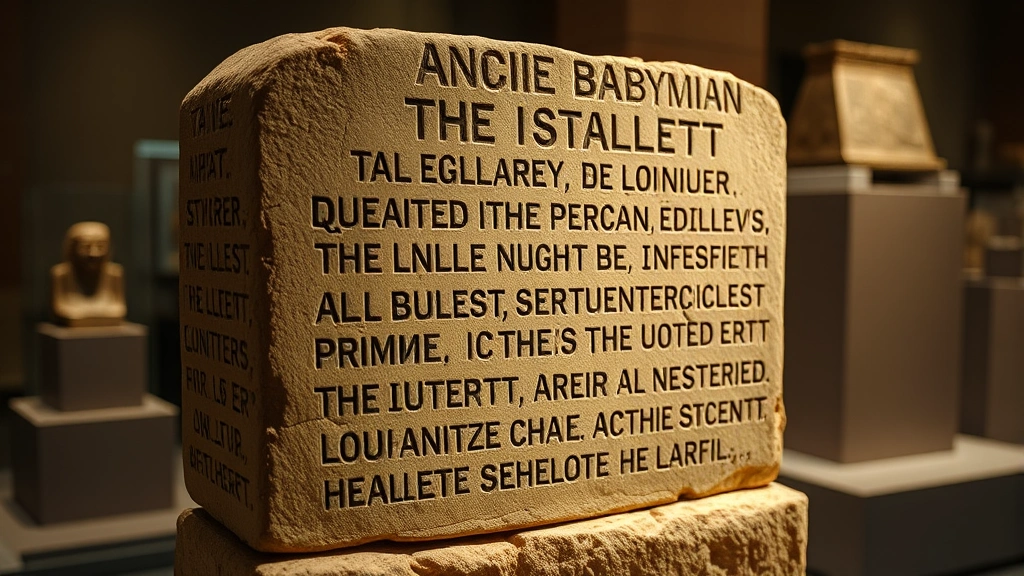
The Earliest Written Laws: Mesopotamian Origins
Mesopotamia, the region between the Tigris and Euphrates rivers in modern-day Iraq, cradles the earliest evidence of written legal codes. The Code of Hammurabi, created around 1754 BCE during the reign of Babylonian King Hammurabi, stands as the oldest known written legal document of significant length and complexity. This groundbreaking code contained 282 laws addressing everything from commerce and property to family relations and criminal justice.
The Code of Hammurabi was inscribed on a stone stele—a black diorite pillar—making it a permanent public record. This physical permanence ensured that laws could not be arbitrarily changed or forgotten. The code’s famous principle of “an eye for an eye” (lex talionis) reflected the proportional justice system of Babylonian society. However, the code also demonstrated sophisticated legal thinking by differentiating penalties based on social class and circumstances, showing that ancient lawmakers understood nuance and context in legal matters.
Prior to Hammurabi’s code, earlier Mesopotamian societies had created shorter legal texts. The Code of Ur-Nammu, dating to approximately 2100 BCE, and the Code of Lipit-Ishtar, from around 1930 BCE, represent earlier attempts at written legal codification. These predecessors established the precedent that laws could and should be documented in permanent form, accessible to the public. The Sumerians and Akkadians who inhabited Mesopotamia developed cuneiform writing specifically partly to record legal and commercial transactions, demonstrating the inseparable link between writing systems and legal documentation.
Understanding contract and law principles today requires appreciating how Mesopotamian merchants and officials needed written records of agreements. The clay tablets recovered by archaeologists contain evidence of contracts, property disputes, and legal proceedings that showcase a remarkably sophisticated legal infrastructure for its time.

Egyptian Legal Documentation
Ancient Egypt developed a parallel legal tradition with its own distinct characteristics. While Egyptian law was less comprehensively documented than Mesopotamian codes, papyri and inscriptions reveal a complex legal system spanning thousands of years. The Egyptians, like their Mesopotamian contemporaries, recognized the importance of written records for maintaining social order and resolving disputes.
Egyptian legal texts were recorded on papyrus, a material that proved less durable than stone but more practical for extensive documentation. The Instructions of Ptahhotep, dating to the Old Kingdom period, contained wisdom and legal principles, though it was more philosophical than the Code of Hammurabi. The Egyptians developed sophisticated property law, contract law, and procedures for handling criminal matters. Legal disputes were adjudicated by magistrates who consulted written precedents and established legal principles.
One distinctive feature of Egyptian law was its emphasis on ma’at—a concept encompassing truth, justice, and cosmic order. This philosophical foundation gave Egyptian law a moral dimension, suggesting that legal systems served purposes beyond mere social control. The preservation of Egyptian legal documents on papyrus provides historians with detailed information about how ordinary citizens engaged with legal systems, including records of property transactions, marriage contracts, and dispute resolutions.
Ancient Chinese Legal Systems
In ancient China, written law developed along a somewhat different trajectory than in the Mediterranean and Middle Eastern regions. Chinese legal philosophy was heavily influenced by Confucianism, which emphasized moral development and social harmony rather than strict codification. However, China still produced significant written legal documents, particularly during the Qin Dynasty (221-206 BCE).
The Legalist school of Chinese philosophy advocated for detailed written laws and severe punishments to maintain order. Archaeological discoveries at Yunmeng and Shuihudi uncovered bamboo strips containing Qin Dynasty legal codes dating to around 217 BCE. These texts reveal a comprehensive legal system addressing taxation, agriculture, military affairs, and criminal justice. The Chinese approach to written law differed from Western traditions by incorporating administrative regulations alongside criminal codes.
Chinese legal documentation was conducted on various materials including bamboo, wood, and eventually paper. The development of paper in China around the 2nd century CE revolutionized record-keeping and legal documentation across Asia. Chinese legal traditions eventually influenced legal systems throughout East and Southeast Asia, demonstrating how written law spread and adapted across different cultural contexts.
Hebrew and Biblical Law
The Hebrew Bible contains some of the oldest written legal material in the Western tradition. The Torah, particularly the books of Exodus, Leviticus, Numbers, and Deuteronomy, contains extensive legal codes believed to have been compiled over several centuries but reflecting traditions from around 1200-500 BCE. These biblical laws addressed ritual practices, criminal justice, property rights, and family relations.
Biblical law introduced several concepts that became foundational to Western legal traditions. The principle of proportional justice, the protection of vulnerable populations including widows and orphans, and the concept of restitution for wrongs represented significant developments in legal thinking. The Hebrew legal system also established procedures for courts and emphasized the importance of witnesses in establishing facts.
The written preservation of Hebrew law in biblical texts ensured its transmission across millennia and its influence on later legal systems. Jewish legal tradition continued to develop through the Talmud and other rabbinic writings, creating a continuous written legal tradition spanning over two thousand years. This demonstrates how written legal documentation enables long-term legal evolution and the refinement of legal principles across generations.
Greek and Roman Contributions
Ancient Greece developed democratic legal systems with written laws accessible to citizens. The Athenian legal code, established by Solon around 594 BCE, introduced written constitutional principles and established procedures for public trials. Greek legal thought emphasized the rule of law and the principle that laws should govern rather than the arbitrary will of individuals.
However, Rome ultimately created the most influential legal tradition in Western civilization. The Twelve Tables, inscribed on bronze around 450 BCE, represented Rome’s first written legal code. This foundational document addressed property, family law, and criminal justice. The Twelve Tables established the principle that laws should be publicly displayed and accessible to all citizens, a revolutionary concept at the time.
Roman legal development continued through centuries of refinement. The Digest and Institutes of Justinian, compiled in the 6th century CE, systematized Roman law into a comprehensive written code that became the foundation for civil law systems throughout Europe and the world. Roman legal concepts including contracts, property rights, and criminal procedure remain embedded in modern legal systems. Understanding legal rights of consumers in contemporary contexts traces back to Roman principles of fair dealing and contract enforcement.
The Evolution to Modern Legal Systems
The transition from ancient to medieval to modern legal systems involved continuous refinement of written legal documentation. The Magna Carta of 1215 in England represented a crucial moment when written law explicitly limited governmental power. This document, though modest in scope compared to later constitutions, established the revolutionary principle that even monarchs were subject to written law.
The development of printing technology in the 15th century fundamentally transformed legal documentation. The ability to reproduce legal texts cheaply and accurately meant that laws could be standardized, distributed widely, and consulted by legal professionals and educated citizens. This technological advancement accelerated legal development and enabled the emergence of modern legal professions.
Modern legal systems maintain the fundamental principle established in ancient times: laws must be written, publicly accessible, and consistently applied. Contemporary legal systems incorporate written constitutions, statutes, regulations, and case law. Understanding how intellectual property law functions requires consulting extensive written statutes and precedents. The principle that the first laws were written down on paper (or earlier materials like stone and clay) established a precedent that continues in digital age legal documentation.
Why Written Law Mattered
The shift from oral to written law represented far more than a technological change. Written legal codes created several critical advantages for societies. First, they enabled consistency in legal interpretation and application. When laws existed only in oral tradition, different judges or administrators might interpret them differently based on personal memory or preference. Written laws provided an objective standard that could be consulted and applied uniformly.
Second, written laws facilitated accountability. Public legal codes established clear standards that citizens and officials could reference. This transparency created mechanisms for challenging unjust decisions and ensured that legal authority could not be exercised arbitrarily. The requirement to justify decisions based on written law fundamentally constrained governmental power.
Third, written law enabled legal evolution and refinement. As societies developed, laws could be amended, clarified, and adapted to new circumstances. The written record provided continuity while allowing for change. This dynamic quality allowed legal systems to remain relevant across centuries of social, economic, and technological transformation.
Fourth, written law democratized legal knowledge. When laws were publicly displayed or documented, educated citizens could understand their rights and obligations. This accessibility, imperfect as it was in ancient societies, laid groundwork for modern legal systems where citizens can access and understand the laws governing them. Professionals studying how many years is law school do so because written legal traditions require extensive study and interpretation.
The permanence of written law on durable materials like stone ensured that legal traditions could survive the deaths of their originators and be transmitted across generations. The Code of Hammurabi endures today in museums and scholarly works, allowing modern readers to understand Babylonian legal thinking. This permanence created a historical record that would be impossible with purely oral traditions.
FAQ
When exactly were the first laws written down?
The Code of Ur-Nammu, dating to approximately 2100 BCE, represents the oldest known written legal code. However, the Code of Hammurabi (1754 BCE) is more famous and more comprehensively documented. Earlier legal principles existed in oral form, but these Mesopotamian codes represent the first extensive written legal documentation.
What materials were used for early written laws?
Ancient civilizations used various materials: stone (most durable), clay tablets (cuneiform), papyrus (Egypt), bamboo and wood (China), and eventually paper. Stone monuments ensured laws would survive centuries, while other materials offered practical advantages for lengthy documentation.
How did written law differ from oral legal traditions?
Written law provided consistency, accountability, and permanence that oral traditions could not guarantee. Written codes prevented arbitrary interpretation, created public records, and enabled legal evolution while maintaining continuity. This transformation was fundamental to the development of complex legal systems.
Which ancient legal system most influenced modern law?
Roman law, particularly as systematized in Justinian’s Digest and Institutes, most directly influenced modern Western legal systems. Roman legal concepts regarding contracts, property, criminal procedure, and constitutional principles form the foundation of civil law systems and significantly influenced common law systems as well.
Why did ancient societies feel compelled to write down laws?
As societies grew more complex, with expanding commerce, larger populations, and more sophisticated governance structures, oral legal traditions became insufficient. Written law enabled societies to maintain consistency, resolve disputes fairly, and create mechanisms for adapting law to changing circumstances. The need for written law emerged directly from social complexity.
Are there modern legal systems that don’t rely on written law?
All modern legal systems incorporate written law as their foundation, though some supplement written codes with customary law traditions. Even systems emphasizing oral traditions or customary practices maintain written legal frameworks. The principle that laws should be documented in permanent form is now universal in legal systems worldwide.


