Raines Law Explained: Attorney Insight
The Raines Law stands as one of New York’s most distinctive and often misunderstood pieces of legislation, fundamentally reshaping how establishments serve alcohol and how patrons consume beverages in public spaces. Enacted in 1896, this law emerged from a specific cultural and political moment in American history, driven by reform movements seeking to regulate the alcohol industry and reduce public intoxication. Understanding the Raines Law requires examining both its original intent and its unexpected consequences, which inadvertently created an entirely new category of social spaces that persist in modified form today.
Named after State Assemblyman John Raines, who championed the legislation, the law was designed to restrict the sale of alcohol to specific hours and to prevent saloons from becoming centers of vice and corruption. However, the law’s strict provisions—particularly its requirement that alcohol could only be sold with meals—led to creative workarounds that fundamentally changed New York’s social landscape. These adaptations gave birth to the concept of the Raines Law room, a phenomenon that continues to influence how we think about bars, restaurants, and hospitality venues more than a century later.
Historical Origins and Legislative Intent
The Raines Law emerged during the Progressive Era, a period of American history characterized by widespread reform movements targeting social ills and government corruption. New York State, particularly New York City, faced significant challenges related to alcohol consumption and the saloon culture that dominated working-class neighborhoods. Saloons served not merely as drinking establishments but as social centers, political headquarters, and sometimes fronts for illegal gambling and prostitution. Reformers, including temperance advocates and civic leaders, viewed the unrestricted sale of alcohol as a root cause of urban decay, poverty, and moral degradation.
John Raines and his political allies believed that by restricting when and how alcohol could be sold, they could diminish the social problems associated with excessive drinking. The legislation reflected broader concerns about reflection about law and its role in shaping society. The law was not purely prohibitionist—it did not ban alcohol entirely—but rather sought to regulate its distribution in ways that would, in theory, reduce public drunkenness and associated social disorders. This nuanced approach represented a compromise between those advocating for complete prohibition and those defending unrestricted access to alcohol.
The political environment of 1896 New York was complex, with various interest groups competing for influence. Breweries and distilleries opposed the restrictions, while reform organizations championed them. The passage of the Raines Law reflected the temporary ascendancy of reform forces, though implementation would prove far more complicated than legislators anticipated. Understanding this historical context is essential for comprehending why Raines Law rooms developed and why they became such a distinctive feature of New York’s hospitality landscape.
The Core Provisions of the Raines Law
The original Raines Law contained several key provisions that fundamentally altered how alcohol could be legally sold in New York. The most significant restriction mandated that spirits and beer could only be sold in conjunction with meals. This provision aimed to prevent the consumption of hard liquor in dedicated drinking establishments and to encourage more moderate consumption patterns tied to dining. The law also imposed strict hours on alcohol sales, prohibiting sales during certain times of day and completely banning Sunday sales—a provision that proved particularly contentious in a city with diverse religious observances.
Additionally, the law increased licensing requirements and fees for establishments seeking to sell alcohol, effectively raising the cost of operating a saloon. These financial barriers were designed to reduce the number of drinking establishments and to ensure that those operating had sufficient resources to maintain proper facilities and prevent illegal activities. The law also granted local authorities greater power to revoke licenses and to inspect premises, theoretically giving municipalities tools to enforce compliance and maintain public order.
For those seeking to understand legal legal terms and definitions, the Raines Law illustrates how legislation can define and restrict commercial activities through specific requirements. The “meal requirement” became a central point of legal interpretation, with ongoing disputes about what constituted an adequate meal and whether the requirement was genuinely satisfied or merely a technical formality.
The Birth of Raines Law Rooms
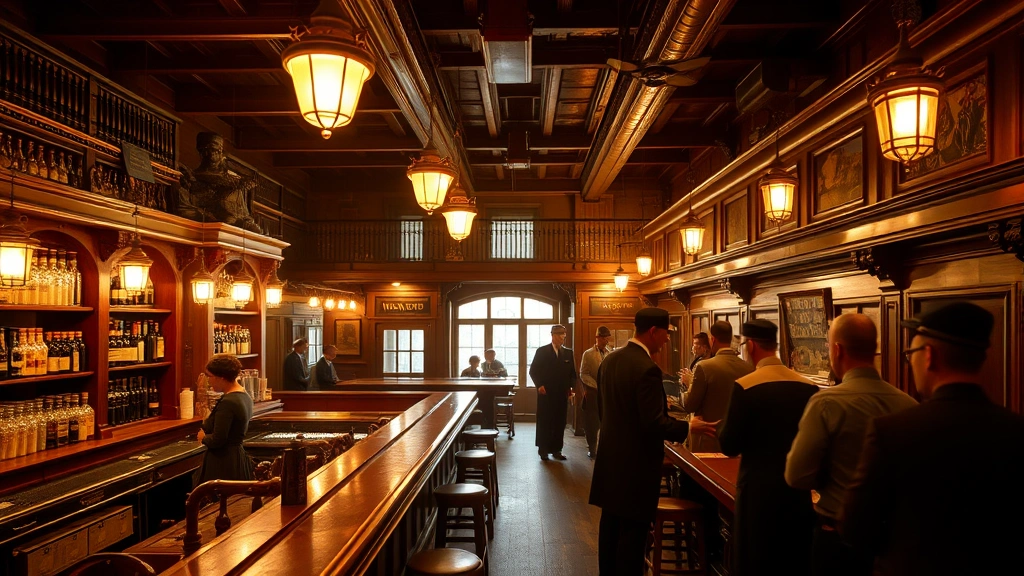
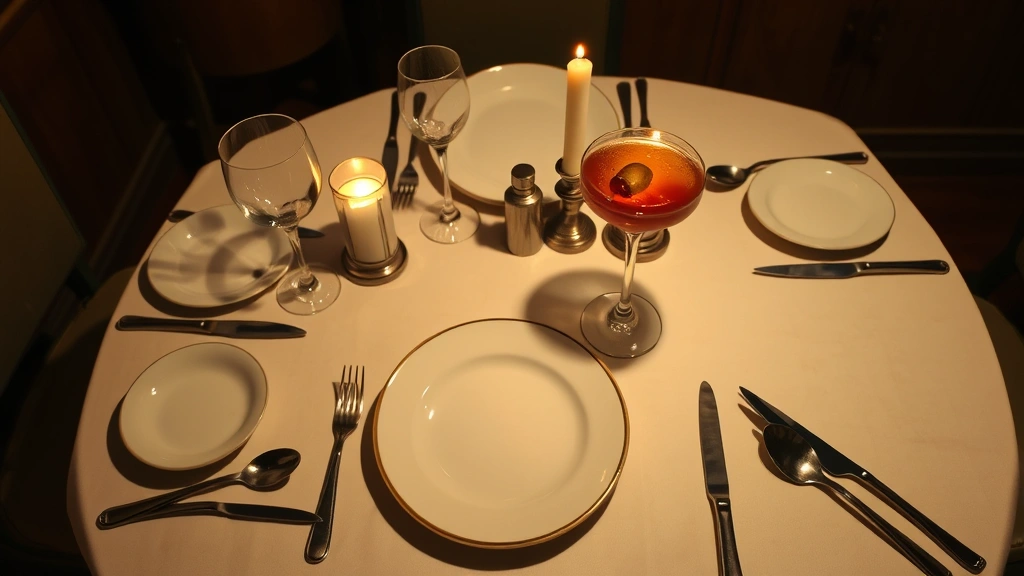
Perhaps no unintended consequence of legislation demonstrates more vividly how human ingenuity responds to legal restrictions than the emergence of Raines Law rooms. Faced with the mandate to serve meals with alcohol, saloon operators responded by adding small dining rooms or upstairs spaces to their establishments. These rooms ostensibly served food, thereby satisfying the legal requirement, while the primary business of selling and serving alcohol continued in the main saloon area below or adjacent to the dining space.
The typical Raines Law room was a modest space, often cramped and poorly furnished, located on an upper floor of a saloon building. These rooms frequently featured minimal meal offerings—sometimes just a sandwich or light snack—that customers could purchase to technically comply with the law. The food itself was often not the primary draw; rather, the room provided legal cover for continued alcohol service. Hotel establishments, which were exempt from certain Raines Law restrictions, began adding small hotel rooms to their operations, further blurring the lines between genuine hospitality and legal workarounds.
Interestingly, these Raines Law rooms developed their own social character and attracted specific clientele. The upstairs rooms became venues for private gatherings, political meetings, and social events that wouldn’t have been possible in the more public ground-floor saloons. Some establishments invested in decorations, entertainment, and more substantial meal offerings, gradually transforming their Raines Law rooms into legitimate restaurants and private dining spaces. This inadvertent innovation in hospitality design demonstrates how legal constraints can paradoxically create new social spaces and business opportunities.
How Establishments Circumvented the Restrictions
The creativity displayed by saloon operators in circumventing the Raines Law was remarkable and multifaceted. Beyond simply adding dining rooms, establishments employed numerous strategies to maintain their core business while technically complying with legal requirements. Some operators established partnerships with nearby restaurants, creating arrangements where customers could claim to be purchasing food while primarily consuming alcohol. Others offered meal “packages” that included minimal food items bundled with drink purchases at inflated prices, ensuring the food requirement was met while the economics of the transaction clearly centered on alcohol sales.
Hotel operators discovered particularly effective loopholes. The law provided different regulations for hotels, and some establishments obtained hotel licenses while operating primarily as drinking venues. These establishments added a small number of hotel rooms—sometimes just a few—to qualify for hotel licensing, thereby exempting themselves from many of the meal requirements and hour restrictions. The distinction between a saloon with hotel rooms and a hotel with a saloon became increasingly blurred, with some operators explicitly marketing their establishments as hotels to avoid Raines Law restrictions.
Enforcement challenges significantly hampered the law’s effectiveness. Determining whether a meal had been genuinely offered and consumed required subjective judgment and constant inspection. Corrupt officials could be bribed to overlook violations, and the sheer number of establishments made comprehensive enforcement impractical. Police and health inspectors faced constant pressure from both reformers demanding strict enforcement and business interests seeking leniency. This enforcement gap meant that many establishments operated with minimal concern for technical compliance, knowing that the likelihood of serious consequences remained relatively low.
The phenomenon of Raines Law rooms also had unexpected social consequences. These spaces provided opportunities for women to enter establishments where they might otherwise have been unwelcome, as the dining room setting created a more respectable atmosphere than the traditional all-male saloon. This gradual shift in social norms, facilitated by the Raines Law’s unintended consequences, contributed to changing gender dynamics in public social spaces throughout the twentieth century.
Legal Implications and Enforcement
The Raines Law generated extensive litigation as prosecutors sought to enforce its provisions and defendants challenged their validity and application. Courts had to grapple with fundamental questions about what constituted compliance: Did a customer need to actually consume a meal, or was merely purchasing one sufficient? Could establishments charge exorbitant prices for minimal food items and claim compliance? These questions led to numerous court decisions that attempted to establish standards for enforcement while respecting the law’s literal language.
One significant legal issue involved the distinction between the letter and spirit of the law. Judges recognized that many establishments were technically complying while flagrantly violating the law’s underlying purpose. However, courts were reluctant to impose stricter standards than what the law’s language permitted, particularly when doing so would require subjective judgments about intent and actual behavior. This tension between literal compliance and purposive enforcement remains a recurring theme in administrative law and common law jurisprudence.
The enforcement of the Raines Law also involved questions about due process and regulatory authority. Establishment operators challenged the constitutionality of licensing revocation procedures and inspections, arguing that the law granted excessive discretion to administrative officials. These challenges contributed to the development of administrative law doctrines protecting property rights and procedural fairness in regulatory contexts. The Raines Law thus played a role not only in shaping hospitality practices but also in developing legal frameworks for regulating commerce and protecting individual rights.
Prosecutors developed various strategies to prove violations, including undercover operations where officers would pose as customers to observe actual practices. These enforcement techniques raised questions about entrapment and the proper scope of law enforcement authority. The Raines Law litigation landscape demonstrates how a single piece of legislation can generate complex legal questions extending far beyond its immediate subject matter.
Modern Legacy and Contemporary Relevance
Although the Raines Law was eventually repealed and replaced by subsequent alcohol regulations, its legacy persists in multiple ways. The concept of the Raines Law room remains culturally significant, referenced in historical discussions of New York City and invoked when discussing how regulations shape business practices. Modern bars and restaurants sometimes deliberately evoke the Raines Law room aesthetic, recognizing the historical appeal and nostalgic value of this distinctive space.
More importantly, the Raines Law demonstrates enduring lessons about regulatory design and unintended consequences. Policymakers and legal scholars continue to cite the Raines Law as a cautionary example of how well-intentioned legislation can produce unexpected results. The law’s history illustrates the principle that human behavior adapts to legal constraints in creative and sometimes counterproductive ways. This insight has influenced how modern regulators approach alcohol licensing, food safety standards, and other commercial regulations.
For those interested in legal education and the study of law’s social effects, the Raines Law provides an excellent case study. Law schools in New York often reference the Raines Law when teaching administrative law, statutory interpretation, and the sociology of law. The law demonstrates how regulations emerge from political processes, how they are implemented in practice, and how they ultimately shape social behavior and commercial activity.
The Raines Law also influenced subsequent alcohol regulations, including those that eventually replaced it. Legislators learned from the Raines Law experience that overly restrictive regulations often generate compliance problems and create perverse incentives. Modern alcohol licensing frameworks, while still regulatory in nature, generally attempt to balance public health and safety concerns with practical business realities, reflecting lessons drawn from the Raines Law era.
The Raines Law Room in Today’s Market
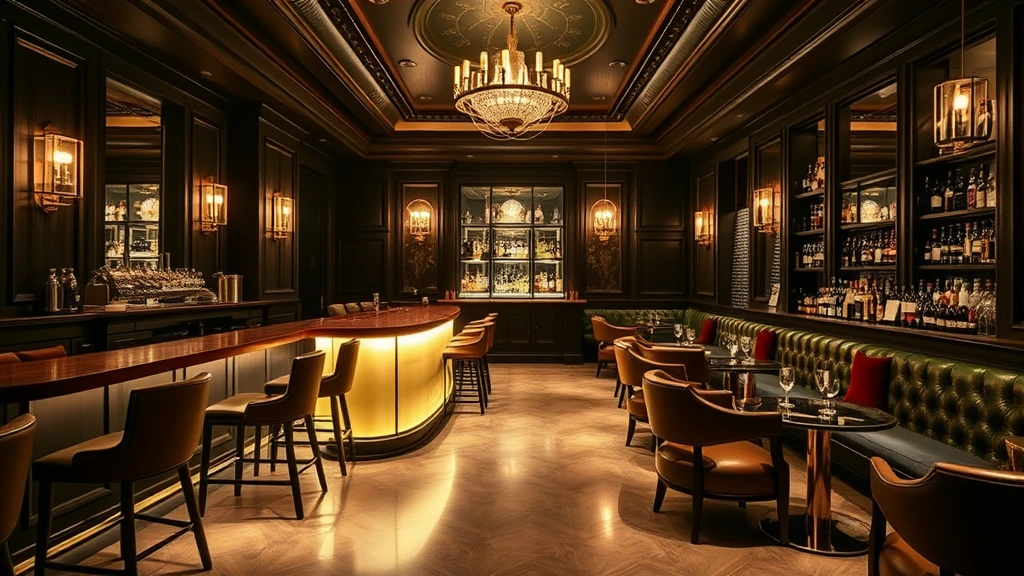
Contemporary establishments occasionally market themselves explicitly as Raines Law rooms or use the terminology to evoke a particular historical aesthetic and social atmosphere. These modern interpretations typically emphasize speakeasy-style ambiance, prohibition-era decor, and elevated cocktail service, drawing on the historical mystique associated with Raines Law rooms as spaces that existed in legal gray areas and offered exclusive social experiences.
Modern speakeasies and craft cocktail bars have adopted some elements of the Raines Law room concept, though updated for contemporary sensibilities. These establishments often feature hidden entrances, dim lighting, and an atmosphere of exclusivity that evokes the historical Raines Law rooms. However, they operate in full compliance with modern alcohol regulations, using the historical reference as a marketing strategy rather than as a legal necessity.
The Raines Law room concept also appears in academic and professional discussions of hospitality design and licensing. Researchers studying alcohol policy and business regulation reference the Raines Law when discussing how regulatory frameworks shape physical space design and social practices. Urban historians and architectural scholars have documented the remaining Raines Law rooms and their evolution over time, recognizing their significance as historical artifacts that embody the intersection of law, commerce, and social life.
For those pursuing legal careers or studying law, understanding the Raines Law provides valuable context for broader discussions about regulatory policy, statutory interpretation, and the relationship between law and society. Law school personal statement examples sometimes reference the Raines Law as an illustration of why applicants are interested in law’s social dimensions. The law’s history demonstrates that legal practice extends beyond courtroom advocacy to encompass the complex processes through which regulations shape human behavior and commercial activity.
Understanding how the Raines Law functioned also provides insight into contemporary regulatory challenges. Modern regulators addressing issues from food safety to environmental protection to financial services regulation face similar problems: how to craft regulations that effectively advance public policy goals while remaining practically enforceable and not generating excessive compliance costs. The Raines Law experience suggests that successful regulation requires not only careful drafting but also realistic assessment of how regulated parties will respond to legal requirements.
Legal research tools like Google Scholar provide access to historical court decisions related to the Raines Law, allowing contemporary researchers to examine how courts interpreted and applied the statute. These historical decisions remain instructive for understanding judicial approaches to statutory interpretation and regulatory enforcement.
FAQ
What exactly was the Raines Law?
The Raines Law, enacted in 1896 in New York State, was legislation designed to regulate alcohol sales by restricting the hours during which alcohol could be sold and requiring that alcohol be sold only in conjunction with meals. The law aimed to reduce public drunkenness and regulate the saloon industry, though it inadvertently created the phenomenon of Raines Law rooms.
Why were Raines Law rooms created?
Saloon operators created Raines Law rooms to comply with the legal requirement that alcohol be sold only with meals. These rooms, typically located upstairs from the main saloon, ostensibly served food, thereby satisfying legal requirements while allowing the primary business of alcohol service to continue. The rooms often featured minimal meal offerings, with the food serving primarily as legal cover rather than a genuine commercial focus.
Were Raines Law rooms actually legal?
Raines Law rooms existed in a legally ambiguous space. While they technically complied with the law’s literal requirements—alcohol was sold alongside food service—many operated in violation of the law’s underlying purpose and spirit. Enforcement was inconsistent, and many establishments operated with minimal concern for strict compliance. Courts struggled with questions about what constituted genuine compliance versus mere technical adherence to legal requirements.
How did the Raines Law eventually end?
The Raines Law was eventually repealed and replaced by subsequent alcohol regulations that reflected lessons learned from its implementation. Legislators recognized that overly restrictive regulations generated compliance problems and unintended consequences. Modern alcohol licensing frameworks attempt to balance regulatory goals with practical business considerations more effectively than the original Raines Law.
What modern lessons does the Raines Law teach about regulation?
The Raines Law demonstrates that regulations often produce unintended consequences as regulated parties adapt creatively to legal constraints. It illustrates the importance of considering practical implementation and enforcement when drafting legislation, and it shows how well-intentioned policies can generate perverse incentives. Modern regulators cite the Raines Law when discussing how to design regulations that effectively achieve policy goals while remaining practically enforceable.
Do Raines Law rooms still exist?
While the legal circumstances that originally created Raines Law rooms have changed, some historical rooms remain. Additionally, modern establishments sometimes deliberately evoke the Raines Law room aesthetic, using the historical reference as a marketing strategy. Contemporary speakeasies and craft cocktail bars draw inspiration from the historical mystique associated with Raines Law rooms, though they operate in full compliance with modern regulations.


