Do Self-Driving Cars Follow Laws? Expert Insight Into Autonomous Vehicle Regulations
The emergence of autonomous vehicles represents one of the most significant technological transformations in transportation history. As self-driving cars become increasingly prevalent on our roads, a critical question arises: do these vehicles actually follow the law? The answer is more complex than a simple yes or no. While autonomous vehicles are programmed to comply with traffic regulations, the legal framework governing them remains fragmented, creating a landscape where technological capability and legislative reality don’t always align perfectly.
Self-driving cars operate within a hybrid system where manufacturers, regulators, and legal systems work in concert—though not always harmoniously. These vehicles must navigate not only physical roads but also an intricate web of federal regulations, state laws, and local ordinances. Understanding how autonomous vehicles interact with existing traffic laws requires examining both the technological safeguards built into these systems and the evolving legal standards designed to govern them.

How Autonomous Vehicles Are Programmed to Obey Traffic Laws
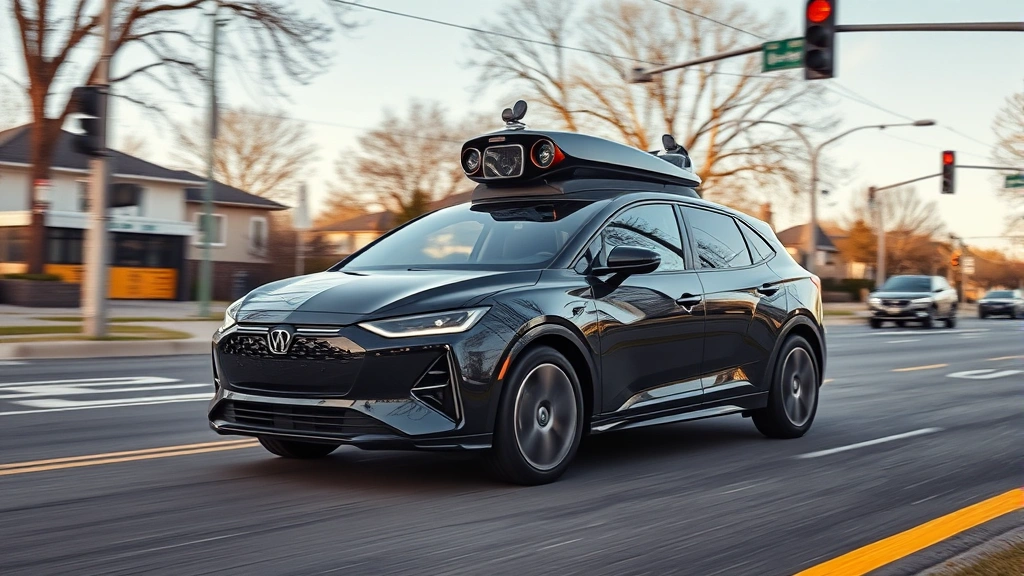
Self-driving cars are engineered with sophisticated software systems designed to recognize and comply with traffic laws. These vehicles use a combination of sensors, cameras, lidar technology, and artificial intelligence to perceive their environment and make driving decisions. The programming includes rules that correspond to standard traffic regulations: stopping at red lights, maintaining speed limits, yielding to pedestrians, and respecting right-of-way rules.
The core programming of autonomous vehicles integrates what legal scholars call “rule-based systems”—algorithms that establish clear parameters for lawful behavior. When a self-driving car encounters a stop sign, its computer vision system identifies the sign, and the vehicle’s control systems execute a stop. Similarly, when approaching a school zone with reduced speed limits, the vehicle’s geolocation and mapping data allow it to adjust speed accordingly. This represents a fundamental difference from human drivers, who may consciously choose to violate traffic laws; autonomous vehicles lack this intentional agency.
However, programming compliance with traffic laws and actual real-world compliance are not identical. Edge cases—unusual or unforeseen situations—can expose gaps between programmed behavior and legal requirements. For instance, a self-driving car might be programmed to treat an obscured traffic signal conservatively, but this conservative approach might technically violate a law requiring vehicles to proceed when safe to do so.
Federal Regulations Governing Self-Driving Cars
At the federal level, the National Highway Traffic Safety Administration (NHTSA) and the Department of Transportation (DOT) provide oversight of autonomous vehicle development and deployment. The NHTSA has issued guidance documents outlining expectations for autonomous vehicle manufacturers, though comprehensive federal legislation remains limited.
Federal regulations currently address vehicle safety standards that apply to autonomous vehicles. These include standards for braking systems, lighting, and structural integrity. The NHTSA’s “Automated Driving Systems 2.0” guidance framework establishes expectations for safety validation, operational design domains, and testing protocols. This guidance emphasizes that manufacturers must demonstrate their vehicles can safely operate within defined conditions and comply with applicable traffic laws.
The federal framework also includes cybersecurity requirements. Since autonomous vehicles rely on software and wireless connectivity, federal standards address protection against hacking and unauthorized control. These cybersecurity measures are essential because compromised vehicle systems could lead to violations of traffic laws or dangerous driving behavior. Understanding legal terminology becomes crucial when navigating these regulatory requirements.
Federal motor vehicle safety standards (FMVSS) apply to autonomous vehicles just as they apply to conventional vehicles. These standards cover everything from crash testing requirements to environmental durability. An autonomous vehicle must meet all applicable FMVSS standards, ensuring that the vehicle’s compliance with traffic laws operates within a framework of broader safety requirements.
State-Level Variations in Autonomous Vehicle Laws
While federal guidelines provide a baseline, individual states have adopted varying approaches to autonomous vehicle regulation. Some states have enacted comprehensive autonomous vehicle laws, while others rely on existing traffic codes adapted to autonomous technology. This patchwork of state regulations creates complexity for manufacturers and operators attempting to ensure their vehicles follow laws across jurisdictions.
States like California, Nevada, Arizona, and Pennsylvania have developed specific regulatory frameworks for autonomous vehicles. These frameworks typically address testing requirements, liability allocation, and operational parameters. For example, some states require autonomous vehicles to be equipped with remote operation capabilities, while others mandate specific reporting of accidents or malfunctions. These variations mean that a self-driving car programmed to follow laws in one state might need reconfiguration for another.
The distinction between common law principles and statutory regulation becomes significant here. Some state regulations explicitly address how autonomous vehicles should interact with common law principles of negligence and duty of care. These legal foundations establish that even though a vehicle is self-driving, the manufacturer and operator maintain certain legal obligations regarding safe operation and compliance with traffic regulations.
Notably, most state laws require that autonomous vehicles, when operating in autonomous mode, comply with all applicable traffic laws. However, the enforcement mechanisms and specific requirements vary considerably. Some states require continuous human monitoring, others allow fully driverless operation in specific conditions, and some remain in early regulatory phases with limited autonomous vehicle operations authorized.
Liability and Legal Responsibility Questions
A fundamental legal question regarding self-driving cars concerns liability when they violate traffic laws or cause accidents. Traditional traffic law assumes a human driver bears responsibility for traffic violations. When a self-driving car runs a red light due to a software error, who bears legal responsibility—the manufacturer, the vehicle owner, the software developer, or the car itself?
This question intersects with commercial law principles, particularly regarding product liability and warranties. If a vehicle’s autonomous system fails to comply with traffic laws due to a defect, the manufacturer may face liability under product liability doctrine. Conversely, if the vehicle owner disabled safety features or failed to maintain the vehicle properly, their liability might be established instead.
Current legal frameworks generally allocate responsibility based on causation. If a manufacturer’s defective design caused non-compliance with traffic laws, the manufacturer bears liability. If an operator’s negligent maintenance caused system failure, the operator may be liable. This allocation reflects established transactional law principles and tort doctrine, adapted to autonomous vehicle contexts.
Insurance law also plays a crucial role in this liability framework. Most autonomous vehicle liability insurance policies specify coverage conditions based on vehicle operation mode and compliance with manufacturer specifications. These policies essentially create contractual obligations that reinforce legal requirements for traffic law compliance.
Current Challenges in Enforcement
Even though self-driving cars are programmed to follow laws, enforcement challenges emerge in practice. Law enforcement agencies trained to identify human driver violations must adapt their approaches for autonomous vehicles. If a self-driving car exceeds the speed limit due to a sensor malfunction, how should enforcement proceed? Traditional traffic stops assume human interaction; autonomous vehicles complicate this process.
Data logging and telemetry present another enforcement challenge. Self-driving cars continuously record operational data—vehicle speed, acceleration, sensor readings, and decision-making processes. This data could serve as evidence in legal proceedings, but privacy concerns and data ownership questions remain unresolved in many jurisdictions. Law enforcement’s access to this data, and the procedures for obtaining it, remain areas where legal frameworks continue developing.
The distinction between negligent violations and innocent system failures creates enforcement complexity. A human driver who runs a red light is presumed to have acted intentionally or negligently. A self-driving car running a red light due to a software bug represents a different category of violation. Enforcement agencies must determine whether violations result from programmable non-compliance, system failures, or edge cases where programmed behavior produces legally problematic results.
Additionally, the transition period where human-driven and autonomous vehicles share roads creates unique enforcement challenges. Autonomous vehicles must anticipate and respond to human driver behavior that may itself violate traffic laws. An autonomous vehicle might brake suddenly to avoid a human driver running a red light, potentially causing a collision with a following vehicle. In such scenarios, determining compliance with traffic laws requires nuanced analysis of each vehicle’s conduct.
The Role of Manufacturers and Insurance
Vehicle manufacturers bear significant responsibility for ensuring autonomous vehicles follow traffic laws. This responsibility extends beyond initial programming to include ongoing software updates, testing protocols, and validation procedures. Manufacturers must document that their vehicles comply with all applicable traffic laws across the jurisdictions where they operate.
The relationship between manufacturers and insurance providers reinforces legal compliance requirements. Insurance underwriters conduct detailed risk assessments of autonomous vehicle systems, and coverage often depends on demonstrated compliance with traffic law requirements. This creates a market-based incentive structure where insurance costs reflect the vehicle’s demonstrated ability to follow laws.
Manufacturers also bear responsibility for addressing discovered defects or non-compliance issues. If a manufacturer discovers that an autonomous vehicle system fails to properly recognize certain traffic signals, they must issue updates or recalls to restore compliance. This obligation reflects both legal requirements and commercial interests in maintaining vehicle safety and public confidence.
Third-party testing and validation services have emerged as important players in this ecosystem. Organizations like the Society of Automotive Engineers (SAE) establish testing standards and validation procedures that help manufacturers demonstrate traffic law compliance. These standards provide objective measures of whether vehicles follow laws as required.
Future Legal Frameworks
The legal landscape governing autonomous vehicle traffic law compliance continues evolving. Future frameworks will likely address several emerging issues more comprehensively. First, standardization of traffic law compliance testing will probably increase, creating uniform benchmarks across jurisdictions. This standardization would reduce the fragmented state-by-state approach currently in place.
Second, legislation addressing edge cases and ethical programming will likely develop. As autonomous vehicles encounter increasingly complex traffic situations, laws may specify how vehicles should prioritize competing safety interests. For instance, should an autonomous vehicle prioritize pedestrian safety or passenger safety when a collision is unavoidable? These ethical questions will increasingly move from engineering discussions into legal requirements.
Third, the relationship between autonomous vehicle compliance and human traffic law violations will require clarification. Should autonomous vehicles be programmed to replicate human driving patterns, including common minor violations? Or should they maintain strict compliance regardless of surrounding traffic behavior? Future legal frameworks will likely establish clear expectations on this question, affecting how legal professionals advise clients on autonomous vehicle deployment.
Fourth, international harmonization of autonomous vehicle standards will probably increase. As autonomous vehicles become global technology, international legal frameworks addressing traffic law compliance will facilitate cross-border deployment. Organizations like the United Nations Economic Commission for Europe are already working on harmonizing autonomous vehicle standards internationally.
Finally, adaptive legal frameworks that can evolve with technology will likely replace static regulations. Rather than legislation specifying precise compliance requirements, future laws may establish performance-based standards allowing manufacturers flexibility in how they achieve traffic law compliance. This approach would allow legal frameworks to keep pace with technological advancement while maintaining public safety and legal accountability.
FAQ
Do self-driving cars always obey traffic laws?
Self-driving cars are programmed to comply with traffic laws, but like any system, they can experience failures. Software bugs, sensor malfunctions, or edge cases can cause violations. However, studies indicate autonomous vehicles violate traffic laws at lower rates than human drivers. The programming is designed for consistent compliance, whereas human drivers may intentionally or negligently violate laws.
Who is legally responsible if a self-driving car violates traffic laws?
Responsibility depends on causation. If a manufacturing defect caused non-compliance, the manufacturer bears liability. If an operator disabled safety features, the operator bears responsibility. If a third party hacked the vehicle’s systems, liability may fall on that party. Current legal frameworks allocate responsibility based on fault and causation, similar to conventional vehicle liability law.
Are self-driving cars legal everywhere?
Autonomous vehicles operate legally in some jurisdictions but remain prohibited or heavily restricted in others. Federal guidelines provide framework, but individual states determine their own regulations. Some states allow testing on public roads with restrictions; others allow limited driverless operation; still others prohibit autonomous vehicles entirely. Before operating an autonomous vehicle, you must verify local regulations. Understanding legal procedures for challenging regulations may be necessary in some cases.
What happens if a self-driving car gets a speeding ticket?
Speeding tickets for autonomous vehicles present novel legal questions. If the vehicle was operating autonomously and exceeded speed limits due to system malfunction, the manufacturer might bear responsibility rather than the owner. However, if the owner disabled speed-limiting features or programmed the vehicle to exceed limits, the owner would be responsible. Traffic enforcement procedures for autonomous vehicles remain underdeveloped in most jurisdictions.
How do self-driving cars handle traffic situations where laws are ambiguous?
Autonomous vehicle programming typically includes conservative decision-making protocols for ambiguous situations. When traffic laws are unclear or conflicting, vehicles are usually programmed to choose the safest option, often involving reduced speed or increased caution. This conservative approach may technically result in non-compliance with certain laws (like failing to proceed through an intersection when safe to do so), but prioritizes safety over strict legal compliance in genuinely ambiguous situations.
Will autonomous vehicles need special traffic laws?
Future legal development will likely create some autonomous vehicle-specific traffic regulations. Issues like remote operation, communication with infrastructure, and handling of system failures may require specialized legal frameworks. However, the core traffic laws regarding speed, right-of-way, and signal compliance will probably remain largely unchanged, with autonomous vehicles expected to comply with the same rules as human drivers.


