
Florida has one of the most restrictive stances on common law marriage in the United States. Unlike many states that recognize informal marriages created through mutual agreement and cohabitation, Florida explicitly abolished common law marriage in 1968. This legal position has significant implications for couples living together in the state, particularly regarding spousal rights, inheritance, and family law matters. Understanding Florida’s stance on common law marriage is essential for anyone in a long-term relationship, as it directly affects property rights, estate planning, and potential disputes.
The question of whether common law marriage is valid in Florida is straightforward from a legal perspective: it is not. However, the nuances surrounding this prohibition, the rights of cohabiting couples, and the recognition of common law marriages from other states require deeper exploration. This comprehensive guide examines Florida’s common law marriage laws, what protections do exist for unmarried couples, and how courts handle disputes involving long-term domestic partnerships.

Florida’s Common Law Marriage Ban: Historical Context
Florida’s prohibition on common law marriage represents a deliberate legislative choice to require formal procedures for creating valid marriages. Prior to 1968, Florida recognized common law marriages under certain conditions. These informal unions, created through mutual agreement and cohabitation without formal ceremony or license, were treated as valid marriages for all legal purposes. However, the state legislature determined that the uncertainty and disputes arising from common law marriages justified eliminating this category of marriage entirely.
The reasoning behind Florida’s 1968 reform reflected broader national trends toward modernizing family law and reducing litigation. By requiring a marriage license and formal solemnization, Florida aimed to create clear, documented evidence of marital status. This approach reduces disputes about whether a marriage ever existed and provides definitive records for property division, inheritance, and other legal matters. The legislature believed that formal requirements would decrease fraud, prevent spurious claims of marriage, and provide clarity for all parties involved.
The historical context matters because it explains why Florida took such a definitive stance. Many states gradually moved away from recognizing new common law marriages while preserving the validity of those created before a certain date. Florida, however, abolished the institution entirely, creating a clean break with its past practice. Understanding this historical shift helps explain the current legal landscape and why couples who believe they have a common law marriage must understand how Florida courts will treat their relationship.
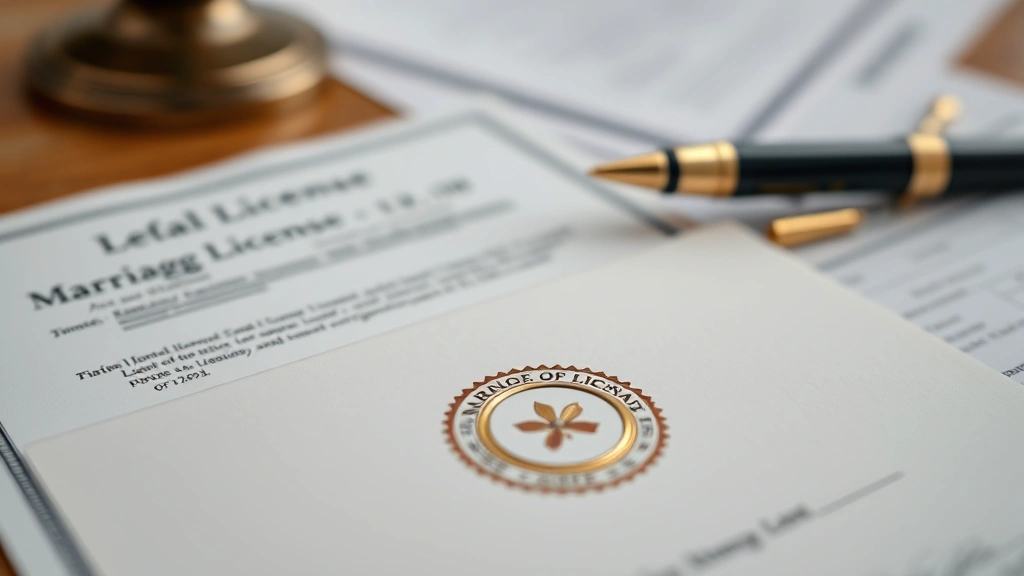
What Happened to Common Law Marriage in Florida
When Florida abolished common law marriage in 1968, the legislature enacted what is now codified in Florida Statutes Section 741.01. This statute explicitly requires that marriages be solemnized, meaning they must be performed with legal authority and in compliance with statutory requirements. The law mandates that before a marriage license is issued, both parties must appear before the clerk of the circuit court or authorize the clerk to issue the license based on their application.
The key language in Florida law states that no common law marriage shall be valid in Florida if the marriage was entered into after January 1, 1968. This creates a definitive cutoff date. Any couple attempting to establish a common law marriage after this date will find no legal recognition in Florida courts. The statute leaves no room for exceptions based on the length of cohabitation, the number of children, or the parties’ intentions to be married.
However, the law does contain an important provision: it recognizes common law marriages created before January 1, 1968, if they were valid under the law in effect at the time of creation. This means that elderly couples who established common law marriages in Florida before 1968 may still have valid marital status. Additionally, Florida recognizes common law marriages created in other states if those states recognize such marriages and the couple meets the requirements of the state where the marriage was created.
The practical effect of Florida’s prohibition is that couples cannot rely on their relationship, regardless of its length or character, to create marital status. Even couples who have lived together for decades, raised children together, and held themselves out as married will not be recognized as spouses under Florida law unless they obtained a marriage license and had their marriage solemnized according to statutory requirements.
For those seeking legal protections similar to marriage, Florida offers alternatives. The state recognizes domestic partnerships in limited contexts, though Florida does not have a comprehensive domestic partnership statute like some other states. Couples can also enter into cohabitation agreements that define their property rights and other obligations, providing some legal protection even without marriage.
Recognition of Out-of-State Common Law Marriages
While Florida does not recognize common law marriages created within its borders after 1968, it does recognize common law marriages validly created in other states. This principle of comity—mutual respect for the laws of other states—means that a couple who established a common law marriage in a state that recognizes such unions will have their marriage recognized as valid in Florida.
Several states continue to recognize common law marriage, including Colorado, Iowa, Kansas, Montana, New Hampshire, South Carolina, Texas, and Utah, among others. If a couple met the requirements for common law marriage in one of these states—typically including mutual agreement to be married, cohabitation, and holding themselves out as married—their marriage will be recognized in Florida even though they could not have created such a marriage within Florida itself.
The recognition of out-of-state common law marriages can become relevant in several contexts. A couple might move to Florida after establishing a common law marriage in another state. If one party dies, their estate may be subject to Florida probate law, but the surviving spouse’s marital status—and thus their inheritance rights—will be recognized based on the validity of the marriage in the state where it was created. Similarly, in divorce proceedings, if one party claims they were in a common law marriage with the other party and that marriage was created in another state, Florida courts will apply the law of that state to determine whether the marriage was valid.
This creates an interesting asymmetry: a couple cannot create a common law marriage in Florida, but if they had created one elsewhere, Florida will respect it. The implications are important for estate planning and for couples who relocate to Florida from states recognizing common law marriage. Such couples should ensure they have clear documentation of their marital status and understand how Florida law will treat their marriage.
Rights and Protections for Unmarried Couples in Florida
Although Florida does not recognize common law marriage, unmarried couples are not entirely without legal protections. The state has developed various doctrines and statutory provisions that provide some recognition of the economic interdependence that can develop in long-term relationships.
One important doctrine is unjust enrichment. Florida courts have recognized that when one party makes contributions to the other party’s property or welfare with the expectation of receiving something in return, and that expectation is not fulfilled, the contributing party may have a claim for unjust enrichment. This doctrine has been applied in cases involving unmarried cohabitants who made financial contributions to property owned by their partner or who provided services in reliance on promised compensation or support.
Another relevant doctrine is quantum meruit, which allows one party to recover the reasonable value of services provided to another party when there is no express contract. Unmarried cohabitants have sometimes used quantum meruit claims to recover compensation for services rendered during the relationship, though Florida courts have been cautious about applying this doctrine in the domestic context.
Florida also recognizes express contracts between unmarried parties. If two people enter into a written agreement defining their property rights, support obligations, and other matters, Florida courts will generally enforce such agreements if they are not based solely on consideration of sexual services. This provides a mechanism for unmarried couples to create legal protections similar to those available through marriage.
Additionally, Florida recognizes certain rights for unmarried domestic partners in specific contexts. For example, unmarried partners may be able to make medical decisions for an incapacitated partner if they have executed a healthcare proxy or have been designated in an advance directive. Similarly, unmarried partners can inherit from an intestate estate if they are named as beneficiaries in a will or if they have established a valid claim to the estate through other legal means.
Property Rights and Cohabitation Agreements
One of the most significant concerns for unmarried couples is the treatment of property acquired during their relationship. Unlike married couples, who have statutory rights to equitable distribution of marital property, unmarried couples in Florida have no automatic claim to property owned by their partner, even if they cohabited for many years.
Property acquired during an unmarried relationship is typically treated according to ownership principles. If property is titled in one person’s name, that person is presumed to be the owner. If both parties’ names are on the title, they are presumed to own the property as tenants in common, each with an undivided interest. This can create significant inequities in long-term relationships where one party may have contributed substantially to the acquisition of property titled in the other party’s name.
To address these concerns, unmarried couples can enter into cohabitation agreements. These written contracts can specify how property will be owned, how expenses will be shared, and what will happen to property if the relationship ends. A well-drafted cohabitation agreement can provide protections similar to those available through marriage, including provisions for property division, spousal support, and inheritance rights.
Florida courts will enforce cohabitation agreements if they are entered into voluntarily by both parties with full disclosure of financial information, if they are in writing, and if they do not violate public policy. The key limitation is that agreements based solely on sexual services are not enforceable. However, agreements that address economic aspects of the relationship and are supported by consideration other than sexual services will generally be upheld.
Couples considering cohabitation agreements should work with a family law attorney to ensure the agreement is properly drafted and executed. The agreement should clearly identify the property involved, specify how ownership and management will be handled, and address what will happen if the relationship ends. Having legal representation for both parties helps ensure that the agreement is fair and that both parties understand its terms.
Estate Planning for Unmarried Partners
Without marriage or a comprehensive legal document, an unmarried partner has no automatic inheritance rights. If one partner dies without a will, Florida’s intestacy laws will distribute their estate according to a statutory scheme that prioritizes spouses, then children, then parents, and then other relatives. An unmarried partner, regardless of the length of the relationship, will receive nothing unless they are named in a will or other estate planning document.
This makes estate planning essential for unmarried couples. Each partner should execute a will that specifically names the other partner as a beneficiary and specifies what property the partner will receive. Without such a will, the deceased partner’s property will go to relatives who may not have been close to the deceased or who may not respect the deceased’s wishes regarding their partner.
Beyond wills, unmarried partners should consider other estate planning tools. A revocable living trust can be used to transfer property outside of probate and can specify that the surviving partner will receive certain assets. A beneficiary deed can be used to transfer real property directly to the surviving partner without probate. Life insurance policies and retirement accounts can name the partner as a beneficiary, ensuring that these assets pass directly to the partner outside of probate.
Additionally, unmarried partners should execute healthcare proxies and advance directives naming each other as agents. These documents ensure that each partner can make medical decisions for the other if they become incapacitated. Without these documents, hospitals and healthcare providers may not recognize an unmarried partner’s authority to make decisions, potentially leading to situations where the partner is excluded from medical decisions and unable to access information about the incapacitated partner’s condition.
Partners should also consider a power of attorney, which names the other partner as an agent to handle financial and legal matters if the principal becomes incapacitated. This ensures continuity of financial management and prevents situations where the partner is locked out of accounts or unable to pay bills.
Florida Domestic Violence Protections
One area where Florida provides protections for unmarried partners is domestic violence. Florida’s domestic violence laws apply to current and former spouses, people in dating relationships, and people who have a child in common, regardless of whether they are married. Additionally, Florida courts have interpreted the domestic violence statute to include unmarried cohabitants.
Under Florida law, domestic violence includes any assault, battery, sexual assault, sexual battery, stalking, or any other crime resulting in physical injury or death, by one family or household member against another family or household member. The statute defines family or household members to include spouses, former spouses, people related by blood or marriage, people who are or were in a dating relationship, and people who have a child in common.
Unmarried partners who are in a domestic violence situation can seek a protective order, also called a restraining order, from the court. This order can require the abusive partner to refrain from contact, stay away from the victim’s home or workplace, and surrender firearms. Violation of a protective order is a criminal offense.
Additionally, victims of domestic violence may be eligible for other protections and resources, including emergency shelter, counseling, and legal assistance. Florida law also provides that victims of domestic violence can terminate a lease without penalty if they leave due to domestic violence, providing an escape route for victims who are financially dependent on their abusive partners.
Comparison with Other States
Florida’s approach to common law marriage is more restrictive than many other states. While some states have abolished common law marriage entirely, others continue to recognize it under specific circumstances. Understanding how Florida compares to other jurisdictions can provide useful perspective on the legal landscape.
States like Colorado, Iowa, and Kansas continue to recognize common law marriage. In these states, a couple can establish a valid marriage through mutual agreement, cohabitation, and holding themselves out as married, without obtaining a marriage license or having a formal ceremony. This provides couples with more flexibility in how they structure their relationships and provides automatic recognition of marital status.
Other states, like Texas and Utah, recognize common law marriage but only under specific conditions. Texas, for example, recognizes common law marriage if the parties agree to be married, live together as married, and hold themselves out as married. However, Texas also allows parties to file a declaration of informal marriage with the county clerk, providing a way to formalize the marriage status.
Some states have adopted a middle ground, recognizing common law marriages created before a certain date but prohibiting new ones. This approach grandfathers in existing relationships while moving toward a more formalized system for future marriages.
Florida’s complete prohibition differs from all of these approaches. It provides no path to common law marriage and no recognition of common law marriages created in Florida, even if they were created before the 1968 cutoff by parties who later moved to Florida. This makes Florida unique in its comprehensive rejection of common law marriage as a legal institution.
For couples relocating to Florida from states that recognize common law marriage, this difference can have significant implications. A couple who established a common law marriage in Texas, for example, will have their marriage recognized in Florida, but if they divorce in Florida, they will be subject to Florida’s family law rules, not Texas rules. This can affect property division, alimony, and custody determinations.
The comparison also highlights the importance of understanding local law when relocating. Couples moving to Florida should review their legal status and ensure they have appropriate estate planning documents in place. Those who were in common law marriages in other states should ensure they have documentation of their marital status.


